Ferrets buying guides
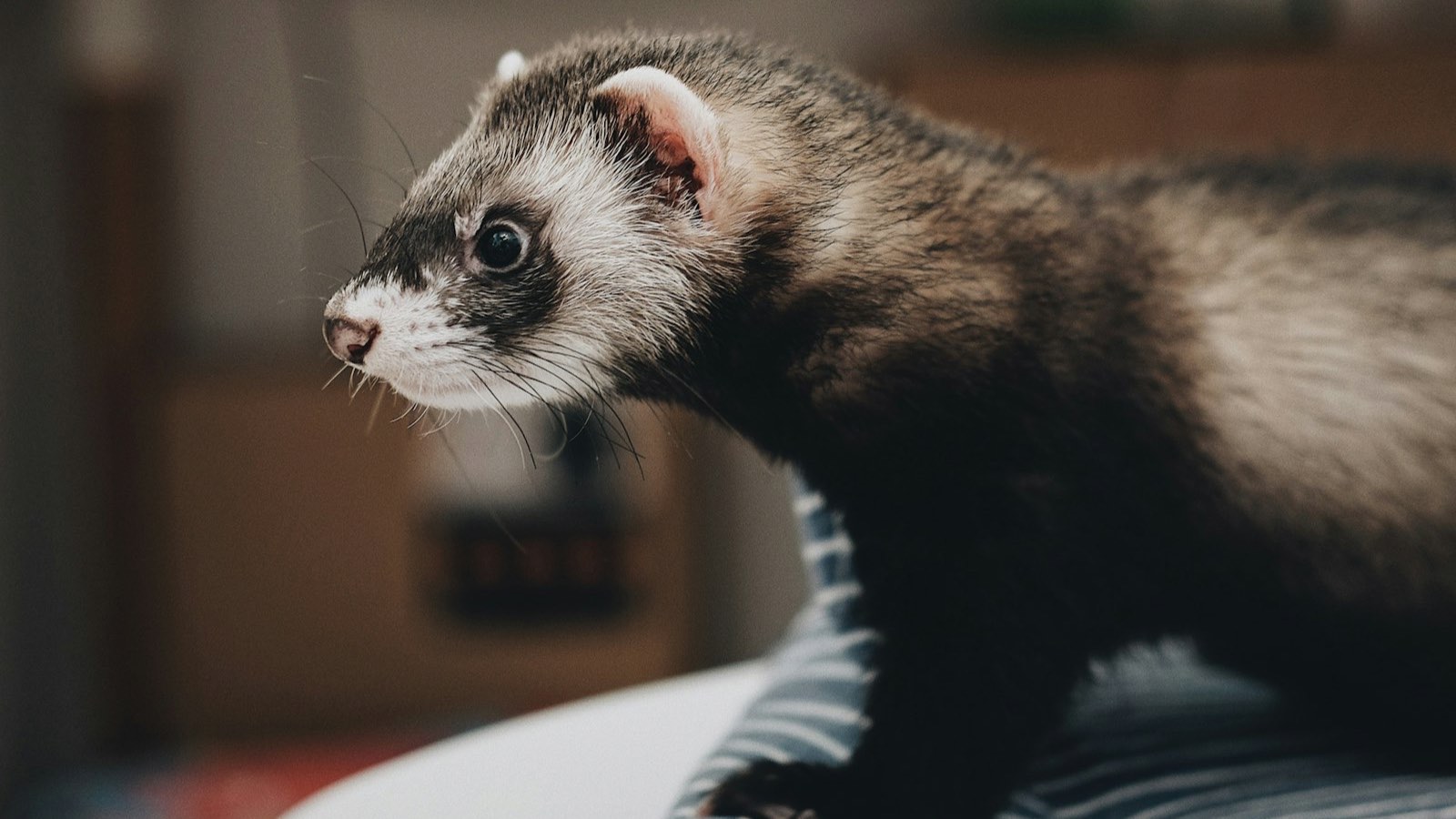
Multi-level cages, hammocks, harnesses: gear for a playful carnivore that sleeps 18 hours a day.
Premium bundle to look after them well: Small Pets Bundle: Chinchilla, Rabbit, Ferret and Rodents — €49
- The complete chinchilla handbook, available only in this bundle: enclosure, heatwaves, dust bath, teeth, taming
- Four guides, each as an English and a French PDF: chinchilla, rabbit, ferret, hamster, guinea pig, rat and gerbil
- Sourced figures, schedules, printable checklists and budgets recorded at real retailers
Buy the bundle — €49 See the contents, sample and guarantee
4 PDF guides (170 pages in all), English and French · instant download · 14-day money-back
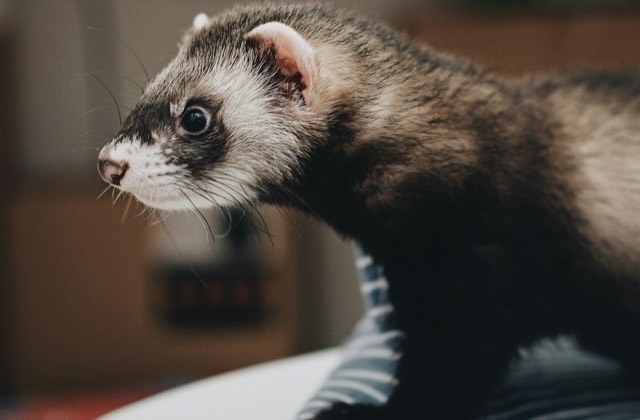
To look after them well, the practical guide: The Ferret Owner’s Handbook — €15
- Clear numbers for the cage, the kibble and the room temperature
- A full hazards chapter: foods, medicines, swallowed objects, heat, what to do
- A real budget collected in 09/2026, 5 schedules and 10 printable checklists
Buy the guide — €15 See the contents, sample and guarantee
40-page printable PDF · instant download · 14-day money-back
- Fruit and vegetables for ferrets: more risk than treatFood
Banana, carrot, apple: why an obligate carnivore's digestive system struggles with these foods, even in small amounts.
- Bell and sound toys for ferrets: engaging their sharpest senseToys & enrichment
Wide hearing range, sharp sensitivity to high frequencies: what research shows about ferret hearing and how to choose the right sound toys.
- Securing a ferret's carrier in the car: the road-safety step owners skipTravel & safety
Sudden braking, sharp turns: why a ferret's carrier needs to be strapped down in the car, and how to do it properly.
- Where to put a ferret's cage: light, noise, and a calm cornerBedding & habitat
A noisy living room, a busy hallway, a too-dark corner: what research on ferret enrichment reveals about the right cage location.
- Ear mites in ferrets: recognizing and treating OtodectesCare & grooming
Black ear wax, constant scratching: what research shows about which ear mite treatment actually works in ferrets.
- What cage size do you need for two ferrets or more?Bedding & habitat
Adding a ferret isn't just about pushing the walls out a few inches: what research shows about enclosure size and the space each extra ferret needs.
- Which toy colors can a ferret actually tell apart?Toys & enrichment
Dichromatic vision, limited acuity: what research shows about ferret eyesight and how it should shape the toys you choose.
- Deslorelin implant or surgical neutering: which is right for your ferret?Care & grooming
Permanent surgery or a reversible hormone implant: what research shows about the link between early neutering and adrenal disease in ferrets.
- Ferret insulinoma: recognizing hypoglycemia and choosing a treatmentCare & grooming
Sudden lethargy, wobbly hind legs: what research shows about the most common hormonal cancer in adult ferrets.
- Allergic reactions to ferret vaccines: how real is the risk?Care & grooming
Facial flushing, drooling, vomiting: what research shows about how often ferrets have anaphylactic reactions to vaccination.
- Hammock, water bowl, or foraging toy: what ferrets actually preferToys & enrichment
A study with progressively weighted doors measured how hard ferrets will work for each type of enrichment — the results are surprising.
- Urinary stones in ferrets: what hydration and diet really changeFood
Cystine or struvite: what research shows about ferret urinary stones and which dietary factors actually make a difference.
- Congenital deafness in ferrets: the link with white and panda coatsCare & grooming
Panda, blaze or white-headed ferrets: what research shows about the link between coat color and congenital deafness in ferrets.
- Extraversion, sociability: what research says about ferret personalityToys & enrichment
743 owners, over 1,000 ferrets assessed: what research shows about the four main personality dimensions in ferrets.
- How narrow a gap can a ferret squeeze through? A study on body awarenessAccessories
A study tested whether ferrets know in advance which opening they can actually fit through — the answer complicates ferret-proofing.
- Bigger cage or more time out of it: what actually matters for ferret welfareBedding & habitat
Single or double enclosure: a laboratory study compares welfare in ferrets housed in two different cage sizes.
- Why ferrets vomit so easily: what research says, and how to ease travel nauseaTravel & safety
Ferrets are among the animals that vomit most easily: what research says about it, and how to ease nausea during a car or train trip.
- Kong-style rubber toys and dispensers for ferrets: what a safety study revealsAccessories
A study of 754 ferret caretakers flags rubber toys and Kong-style dispensers among the enrichment items most often linked to incidents.
- What recent research clarifies about ferret nutritional needsFood
A 2023 scientific update on ferret nutrition clarifies the ideal protein-to-fat ratio and the role of plant-based ingredients.
- Pine or cedar shavings in a ferret's nest: what a landmark study on phenols revealsBedding & habitat
A landmark study on wood phenols shows why pine and cedar shavings remain a poor choice for a ferret's bedding or nest.
- Commercial raw diets and BARF for ferrets: what a Dutch study reveals about bacterial contaminationFood
A Dutch study on commercial raw diets reveals frequent bacterial contamination, a point of caution for households feeding their ferret a raw diet.
- Does a ferret really get used to travel with repetition? What a study in dogs showsTravel & safety
A study on dogs transported repeatedly shows no physiological habituation, a finding worth knowing before assuming frequent trips stop being stressful for a ferret.
- Artificial light and ferret adrenal disease: what a melatonin study showsCare & grooming
A melatonin study in ferrets with adrenal disease sheds light on the role of artificial lighting and photoperiod in this common condition.
- Aleutian disease in ferrets: what a landmark study reveals about this overlooked parvovirusCare & grooming
A landmark study on Aleutian disease in ferrets reveals many asymptomatic carriers, an essential point of caution in multi-ferret households.
- Ferret rabies vaccination: legal requirement and efficacy according to a landmark studyAccessories
A landmark study on the ferret rabies vaccine sheds light on its real-world efficacy and why this vaccination remains a legal requirement in many countries.
- Hammock, bowl or dig box: which enrichment to prioritize according to a Dutch study on ferretsToys & enrichment
A seven-chamber Dutch study reveals the real hierarchy of ferret enrichment preferences, from the hammock to foraging.
- Can a ferret catch human flu? What its role as a reference animal model revealsCare & grooming
A landmark review of the ferret as an animal model for human influenza sheds light on the real risk of two-way transmission between a ferret and its household.
- Helicobacter mustelae gastritis in ferrets: what a landmark 1990 study revealsCare & grooming
A landmark 1990 study established the link between Helicobacter mustelae and gastritis in ferrets, a useful reference when vomiting or appetite loss won't go away.
- Neutering age and adrenal disease in ferrets: what a Dutch study showsCare & grooming
A Dutch study finds a correlation between a ferret's age at neutering and the age at which adrenal disease appears, a useful reference for planning veterinary follow-up.
- Does a ferret recognize its owner? What a study comparing it to dogs revealsToys & enrichment
A Hungarian study comparing ferrets, dogs and wild hybrids shows that ferrets form a genuine bond with their owner and follow their gestures, a basis for interactive enrichment.
- Does boredom exist in ferrets? What 621 owners think, according to a UK studyBedding & habitat
A UK study of 621 ferret owners links perceived boredom to housing, time out of the cage and how much variety of enrichment is on offer.
- Canine distemper in ferrets: what a vaccine efficacy study showsCare & grooming
A US study on vaccinated ferrets later exposed to canine distemper virus shows full protection, against 100% mortality in unvaccinated ferrets.
- Heart disease in ferrets: what a 95-case study revealsCare & grooming
A US study of 95 ferrets followed with echocardiography details how common valvular murmurs and dilated cardiomyopathy are in aging ferrets.
- Ferret tooth fracture: the link with biting cage barsToys & enrichment
A study on rescued ferrets found a high rate of canine tooth fractures, linked to biting cage bars: a case for rethinking the chew toys on offer.
- My ferret twitches in its sleep: REM sleep or a warning sign?Bedding & habitat
A study on ferret sleep shows an exceptionally high proportion of REM sleep in this species, which explains the twitching seen during naps.
- Is the ferret nocturnal? Understanding its crepuscular activity rhythmToys & enrichment
Ferrets are often thought to be nocturnal. In reality they are mostly crepuscular and sleep enormously. Understand their activity rhythm to adapt play, outings and family life.
- Ferret starter kit: the complete budget before you adoptAccessories
Cage, bedding, litter, bowls, toys: the ferret starter kit item by item, with a realistic complete budget of €250 to €500 to get off to a good start.
- Whole prey and raw diets for ferrets: the essential equipmentFood
Dedicated freezer, kitchen scale, easy-to-disinfect bowls: the equipment you need to feed a ferret a whole-prey or raw diet hygienically, with a detailed budget.
- Healthy ferret treats: which to choose, which to banFood
Dried meat, chick, vitamin paste: the healthy treats for ferrets, the ones to ban (sugar, lactose, fruit) and the right prices, between €3 and €10 a pack.
- Salmon oil for ferrets: useful or unnecessary?Food
Salmon oil and supplements for ferrets: what studies show, why a dull coat is often not a deficiency, and how to avoid giving your ferret a rancid oil.
- Indoor ferret playpen: choosing an enclosure that is truly escape-proofToys & enrichment
Minimum height, solid panels, protected floor: how to choose an indoor ferret playpen that resists escapes, with models from €40 to €120.
- XXL tunnels and modular play circuits for ferrets: building a hazard-free mazeToys & enrichment
Minimum 10 cm diameter, rigid PVC, bends and junctions: choosing XXL tunnels and modular play circuits for ferrets, from €15 to €80 depending on length.
- Dig box for ferrets: balls, rice, soil — what can safely go inside?Toys & enrichment
Plastic balls, rice, cork granules or potting soil: which filling to choose for a ferret dig box, the safety rules and a budget of €20 to €50.
- Safe ferret toys: why latex and foam are off the listToys & enrichment
Latex, foam, soft rubber: these materials cause intestinal blockages in ferrets. How to recognise safe toys and which to buy between €5 and €20.
- Bell and tracker for ferrets: never lose yours in the house againAccessories
Bell on the harness, Bluetooth tracker, jingle collar: a comparison of tracking solutions for ferrets at home and on outings, from €3 to €40.
- Ferret litter: wood pellets versus plant-based litter, the showdownCare & grooming
Wood pellets, hemp, recycled paper, corn: which ferret litter absorbs odours best without respiratory risk? Comparison and prices from €5 to €15.
- Enzymatic cleaner for ferrets: the odour-busting weapon that actually worksCare & grooming
Why an enzymatic cleaner removes ferret urine odours where bleach fails: how to use it, which surfaces, mistakes to avoid and prices from €8 to €20.
- Dry shampoo or bath for ferrets: wash less to smell betterCare & grooming
Bathing too often makes a ferret smell worse. Dry shampoo, rinse-free foam or a proper bath: when to wash, with which products and at what price (€6 to €15).
- Brushing and shedding in ferrets: managing hair without hairballs or trichobezoarsCare & grooming
Ferrets moult twice a year and cannot regurgitate: brushing, a soft slicker, a rubber grooming glove and malt paste to prevent trichobezoars.
- Nail trimming for ferrets: technique, kit and the lickable-paste trickCare & grooming
Trimming a ferret's nails every 2 to 3 weeks: which clippers to choose (€5 to €12), the drop-of-paste-on-the-belly technique and the mistakes to avoid.
- Traveling with a ferret: train, plane and the basic paperworkTravel & safety
Microchip, rabies vaccination, EU pet passport: the paperwork for traveling with a ferret, the rules on trains and planes, and the €60 to €200 budget.
- Heatwave: how to keep your ferret cool when the thermometer passes 26 °CTravel & safety
Ferrets do not sweat and suffer from 26 °C upwards: cooling mats, frozen bottles, a ventilated room… every solution for keeping a ferret cool in a heatwave.
- Ferrets, dogs and cats under one roof: barriers, buffer zones and successful introductionsTravel & safety
Getting a ferret to live with a dog or cat takes tall barriers, a staged introduction area and weeks of patience: the method and the equipment (€30 to €100).
- Sleep sack or hammock for ferrets: which bedding for which season?Bedding & habitat
A snug sleep sack in winter, an airy hammock in summer: how to choose your ferret's bedding by season and personality, with models from €8 to €25.
- Hospital cage for ferrets: setting up for recovery after surgeryBedding & habitat
After surgery, a ferret must be confined to a single-level hospital cage: layout, warmth, recovery feeding and equipment for €40 to €90.
- Heavy bowls and no-tip fountains: stopping the ferret that empties its waterAccessories
Does your ferret flip its bowl and empty its water? Heavy ceramic bowls, clip-on dishes and no-tip fountains: the solutions that work, from €8 to €40.
- Ferret odor: why neutering changes everythingCare & grooming
A ferret's musky smell mostly comes from sebaceous glands driven by sex hormones. Understanding this mechanism explains what neutering actually changes.
- Play biting in ferret kits: how bite inhibition is learnedToys & enrichment
In ferret kits, bite inhibition is mostly learned from the mother and littermates before weaning. Understanding this mechanism helps you respond better to play biting after adoption.
- Ferret whiskers: an essential sense to respect when handlingCare & grooming
A ferret's whiskers are richly innervated sensory organs, not just ordinary hair. What this means for everyday handling and grooming.
- Introducing a new ferret to one you already have: the step-by-step protocolAccessories
Adopting a second ferret is not something to improvise: scent swapping, neutral ground, gradually longer sessions. The step-by-step introduction protocol to limit conflict.
- Male or Female Ferret: The Real Differences Before You AdoptAccessories
Hob or jill: how much do size, temperament and odor really depend on a ferret's sex? What to know before choosing, beyond the common myths.
- Retractable or Fixed Leash for a Ferret: Which One Is Actually Safe?Travel & safety
Between length and comfort versus injury risk, retractable and fixed leashes are not equally safe with a ferret. What leash research shows, and how to choose.
- Ferret Price: Breeder, Pet Store or Shelter, What Does It Really Cost?Accessories
A ferret's purchase price varies widely depending on the adoption source. A realistic comparison of breeder, pet store and shelter, and what that price gap actually changes.
- Ferret Cage: Materials and Paint to Avoid for a Truly Safe EnclosureBedding & habitat
Galvanized wire, cheap paint, zinc: some cage materials pose a real toxic risk for a chewing ferret. What to avoid and what to use instead.
- Ferrets and Human Allergies: Can You Live With One If You're Allergic to Fur?Care & grooming
Ferret fur, dander and saliva can trigger allergic reactions in some people. What allergy research shows, and how to limit symptoms day to day.
- Ferret Swallowed an Object: Recognizing Intestinal Obstruction and Acting FastCare & grooming
Rubber, foam, fabric: ferrets swallow small objects easily, with a real risk of intestinal obstruction. The warning signs and the right emergency steps to take.
- Eggs for Ferrets: Benefits, Risks and the Right FrequencyFood
Egg is an excellent protein source for a ferret, but not without nuance between raw yolk, raw white and cooked egg. What biotin research shows, and how often to feed it.
- Paper Bags and Cardboard: The Free Enrichment Ferrets Genuinely LoveToys & enrichment
No need to buy everything: kraft paper bags, cardboard boxes and empty tubes make safe, free enrichment that ferrets genuinely enjoy. How to use them without risk.
- ID Tag or QR Code for a Ferret: A Useful Complement to the MicrochipAccessories
A microchip is legally required, but it says nothing to whoever finds a lost ferret. What research on lost pets shows, and why an ID tag or QR code makes a real difference.
- Fasting Before Anesthesia in Ferrets: Why It Must Stay ShortCare & grooming
Unlike dogs or cats, a ferret should never fast for long before anesthesia, at the risk of severe hypoglycemia. What research shows, and the other risk factors to know.
- Pain in Ferrets: The Subtle Signs Owners Often MissCare & grooming
Ferrets hide pain well, a leftover instinct from being occasional prey. What the ferret grimace scale study shows, and the everyday behavioral signs to watch for.
- Toxic Foods for Ferrets: Chocolate, Onion, Grapes, XylitolFood
Chocolate, onion, grapes, xylitol: the foods that are genuinely dangerous for a ferret, the poisoning symptoms to watch for, and the right emergency steps.
- Puzzle-Style Kibble Dispensers for Ferrets: Are They Worth It?Toys & enrichment
A puzzle feeder taps into a ferret's digging instinct and slows down fast eaters. What a UK survey on ferret enrichment found, and how to use one well.
- Hairballs in Ferrets: An Obstruction Risk Not to UnderestimateCare & grooming
Unlike cats, ferrets cannot easily vomit up hairballs swallowed while grooming. What veterinary literature shows, and how to lower the risk during shedding season.
- Fleas on ferrets: spotting, treating and preventing themCare & grooming
An indoor ferret can catch fleas from the dog, the cat or your shoes. Subtle signs, suitable treatments and how to decontaminate the home.
- Ferrets have an ultra-fast gut transit: why several small meals work betterFood
An imaging study shows ferret small intestinal transit under two hours: what that means in practice for meal frequency and portion size.
- Raw fish for ferrets: the thiaminase risk inherited from mink and fox farmingFood
Some raw fish contain an enzyme, thiaminase, that destroys vitamin B1 — a risk documented since the 1930s in farmed mink and fox, worth knowing before feeding a ferret raw fish.
- Training a ferret to its carrier before the first trip: what a cat study teachesTravel & safety
A study on cats trained to their carrier before a trip shows a measurable drop in stress — a method that transfers well to a ferret's first outing.
- Preventing boredom in a ferret's cage: what a farmed mink study teachesBedding & habitat
A study on farmed mink, a mustelid close to the ferret, shows that structured environmental enrichment reduces signs of boredom — lessons that carry over to cage setup.
- Epizootic green diarrhea in ferrets: what the founding study on this coronavirus revealsCare & grooming
A landmark study of 119 ferrets identified the coronavirus behind the "green slime" outbreak that marked the species in the 1990s: symptoms, severity, and what to do.
- Play fighting or real aggression between ferrets? What a landmark polecat study teachesToys & enrichment
A landmark study on the behavior of European polecats, the ferret's wild ancestor, spells out precisely which signals separate play fighting from real aggression.
- Insect protein for ferrets: a real alternative for this strict carnivore?Food
A scientific review of insects as an animal protein source in dogs and cats sheds light on a question ferret owners increasingly ask: can part of the meat ration be replaced with insects?
- Weighing your ferret regularly at home: what a cat body condition study teachesAccessories
A study on body condition scoring in physically inactive cats shows the value of regular weight tracking — a simple method that transfers well to monitoring a ferret at home.
- Ferret tartar: what a study on carnivore diet texture revealsFood
A landmark study on dog and cat diets draws a clear link between food texture and tartar buildup, useful insight for choosing the right diet for this obligate carnivore, the ferret.
- Skin tumors and lymphoma in ferrets: what a 574-case study showsCare & grooming
A study of nearly 4,800 ferret medical records details how often tumors occur in this species and where, useful context for knowing which skin or lymph node changes to never ignore.
- What enrichment do ferrets actually get? A multi-sector survey of owners, labs and sheltersToys & enrichment
A survey spanning pet owners, labs, zoos and shelters compares the enrichment ferrets actually receive across settings, useful insight into what's most often missing at home.
- Taurine deficiency and cardiomyopathy: what a canine study reveals about ferret kibbleFood
A study of golden retrievers links certain non-traditional kibble formulas to taurine deficiency and dilated cardiomyopathy, a useful signal for choosing kibble for an obligate carnivore like the ferret.
- Overly confined cages and undesirable behaviour in ferrets: what a survey of 466 owners showsBedding & habitat
A survey of 466 ferret owners links time spent confined and the number of enrichment items to how often undesirable behaviours occur, practical pointers for setting up the everyday habitat.
- A mirror for ferrets: what a study on their reaction to their own reflection showsToys & enrichment
A study tested how ferrets react to a mirror: approach, sniffing and self-exploration, without proof of true self-recognition. What this means for using one as enrichment.
- Recognizing your ferret's psychological well-being: what a 2024 behavioural study showsCare & grooming
A 2024 study built a catalogue of ferret well-being behaviours, including the famous play "dook": practical pointers for reading your ferret's psychological state day to day.
- Hyperestrogenism in unspayed female ferrets: what a landmark study on persistent estrus showsCare & grooming
A landmark veterinary study documented bone marrow suppression linked to persistent estrus in unspayed female ferrets, an overlooked life-threatening risk that explains why spaying or an implant is a real health decision, not just a matter of convenience.
- A dark hiding spot in the cage: what a cat study reveals about ferret stressBedding & habitat
A study found that a simple hiding box measurably reduced stress in shelter cats, a principle that carries over to setting up a ferret's cage, a burrowing animal that naturally seeks darkness to rest.
- Calming pheromones during transport: what a cat study teaches for ferretsTravel & safety
A study found that a synthetic facial pheromone reduced stress behaviours in cats during vet visits, a potentially useful tool for calming an anxious ferret during transport.
- Frustration and repetitive behaviour in farmed mink: what a landmark study teaches about ferret enrichmentToys & enrichment
A study published in Nature links the lack of access to natural activities like foraging or swimming to stereotypic behaviour in farmed mink, a strong signal for ferret enrichment, since this fellow mustelid is also driven by active foraging.
- One ferret or two? What the research says about pairsToys & enrichment
One ferret or two: ferrets value a companion of their own kind, but a badly matched pair will fight. Which pairs get along, according to two studies.
- Cage or dedicated room for a ferret: which should you choose?Bedding & habitat
Cage or dedicated room for your ferret? Safety, budget and comfort compared to choose the best everyday habitat.
- Ferret kibble or premium kitten kibble: which should you choose?Food
Ferret kibble or premium kitten kibble? Protein levels, price per kilo and pitfalls compared for a strict carnivore.
- Ferret and litter: litter box or pads, which solution should you adopt?Care & grooming
Litter box or pads for your ferret? Cleanliness, odours, monthly cost and training tips compared for a fresh-smelling home.
- Leash or free roaming indoors: how should your ferret get around?Travel & safety
Leash or total freedom indoors for your ferret? Safety, supervision and gear compared for accident-free play sessions.
- First-ferret mistakes: the top 7 to avoidAccessories
First ferret: the 7 most common beginner mistakes, from the wrong gear to risky savings, and how to avoid every one of them.
- Exercise wheel for a ferret: why it is a bad ideaToys & enrichment
Is an exercise wheel useful for a ferret? Why this rodent accessory is unsuitable, and which alternatives actually get a ferret running.
- Sugary treats for ferrets: why the answer must be noFood
Raisins, milk, biscuits: why sugary treats are dangerous for ferrets and what to replace them with, risk-free.
- Leaving a ferret loose at night: good or bad idea?Travel & safety
Can you leave a ferret roaming free at night unsupervised? Real risks, safety conditions and alternatives for peaceful nights.
- Does a ferret need a collar? Risks and alternativesAccessories
Collar for a ferret: false good idea or useful accessory? Strangulation risks, the point of a bell and why a harness is better.
- How much does a ferret cost per month? The detailed budgetAccessories
How much does a ferret cost per month? Food, litter, healthcare, surprises: the monthly budget detailed line by line, from 60 to 120 €.
- First-year budget for a ferret: how much should you plan in total?Bedding & habitat
What budget for a ferret’s first year? Purchase, cage, neutering, vaccines and running costs: the detailed total, between 1,200 and 2,200 €.
- Meat-based diet for ferrets: the true day-to-day costFood
What does a ferret’s meat-based diet really cost? Raw feeding, whole prey and kibble prices compared, with a detailed monthly budget.
- Second-hand ferret gear: good deals and pitfalls to avoidAccessories
Cage, travel carrier, playpen: which second-hand ferret gear is safe to buy, how to disinfect it and what savings to expect.
- Ferret vet budget: how much does healthcare cost each year?Care & grooming
Vaccines, neutering, emergencies, chronic diseases: a ferret’s annual vet budget in detail, and how to smooth out these exotic-pet costs.
- Ferret in an apartment: how to set things up properlyBedding & habitat
Living with a ferret in an apartment: floor space needed, odour management, neighbours and practical fittings for a small home.
- Going away for the weekend with or without your ferret: how to organise itTravel & safety
Weekend coming up: take your ferret along or arrange care? Pet-sitting options, travel checklist and costs for two days away.
- Ferrets and children: from what age and with which rules?Toys & enrichment
Is a ferret compatible with children? Recommended age, handling rules, suitable games and mistakes to avoid for peaceful family life.
- Senior ferret: what adjustments and care after age 4?Care & grooming
Your ferret is ageing: cage adjustments, adapted diet, stepped-up exotics vet monitoring and comfort for the senior ferret after age 4.
- Adopting a shelter ferret: the complete starter kitAccessories
Adopting a shelter ferret: the starter equipment list item by item, the total budget and what is specific to an animal with an unknown past.
- Surgical or chemical neutering: what a landmark study shows about ferret play and aggressionToys & enrichment
A Dutch study compared intact, surgically neutered and chemically neutered male ferrets: it clarifies what neutering actually changes about aggression, sexual behaviour and, above all, the drive to play.
- What nesting substrate does a ferret actually prefer? A lab rodent study offers cluesBedding & habitat
A landmark study measured how strongly laboratory rodents preferred different nesting substrates, useful insight for choosing bedding that lets a ferret really build a nest, beyond just a hammock.
- Fireworks and loud noises: what a dog study teaches about ferret sound-related fearCare & grooming
A large UK study measured the prevalence and risk factors behind firework fear in dogs, offering transferable insight for understanding and easing a ferret's stress from a sudden, loud noise.
- A parked car, even in the shade: what a cabin-temperature study reveals for ferretsTravel & safety
A study measured how quickly temperature rises inside a parked car's cabin depending on weather conditions, figures that explain why leaving a ferret in a vehicle, even for a few minutes, stays dangerous.
- A ferret's blood test: how to read the reference valuesCare & grooming
A German study established updated reference ranges for 51 blood parameters in 111 healthy ferrets, a valuable tool for understanding what a blood test actually reveals in this exotic pet.
- Wire mesh or solid floor for a ferret's cage? What a farmed-mink review suggestsBedding & habitat
A landmark review on farmed-mink welfare compiled the effects of wire flooring on paws and behaviour, lessons that carry over to choosing a ferret's cage flooring.
- Free-choice kibble: does it make a ferret gain weight? What a cat study revealsFood
A longitudinal study tracked the growth of cats fed free-choice: its findings on the speed of weight gain shed light on a similar risk for ferrets fed ad libitum.
- Why varying treat hiding spots stimulates a ferret, according to a foraging-learning studyToys & enrichment
A study showed that ferrets adjust their search strategy depending on how food is spread out, a good reason to rethink how a dig box or snuffle mat is arranged.
- What age should you adopt a ferret kit? What a cat weaning study suggestsAccessories
A study of over 5,700 cats found that weaning too early raises the risk of adult aggression, lessons that carry over to picking the right age to adopt a ferret kit.
- Why does a ferret explore everything without fear? What a comparative polecat study revealsToys & enrichment
A landmark study compared exploratory behaviour in the domestic ferret, the wild polecat and their hybrids: domestication markedly changes how the animal relates to novelty and to humans.
- Does daily playtime really reduce boredom in ferrets? What a laboratory study showsToys & enrichment
A study in a laboratory setting compared ferret behaviour with and without daily playtime: signs of boredom dropped markedly after one hour of play.
- Is a young ferret naturally more stressed? What a black-footed ferret study suggestsCare & grooming
A hair-cortisol study found that young black-footed ferrets show higher stress hormone levels than adults, a useful reference point for reading a young ferret's behaviour.
- Premium or budget kibble for ferrets: is the price gap actually worth it?Food
Premium versus budget kibble for ferrets: what protein quality really changes for digestion, and how to spot the difference that justifies the price.
- Fearful or nippy ferret at adoption: how to earn its trust without rushing itToys & enrichment
A skittish ferret that nips at adoption isn't a lost cause: the gradual method that works, backed by what research shows about ferret socialisation.
- Ferret sneezing or coughing: when to worry and see a vetCare & grooming
An isolated sneeze in a ferret is rarely serious, but certain accompanying signs call for prompt attention: how to tell passing irritation apart from a vet emergency.
- Camping with your ferret: what gear do you need for a stay under canvas?Travel & safety
Camping with a ferret: secure sleeping setup, managing predator scents and temperature precautions for a tent stay with no bad surprises.
- Boarding or a home pet-sitter for your ferret while on vacation: what budget should you plan?Accessories
Ferret boarding versus a home pet-sitter: a budget comparison, stress on the animal, and how to choose based on how long you're away.
- Adrenal gland disease in ferrets: the link with early neutering, according to researchCare & grooming
Hair loss starting at the tail, a swollen vulva, late-onset aggression: adrenal gland disease affects a large share of early-neutered ferrets. What a landmark study reveals about its mechanism.
- Helicobacter mustelae gastritis in ferrets: the leading cause of chronic vomitingCare & grooming
A ferret with occasional vomiting or teeth grinding after meals is almost always hosting this stomach bacterium. What the founding study on this animal model shows.
- Ferret hydration: does wet food really protect the urinary tract?Food
Does a ferret fed only dry kibble drink enough for its kidneys and bladder? What a landmark cat study reveals about the value of wet food.
- Moving house with your ferret: how to ease the stress of a new environmentBedding & habitat
A ferret can go listless or irritable after a move. What a landmark cat study teaches about the stress of environmental change, and how to plan around it.
- Senior ferret: adapt play and enrichment to sensory decline instead of cutting it backToys & enrichment
Fading vision and smell, less interest in familiar toys: what a veterinary review on brain ageing teaches about adapting enrichment for the senior ferret.
- Bulk-bag kibble for ferrets: real savings, or a rancidity risk?Food
A 15 kg bag costs less per kilo, but a single ferret takes nearly a year to finish it. What research on fat oxidation in kibble reveals once the bag is opened.
- Microchip or GPS tracker for a ferret: which one actually helps you find an escapee?Accessories
A microchip identifies a ferret once it's found; a GPS tracker promises to locate it in real time — two very different tools. What a study on the maximum weight for a small-mammal tracker changes about the choice.
- A new baby is on the way: should you worry about your ferret and allergies?Care & grooming
No, having a ferret at home is not a reason to rehome it before a baby arrives. What a landmark study on early pet exposure reveals about allergy risk, and the real precautions worth taking.
- Ferret afraid of the bath: how to get it used to water without forcing itCare & grooming
A ferret that struggles the moment it touches water isn't being difficult. What a study on the response to unfamiliar touch in rabbits teaches about desensitising a fearful ferret, step by step.
- Vitamin supplements on top of kibble: a smart precaution, or a mistake for your ferret?Food
Adding a supplement to an already complete diet isn't harmless. What a study on the real reliability of commercial vitamin-mineral supplements reveals, and when supplementation actually makes sense.
- A ferret that always urinates in the same wrong spot: what research on scent-marking revealsCare & grooming
A ferret that consistently misses the litter box in one exact spot, and nowhere else, is often following an already-established marking site. What ferret scent-marking research changes about litter strategy.
- Does a ferret digest kibble as well as a cat? What a comparative study showsFood
Same kibble, different digestion: a study comparing ferrets, mink and cats explains why ferret stools are often bulkier, and what that changes about choosing kibble.
- Periodontal disease in ferrets: why it so often goes unnoticedCare & grooming
Two ferrets out of three show periodontal disease detectable only under anaesthesia. What a study on shelter ferrets reveals, and why brushing alone isn't enough to prevent it.
- A limp, cold-to-the-touch ferret: the warning signs of a real emergencyCare & grooming
A study of 321 hospitalised ferrets identifies the vital signs most tied to risk of death. How to know when simple limpness should mean an immediate trip to the vet.
- Zinc and ferrets: why galvanized wire and coins are a real dangerBedding & habitat
Ferrets tolerate excess zinc far worse than other species studied. What a toxicology study reveals, and why checking your cage's metal and any small objects within reach matters.
- Probiotics in ferrets: a study links gut microbiome to curiosityFood
A double-blind study in ferrets found that probiotic supplementation shifts the gut microbiome and increases interest in novelty. What this suggests for the food bowl and enrichment routine.
- Does your ferret actually hear that bell toy? What hearing research showsToys & enrichment
Ferret hearing peaks between 8 and 12 kHz, well above the range where human hearing is sharpest. What a landmark study changes about choosing sound toys and locator bells.
- Ferret and newborn at home: why supervision can never lapseTravel & safety
A clinical case published in 2023 reports a ferret bite that put a newborn's life at risk. What this report changes about the rules for cohabiting with a young infant.
- Toxic houseplants for a ferret: the list to know before it takes a biteAccessories
Lilies, philodendron, dieffenbachia: which houseplants are genuinely dangerous for a ferret, and how to keep a plant-friendly home without the risk.
- H-style or neck-loop harness for a ferret: which should you choose for outings?Travel & safety
H-style harness with two attachment points or a single-strap neck-loop harness: which one actually stops a ferret from slipping out on a walk, and how to fit it right.
- Home insurance and ferrets: does liability coverage pay for the damage it causes?Accessories
A bite, a chewed cable, water damage: what homeowners' liability coverage actually pays for when a ferret is involved, and the precautions worth taking.
- Punishing a ferret for stealing or biting: why it makes the problem worseToys & enrichment
Yelling, flicking the nose, an abrupt time-out: why punishing a ferret that steals or bites doesn't correct anything, and what actually builds trust instead.
- Ferrets and rodents (rats, mice, guinea pigs): why cohabitation is dangerousTravel & safety
Rats, mice, guinea pigs: why a ferret's predatory instinct makes this cohabitation risky, even in an animal born and raised indoors that has never hunted.
- The e-collar after ferret surgery: why it sometimes does more harm than goodCare & grooming
Elizabethan collar after a ferret's neuter or surgery: what research shows about its real impact, and the alternatives worth discussing with your vet.
- Renting with a ferret: what your lease can actually sayAccessories
A "no pets" clause, security deposit, odor concerns: what a tenant can genuinely push back on to keep a ferret in a rented home, and what the law says.
- Essential oils and diffusers: a real danger for a ferret?Accessories
Essential oil diffusers, topical tea tree applications: why a ferret's liver struggles with these compounds, and the precautions worth taking at home.
- How often should you clean a ferret's cage and litter to avoid ammonia buildup?Bedding & habitat
Ferret urine, a neglected litter box: why ammonia building up in a poorly maintained cage harms the airways, and the right cleaning routine to follow.
- Space heater or heating pad for a ferret: how to keep it warm in winter?Bedding & habitat
Space heater or heating pad for a ferret in winter? Comparing safety, running cost and comfort for a draft-free cage.
- Best kibble for a neutered ferret: how to avoid weight gain?Food
Best kibble for a neutered ferret to avoid weight gain without cutting animal protein. Our guidelines for choosing well.
- Automatic litter box for a ferret: a worthwhile investment?Care & grooming
Automatic litter box for a ferret: price, how it works and its limits. A worthwhile investment or a gadget poorly suited to this small carnivore?
- Mistakes to avoid driving with a ferret: heat, carrier and stopsTravel & safety
Mistakes to avoid when driving with a ferret: heat building up in the car, a poorly secured carrier, and forgotten stops. Tips for a safe trip.
- Adopting a ferret when you already have a rabbit: a risky cohabitation?Travel & safety
Ferret and rabbit under one roof: why cohabitation is risky and what precautions to take if you adopt a ferret with a rabbit already at home.
- Xylitol: a dangerous sweetener for ferrets?Food
Sugar-free gum, reduced-fat peanut butter: why xylitol, a known toxin in dogs, should also stay out of reach of a ferret already prone to hypoglycemia.
- Sunburn in ferrets: a real risk in a catio or garden?Care & grooming
Nose, ears, thinly-furred belly: the parts of a ferret vulnerable to UV during catio time, what the science says about skin burns, and how to prevent them.
- Ferret bowls and water fountains: how often should you clean them against bacteria?Accessories
Invisible biofilm, bowl material, washing frequency: what research shows about the real bacterial contamination of pet bowls, and how to keep it in check.
- Rabies antibody titer testing: what to know before flying abroad with your ferretTravel & safety
The FAVN test, the 0.5 IU/ml threshold, timelines to plan for: how the rabies antibody titer required for travel outside the EU works for ferrets, and what research says about its reliability.
- Heartworm disease in ferrets: an underestimated riskCare & grooming
Mosquito bites, a tiny heart: why ferrets are especially vulnerable to heartworm, what a recent Spanish study reveals, and how to protect them.
- Enrichment and aggression between ferrets: what a behavioural study showsToys & enrichment
Hammock, water bowl, foraging ball: a Dutch study measures the real effect of enrichment on tension between cohabiting ferrets.
- Raw liver for ferrets: nutritional benefits and the risk of vitamin A overdoseFood
Rich in iron and vitamin A, liver is a favorite in raw diets for ferrets — but too much exposes them to a toxicity risk documented in other domestic carnivores.
- Do ferret kits hear from birth? A foundational neuroscience study answersCare & grooming
A ferret kit that ignores loud noises isn't necessarily deaf: a landmark study explains why its hearing develops unusually late.
- Do ferrets choose their food by smell rather than sight?Food
A landmark study on polecats shows that scent, far more than appearance, is what triggers food-seeking behaviour in this carnivore.
- Domestic ferrets and wild polecats: what a comparative study reveals about domesticationToys & enrichment
A landmark study compares domestic ferret behaviour to that of the wild polecat — with direct consequences for enrichment needs.
- My ferret gains weight in winter and slims down in summer: a study explains this natural cycleFood
A study on ferrets reveals a marked seasonal weight cycle tied to day length — a useful benchmark before worrying over the scale.
- The ferret's "dook": what this little chuckle reveals about its well-beingToys & enrichment
A scientific study shows that the ferret's signature chuckle, or "dook," is a reliable indicator of its psychological well-being during play.
- Why does my ferret's coat change so much in winter? What day length explainsBedding & habitat
A thicker, paler winter coat in ferrets is no coincidence: a scientific review explains the role of day length in this seasonal change.
- Can a ferret learn like a detection dog? What a study showsToys & enrichment
A study trained ferrets to flag a specific odor through positive reinforcement, with real success — a fresh look at what this animal can learn at home.
- Broken teeth in ferrets: what a radiographic study of 57 ferrets revealsCare & grooming
A veterinary study that radiographed 57 pet ferrets details how common dental fractures and periodontal disease are in this species, often invisible to the naked eye.
- Toxoplasmosis, leishmaniasis, heartworm: what a screening of 448 Spanish ferrets showsCare & grooming
A serological study of 448 pet ferrets in Spain measures, for the first time, this species' exposure to three major parasites, with useful benchmarks for veterinary screening.
- Calcium and vitamin D in ferrets: what a study on reference values showsFood
A study established normal blood concentrations of calcium, parathyroid hormone and vitamin D in healthy ferrets, a useful benchmark for judging whether a diet truly meets these needs.
- Single cage or two cages joined by a tunnel: a study compares ferret activityBedding & habitat
A laboratory study compared the activity and behavior of ferrets housed in a single cage versus two cages joined by a tunnel, with a result that nuances the idea that bigger always means more active.
- Should you watch your ferret after a vaccine? What a study of 143 ferrets showsAccessories
A veterinary study of 143 ferrets vaccinated against distemper and rabies measures how often anaphylactic reactions occur, with a clear benchmark for how long to keep watch after the injection.
- Kit or adult ferret: who adapts faster to a new environment?Travel & safety
A laboratory study compares the behavior of young and adult ferrets discovering a new space, with a useful benchmark for a kit's first outing after adoption or a house move.
- Does a daily play session really reduce a ferret's boredom? What a study showsToys & enrichment
A laboratory study compared ferret behavior with and without a daily play session, with results that support the value of active playtime over toys simply left in the cage.
- Washing every hammock on the same day: what bedding scent means to a ferretBedding & habitat
A landmark study shows ferrets tell a familiar odour from an unfamiliar one, and even a fresh odour from a day-old one. Good reason to rethink how you launder their bedding.
- Ferret emergency evacuation: the plan to prepare before it's too lateTravel & safety
A US study on a flood evacuation found that lack of preparation is the top reason households fail to evacuate pets in time. Here's how to build a ferret evacuation plan before disaster strikes.
- Car vibration: a hidden stressor for ferrets in transportTravel & safety
A study on mice housed near a railway found that vibration alone, separate from noise, raises cortisol and harms welfare. Reason enough to rethink where and how a ferret carrier sits in the car.
- Dry winter air: the humidifier that protects a ferret's airwaysAccessories
A study conducted directly on ferrets found that dry indoor heated air favours respiratory virus transmission. Reason enough to run a humidifier near the cage in winter.
- Air purifier by a ferret's cage: does it actually help with ammonia and dust?Accessories
A study comparing ventilated and standard mouse caging quantifies the ammonia gap between the two systems. Here's what it suggests about whether an air purifier is worth it near a ferret's cage.
- How long does a ferret stay unsettled after a trip? What a mouse study revealsTravel & safety
A study on freshly transported mice found that cortisol drops fast, but behaviour takes days to settle. Reason to look past a ferret's calm appearance right after getting home.
- Scruffing your ferret before a trip: a cat study advises against itTravel & safety
A study comparing restraint techniques in cats found that scruffing triggers more stress signs than gentle handling. Reason to rethink the grab before loading your ferret into its carrier.
- Enriching the cage with real accessories: what a farmed mink study revealsAccessories
A study comparing three levels of housing enrichment in farmed mink, a close relative of the ferret, found that the amount of cage furnishing directly shapes behaviour and coping ability. Useful guidance for accessory shopping.
- A timer for the lights: reducing adrenal disease risk in a neutered ferretAccessories
A study on the hormonal link between neutering and adrenal disease in ferrets clarifies why the length of light exposure matters. Reason enough to run a timer rather than irregular lighting near the cage.
- Normal ferret temperature: 38.1 to 39.9 °C, an interval at last establishedCare & grooming
The ranges copied everywhere had almost no data behind them. A 2026 study on 56 healthy ferrets sets a reference interval for the digital rectal thermometer.
- Feeding a sick or recovering ferret: what to change temporarily?Food
Feeding a sick or recovering ferret: how to adjust texture, frequency and palatability without breaking the obligate-carnivore balance.
- Ferret first aid kit: what belongs in it?Care & grooming
What should a ferret first aid kit contain? The basic supplies to keep on hand before calling the vet.
- Treat dispensers for ferrets: which ones actually work?Toys & enrichment
Treat dispensers for ferrets: which models really engage the digging instinct without frustrating or overfeeding your fuzzy.
- Building multi-level DIY shelves for a ferret cage: best practicesBedding & habitat
DIY shelves for a multi-level ferret cage: safe materials, solid fixing and mistakes to avoid for a reliable setup.
- Pet insurance for ferrets: is it worth signing up?Accessories
Pet insurance for ferrets: what exotic-pet plans actually cover, their cost, and when they become worth it.
- Ferret coronavirus: carriage is ordinary, the systemic form is notCare & grooming
In ferrets, enteric coronavirus circulates widely without making any noise. It is the systemic form, rare and severe, that should raise the alarm: a young ferret, weight loss, a palpable abdominal mass.
- Where to put the ferret's hammock? A mink study challenges the instinct to go for warmthBedding & habitat
Owners often tuck the ferret's hammock right against a radiator, assuming a heavy sleeper loves the heat. A nest-site study in mink suggests the opposite: given a choice, females preferred the cooler box.
- Cerenia (maropitant) for ferret motion sickness: what a dog study actually showsTravel & safety
Facing a ferret that vomits on the first bend, many owners ask their vet for maropitant. Here's the clinical trial data behind it — established in dogs, not in ferrets.
- Could nail clippings reveal a ferret's chronic stress? A cat study opens a leadAccessories
Trimming a ferret's nails is routine and almost trivial. A cat study suggests the clippings themselves could one day become a welfare-monitoring tool.
- Ibuprofen and ferrets: a single tablet can be enoughAccessories
A series of 43 poisonings reported to a poison control centre shows ferrets tolerate ibuprofen far worse than dogs — and the first sign isn't a digestive one.
- Cloudy eye in a one-year-old ferret: cataracts don't wait for old ageCare & grooming
An ophthalmology study examined 73 ferrets with a slit lamp: nearly one in two already had lens opacities at 11-12 months.
- Flying with a ferret: what a survey of 635 dogs revealsTravel & safety
An owner-reported survey of 635 dogs that flew shows the real risks of air travel — findings that carry over to ferrets, who are almost never allowed in the cargo hold anyway.
- The polecat's thermal comfort zone: what a mustelid study says about the ideal room temperature for a ferretBedding & habitat
A comparative study of five mustelids places the polecat's thermoneutral zone around 25°C — a concrete benchmark for choosing where to set up a ferret's cage.
- Multi-level cages: a rat study is a reminder that floor space beats heightBedding & habitat
Faced with a three-dimensional space, rats clearly favor horizontal movement over vertical — a finding worth weighing against the usual push to add levels to a ferret's cage.
- Ferrets have no known blood groups: what that changes in an emergencyCare & grooming
No study has identified blood groups in the ferret. It is a useful quirk to know before a haemorrhagic emergency — along with the limits of that conclusion.
- EU pet passport for ferrets: the dog’s tapeworm treatment does not applyTravel & safety
Ferrets, dogs and cats share the same EU pet passport — but not the same health requirements. What the regulation actually says before a trip within the EU.
- Ferret in a travel carrier: the real risk is ambient heatTravel & safety
In ferrets as in rabbits, heat-related illness always comes from a hot environment, never from exertion. A travel carrier concentrates exactly that risk.
- Where to place a ferret’s cage to limit noise: what the mink study showsBedding & habitat
Human voices and traffic lower activity and raise cortisol in a mustelid close to the ferret. Reason enough to rethink cage placement beyond just light.
- Blood sampling under anaesthesia: why your ferret looks anaemic without being soCare & grooming
Under isoflurane or sevoflurane, a healthy ferret's haematocrit reads a third lower. The red cells are not missing: they are in the spleen.
- Hiding medication in your ferret's favourite treat: a bad idea?Food
A landmark study on ferrets shows that a food linked to feeling unwell can be rejected for a long time afterwards, even when the illness strikes up to 90 minutes later.
- A kit that skips a meal then eats poorly: the overlooked arginine riskFood
A study on young ferrets shows that a single meal too low in arginine, after a fast, can trigger ammonia poisoning within two to three hours.
- Can a carnivore self-correct its own meal? What a mink study suggests for ferretsFood
Given a choice between two foods, mink correct the imbalances of their previous diet, including for carbohydrate. What this does, and does not, mean for the ferret's bowl.
- A ferret that bites: why observation replaced euthanasiaTravel & safety
Biting ferrets used to be put down for lack of data. An experiment on 54 ferrets dated saliva shedding of rabies virus and changed the rule.
- Ferret kit sleep between eye-opening and weaning: what a US study revealsBedding & habitat
A polysomnography study on ferret kits aged 30 to 50 days overturns an assumption about REM sleep in newborn mammals that are extremely immature at birth.
- A ferret that pushes for nothing: what a Dutch study reveals about its need for spaceBedding & habitat
Ferrets pushed a weighted door almost as hard to reach a completely empty room as to reach food. What this means for how you lay out a cage.
- Dig boxes for ferrets: what a UK survey reveals about the most-loved enrichmentToys & enrichment
A survey of 754 ferret keepers ranks enrichment by observed enjoyment. The dig box comes in second place, just behind tunnels.
- Overweight ferret: how to help it lose weight safely?Food
Overweight ferret: how to spot excess weight and organize a gradual weight loss plan without cutting animal protein.
- Ferret vaccination schedule: what shots and whenCare & grooming
Ferret vaccination against distemper and rabies: primary shot schedule, booster timing and special cases to plan for.
- Keeping a ferret busy all day while you're at workToys & enrichment
How to keep a ferret busy alone for a full workday: cage setup, suitable toys and a routine that limits boredom.
- Best cage flooring for a ferret: which material to choose?Bedding & habitat
Wire, plastic, mats or plant-based litter: comparing ferret cage flooring options for paw comfort and easy cleaning.
- Lost or escaped ferret: what to do in the first hoursTravel & safety
Ferret that escaped indoors or got loose outside: what to do in the first hours to maximize the chances of finding it quickly.
- The ferret has an 89° blind spot behind its head: how to approach it without startling itCare & grooming
A 2025 study puts the first figures on the ferret's visual field. What those 89 blind degrees change about waking it, lifting it and offering it your hand.
- A closed travel carrier: the risk that heat alone doesn’t explainTravel & safety
A carrier that stays cool but has its mesh sides blocked by a blanket can still build up CO2 within minutes. What a study on sealed laboratory cages reveals about travel carriers.
- Does doubling the cage size actually change a ferret’s behavior?Bedding & habitat
A study directly compared a single cage to a double cage joined by a tunnel in paired ferrets. The result complicates the idea that more floor space alone improves welfare.
- A hammock at every level: what a mink study reveals about multilevel cagesAccessories
In a multilevel cage, jumping between levels puts the tail at risk against the wire. A study in farmed mink shows a hammock makes a real difference — reason enough to rethink each level’s setup.
- Carrier height and heat: what a rabbit transport study reveals about pilingTravel & safety
A taller carrier looks like more comfort. A rabbit transport study shows that combined with heat, it instead encourages dangerous piling between animals.
- Straw or shavings in the nest: what a mink study says about bedding materialBedding & habitat
A comfortable bedding material isn't necessarily the best built or the most stable. A study comparing straw and shavings in farmed mink sheds light on this trade-off, transposable to a ferret's hammock.
- Rotating toys instead of leaving them all out: what a mink study showsAccessories
Leaving every toy out permanently seems like the best way to maximize enrichment. A study in farmed mink shows that regular rotation drives more actual use than quantity alone.
- What French ferrets actually eat: the results of a survey of 1205 ferretsFood
Between theoretical guidelines for obligate carnivores and real-world practice, the gap can be wide. A survey of 709 French households details what ferrets are actually fed.
- Why does my ferret hide kibble all over the house?Food
A ferret stashing food under cushions or inside a shoe is not unusual: a recent international survey found this in three ferrets out of four.
- Programmable automatic feeder for a ferret: paw dexterity changes the gameAccessories
A scheduled feeder simplifies mealtime organisation, but a mechanism built for cats rarely holds up against a ferret's unusually dexterous front paws.
- What flooring works best in the room where my ferret roams free?Bedding & habitat
Jumps, tight turns and skids: the floor of a ferret's free-roam room matters for its joints, as suggested by a landmark study on large-breed dogs.
- Gabapentin before a stressful trip for a ferret: what a feline study showsTravel & safety
A single dose of gabapentin reduces travel stress in cats according to a landmark veterinary study, opening the door to a vet-prescribed anti-anxiety option for ferrets too.
- Elevated or floor-level bowl for a ferret?Accessories
A raised bowl sounds like plain common sense, but a landmark veterinary study in dogs found the opposite effect — worth knowing before choosing for a ferret's very different build.
- Ferret kit: the window that decides what it will accept to eat for lifeFood
In ferrets, food odours are imprinted between day 60 and day 90. Past that point, an unfamiliar odour no longer triggers food searching.
- Ferret litter box accidents: a survey of 495 households finds it's the normBedding & habitat
A 2026 international survey reports inappropriate elimination in 79% of ferrets tracked, despite daily free-roam time and regular enrichment.
- Feeding your ferret whole prey: a practice in clear decline, international survey showsFood
Only 25.9% of ferrets tracked in 2026 are fed whole prey, down from 46% in France and 29% in German-speaking countries in earlier surveys.
- American and British ferrets: more neutered, less vaccinated, international survey showsCare & grooming
A survey of 495 ferrets reveals a US and UK gap: more frequent surgical neutering, but less systematic vaccination and parasite prevention than in continental Europe.
- What's the maximum weight for a GPS tracker on a ferret? What black-footed ferret research suggestsAccessories
The 4-5% body-weight rule used in wildlife research, applied to the GPS tracker or radio collar you'd put on a pet ferret.
- Why does my ferret dig mostly in the evening? What a wild black-footed ferret study revealsToys & enrichment
In wild black-footed ferrets, nocturnal digging sessions last close to two hours on average — reason enough to rethink your ferret's dig box.
- Before a big change of environment, prior experience matters: what tracking released black-footed ferrets revealsTravel & safety
A translocation experiment on black-footed ferrets shows that prior experience of the unfamiliar sharply improves survival after a big change of environment.
- Smoking near your ferret's cage: what a chronic bronchitis animal model revealsBedding & habitat
A US study exposed ferrets to cigarette smoke for six months to model human chronic bronchitis. Reason enough to rethink the room where your ferret lives.
- Temporarily separating two ferrets for boarding or quarantine: what a US study suggestsTravel & safety
A study on ferrets housed alone or in pairs during a health protocol found no consistent difference in weight loss or fever between the two setups.
- Cannabis edibles at home: a real intoxication risk for ferretsAccessories
A clinical case documents a ferret's severe intoxication after eating cannabis-infused candy, with coma and bradycardia, followed by a full recovery.
- A pressure wrap to calm a stressed ferret during transport? What a dog study foundTravel & safety
A study on 90 anxious dogs found that a properly fitted pressure wrap dampens the rise in heart rate during a stressful event, unlike the same wrap worn without pressure.
- Warm or cold nest for a mother ferret and her kits: a temperature conflict revealed in minkBedding & habitat
A mink study found that nursing mothers choose the coldest nest box to build in, even though their kits actually grow better in a heated one.
- How much pressure does a collar really put on a neck: what a mannequin study foundAccessories
A study measured, down to the kilopascal, the pressure exerted by seven collar types on a neck model during a pull or a jerk, with considerable differences between models.
- Switching a ferret's kibble: how to transition without digestive upsetFood
How to switch a ferret's kibble without triggering diarrhea or food refusal: a gradual transition method and the right timeframe.
- Deworming and parasite treatment for ferrets: what to treat and how oftenCare & grooming
Intestinal worms, fleas, ticks: which parasite treatments a ferret needs and on what schedule, indoors or with outdoor access.
- Ideal temperature and humidity for a ferret's cageBedding & habitat
What temperature and humidity level to maintain around a ferret's cage, and how to monitor both across the seasons.
- Moving house with a ferret: how to reduce its stressTravel & safety
Moving house with a ferret: preparation, moving day, and the first days in the new home to keep the animal's stress in check.
- Ferrets and catios: building a secure outdoor enclosureToys & enrichment
Outdoor catio-style enclosure for a ferret: materials, escape-proofing and predator-proofing for safe time in the garden.
- Ferret sleeping a huge amount: why it's normal and when to worryBedding & habitat
Ferret sleeping a huge amount: why it's perfectly normal for this species, what research shows about its sleep, and the signs that should worry you.
- Ferrets and hypoglycemia: why meal timing mattersFood
Split meals, free-fed kibble, warning signs: what to know about ferret hypoglycemia and the role of feeding rhythm.
- Ferret dental care: should you brush its teeth?Care & grooming
Tartar, gingivitis, broken canines: what research shows about ferret dental health and how to look after it day to day.
- Ferret identification: is a microchip legally required?Accessories
Legal age, cost, and the process at the vet: everything to know about mandatory microchip identification for ferrets in France.
- Snuffle mats for ferrets: scent enrichment against boredomToys & enrichment
Why foraging ranks among ferrets' top enrichment preferences according to research, and how to introduce a snuffle mat safely.
- Ferret hair loss: seasonal shed or adrenal disease?Care & grooming
How to tell a normal seasonal shed apart from alopecia linked to adrenal disease in ferrets, and when to seek urgent care.
- What cage does a ferret need? Height, levels and bar spacing put to the testBedding & habitat
Minimum dimensions, number of levels, bar spacing: practical advice for choosing a cage that truly suits your ferret, with realistic price ranges.
- Ferret diet: feeding an obligate carnivore properlyFood
Kibble rich in animal protein, whole prey, treats: what a ferret should eat, what to ban from its bowl and the monthly budgets to plan for.
- Ferret litter: choosing the right corner litter box and substrateCare & grooming
Corner litter box, plant-based litter, placement, upkeep: the simple method for getting a ferret to go in the right spot, in the cage and out of it.
- Harness and leash for ferrets: walking your little weasel safelyTravel & safety
H-harness, vest or jacket: which model to choose for walking a ferret with zero escape risk? Fit, step-by-step habituation and price ranges.
- Toys and tunnels for ferrets: the essentials of a happy little explorerToys & enrichment
Tunnels, balls, puzzle toys: how to enrich a ferret's daily life, which materials to avoid and how much to budget for a complete starter set.
- Hammock and bed for ferrets: sleeping quarters worthy of a champion napperBedding & habitat
Ferrets sleep up to 18 hours a day: hammocks, sleeping bags and hideaways compared, recommended fabrics, upkeep and the budget to equip them well.
- Travel carrier for ferrets: taking your pet on the road with peace of mindTravel & safety
Vet visits, holidays, car journeys: how to choose a safe travel carrier for a ferret, set it up properly and avoid the classic mistakes.
- Ferret odour: the hygiene action plan that actually worksCare & grooming
Cage cleaning, washing fabrics, sensible bathing: the routines that genuinely reduce ferret odour without harming the animal's skin or health.
- Ferret-proofing: securing your home before letting your ferret roam freeAccessories
Barriers, furniture guards, cable covers: the complete ferret-proofing checklist for free-roam sessions without accidents or vanishing acts.
- Food bowl and water fountain for ferrets: the right kit for mealtimesAccessories
Heavy bowl, sipper bottle or water fountain? The pros, cons and prices of each option for feeding and hydrating a playful ferret that tips everything over.