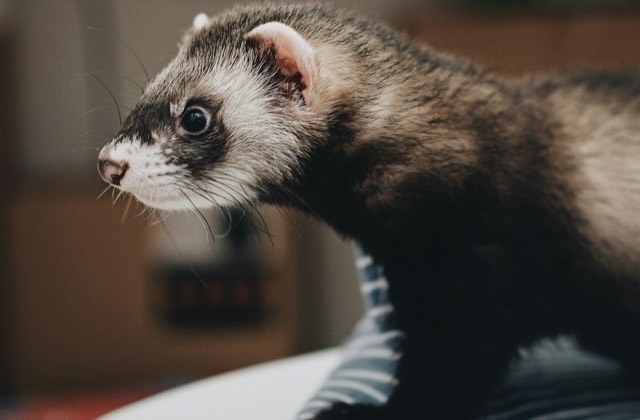
Ferret in an apartment: how to set things up properly
Published by Planète Pets · managing editor: Clément Lacaille · how our guides are written
Can you keep a ferret in an apartment? Yes, without any particular difficulty: ferrets do not need a garden, sleep 14 to 18 hours a day and are content with a well-secured living room. The real challenges of apartment life are organising the space, managing odours and keeping the neighbours happy.
Contents · 5 sections
How much floor space does a ferret really need?
A 25 m² studio can be enough if the animal gets out of its cage 3 to 4 hours a day. The essentials: a large multi-level cage (120 to 300 €) placed away from direct sun and draughts, and a secured play zone, even a partial one. A hallway fitted with tunnels and cardboard boxes becomes an excellent exploration ground. Our setup guidelines are in the ferret bedding and habitat category, and the trade-off between formulas is detailed in cage or dedicated room.
How do you manage odours in a small space?
- clean the litter box every day, using absorbent plant-based litter;
- wash hammocks and beds every week at 60 °C;
- enzymatic cleaner on any accidents outside the box;
- daily airing, without draughts blowing over the cage;
- neutering or an implant: the most effective measure against the musky smell.
A well-designed toilet setup changes everything: see our comparison litter box or pads. There is no point bathing the ferret, on the other hand: it strengthens the smell instead of reducing it.
Does a ferret disturb the neighbours?
No: ferrets are nearly silent. Their playful chuckles do not carry through a wall. The only notable noises are bowls being pushed around and bars rattled at dawn, easy to eliminate with a heavy bowl and a well-timed outing schedule. Simply check that your lease does not ban pets, which remains rare and debatable for a caged exotic pet.
What pitfalls are specific to apartments?
The balcony is danger number one: a ferret slips between the railings and has no sense of the drop. Netting is compulsory, or access is off-limits. Also beware of tilt-and-turn windows, service ducts and landing doors left ajar. Finally, prevent falls and escapes before the animal even arrives, following the priorities listed in the first-ferret mistakes.
Frequently asked questions
Can a ferret live without ever going outside?
Yes: outdoor harness walks are a bonus, not a necessity. Daily indoor exploration covers its needs.
Heat in an apartment: when should you worry?
Above 26 °C, ferrets suffer: shade, tiled floors, wrapped frozen bottles. If your ferret is listless and panting, contact an exotics vet urgently.
Should you notify your home insurance?
Your liability cover generally includes domestic exotic pets. A call to your insurer will confirm that the ferret is indeed included.
An accessory from our shop for this use: Double-layer plush hammock for rats, squirrels or ferrets (€18.90) · the whole shop
An accessory from our shop for this use: Rolling 4-level ferret and chinchilla cage with hammock ($159.90, ships from the US) · the US shop
This guide is part of Planète Pets’s Ferrets universe. Our advice is general in nature: for any health concern, your veterinarian remains the only reference.