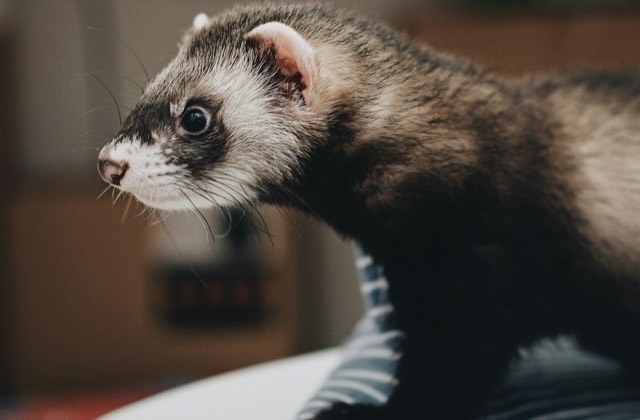
Hospital cage for ferrets: setting up for recovery after surgery
Published by Planète Pets · managing editor: Clément Lacaille · how our guides are written
A hospital cage for a ferret is a single-level recovery cage, with no upper floors or high hammocks, where the animal recuperates after surgery (neutering, mass removal, blockage) or during illness. A simple XL travel crate or a repurposed guinea-pig cage (€40 to €90) does the job, provided it is set up according to the exotics vet's instructions.
Contents · 5 sections
Why confine a recovering ferret?
A ferret bounces back fast and wants to leap everywhere the day after an operation: exactly what reopens sutures. Confinement in a low cage for 5 to 15 days (duration set by the exotics vet) prevents jumps, climbs and scuffles with cage mates. It also makes monitoring easier: in a big multi-level cage, there is no checking the stools, appetite or wound of an animal that hides.
How do you set up the hospital cage?
- a single level, solid floor covered with washable pads or towels changed daily;
- a low bed with a cut-down edge, no hammock: see our guide sleep sack or hammock to pick a flat model;
- low ceramic bowls, water at muzzle height, no bottle if the animal wears a cone;
- a litter box with a very low entrance (or a simple pad at first);
- a gentle heat source over half the cage: a small heating mat or a wrapped hot-water bottle, €15 to €30;
- a quiet spot, away from other animals, between 20 and 23 °C.
What should you monitor during recovery?
Three daily checks: the wound (redness, discharge, pulled stitches), the stools (present, consistent) and the appetite. A ferret that has had surgery must eat again within 12 to 24 hours; beyond that, alert the exotics vet, because hypoglycaemia strikes this species quickly. Meat-based recovery foods (€3 to €6 a sachet), warmed and syringe-fed if necessary, save many a situation. Note everything in a log: exotic pets decline in silence.
How do you manage the return to normal life?
Reintroduce short outings first, in a room secured ferret-proofing style with no climbing, then the return to the usual big cage once the stitches are out. With cage mates, a gradual reintroduction with scent swapping prevents the clinic smell from triggering a fight. Recovery equipment is in our ferret bedding and habitat comparison.
Frequently asked questions
How long should the ferret stay in the hospital cage?
From 5 days for a routine neuter to 2 or 3 weeks after digestive surgery: only the exotics vet's instructions count.
My ferret is scratching frantically to get out — what can I do?
Partially cover the cage, offer a safe chew toy and split the meals up. If the agitation threatens the wound, the vet can adjust the treatment.
Is the cone really necessary?
Many ferrets tolerate a protective bodysuit better than a cone. Ask your exotics vet for that option rather than removing the protection.
In our shop, for this use: Double-layer plush hammock for rats, squirrels or ferrets (€18.90) · the whole shop
In our shop, for this use: Rolling 4-level ferret and chinchilla cage with hammock ($159.90, ships from the US) · the US shop
This guide is part of Planète Pets’s Ferrets universe. Our advice is general in nature: for any health concern, your veterinarian remains the only reference.