Ferret-proofing: securing your home before letting your ferret roam free
Published by Planète Pets · managing editor: Clément Lacaille · how our guides are written
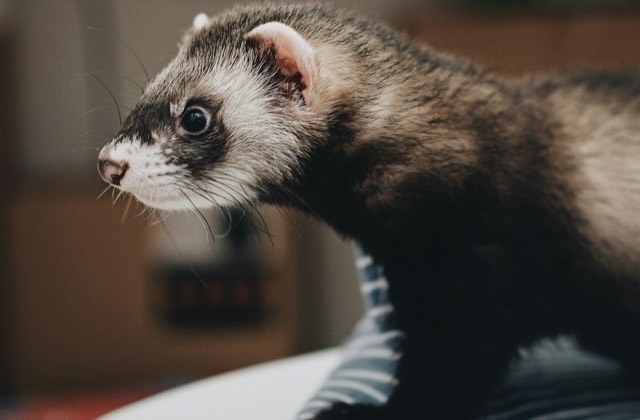
A free-roaming ferret is a ten-centimetre-tall detective, capable of slipping under a dishwasher, opening a cupboard and vanishing inside a sofa. Ferret-proofing — securing the home — is not optional: it is the precondition for stress-free daily outings. Here is the method, along with the equipment that helps.
Contents · 4 sections
Adopt the ferret's point of view
Get down on all fours and inspect the room from 10 cm above the floor: any gap wider than 3 cm is an open door to a ferret. The classic danger zones: underneath appliances, the backs of sofas and upholstered bed bases (ferrets tear open the fabric underneath and move in), ventilation ducts, gaps behind skirting boards, windows left ajar. Ferrets fall badly: balconies and windows are lethal hazards, not viewpoints.
The equipment that does the job
- Solid, smooth barriers at least 60 cm high (€30 to €60): baby gates with bars are useless — a ferret slips between them or climbs over;
- Plexiglass sheets or rigid panels (€10 to €25) to seal off the space under furniture;
- Cable covers and sleeves (€5 to €15): ferrets chew less than rabbits do, but a live cable remains a risk;
- Door stops and cupboard latches (€3 to €10): essential wherever household chemicals are kept;
- Fine mesh grilles for vents and the backs of appliances.
A realistic total budget for one dedicated room: €50 to €120.
Hunting down ingestion hazards
The number-one veterinary emergency in young ferrets is intestinal blockage caused by a foreign body: foam, latex, rubber, earplugs, shoe soles, elastic bands. Put away anything rubbery, check the condition of toys and tunnels every week and banish toxic plants (ficus, dieffenbachia, lilies) from the free-roam zone. If you suspect something has been swallowed, head straight to an exotics vet without waiting for symptoms.
A routine before every session
Ferret-proofing is never finished: before each free-roam session, do a quick sweep — windows closed, washing machine checked (ferrets love sneaking inside), dishwasher and fridge opened with care afterwards. Keep track of the animal's comings and goings, and teach it to come to the rattle of a treat tin: a reliable recall is worth more than any piece of equipment. Find our full selection in the ferret accessories category and our other practical guides on the ferret hub.
In our shop, for this use: Double-layer plush hammock for rats, squirrels or ferrets (€18.90) · the whole shop
This guide is part of Planète Pets’s Ferrets universe. Our advice is general in nature: for any health concern, your veterinarian remains the only reference.