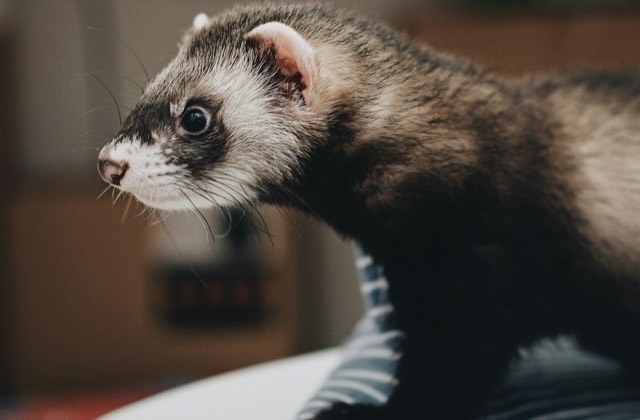
Zinc and ferrets: why galvanized wire and coins are a real danger
Published by Planète Pets · managing editor: Clément Lacaille · how our guides are written
Cage wire that rusts or dulls quickly isn't just an eyesore for a ferret owner: it's often a sign of zinc-galvanized coating, a metal this species is particularly sensitive to. Find all our setup guidance in the ferret bedding and habitat section.
Contents · 5 sections
What does research show about zinc toxicity in ferrets?
A study by Straube, Schuster and Sinclair, published in 1980 in the Journal of Comparative Pathology, fed ferrets diets containing 500, 1,500 and 3,000 parts per million of zinc for several months (see the study). The groups on the two highest concentrations developed severe signs of toxicity within one to two weeks, and ferrets on the 3,000 ppm diet died in under two weeks, with diffuse kidney lesions, intestinal haemorrhages and marked macrocytic hypochromic anaemia. The authors concluded that ferrets tolerate excess dietary zinc far worse than any other species studied up to that point.
Where does the risk come from day to day, beyond food?
- Galvanized wire, zinc-treated against corrosion, can be licked or chewed by a ferret exploring its cage with its teeth, a very common behaviour in this species.
- Coins minted after 1982 in several countries contain a very high proportion of zinc and pose an accidental ingestion risk during supervised free-roam time.
- Certain screws, buckles or parts of cheap toys are galvanized without the packaging making this clear.
How can you spot and avoid these materials?
A cage with epoxy-painted metal or stainless steel removes this risk, unlike raw or cheap galvanized wire; our guide to materials and paints to avoid in a ferret cage breaks down safe alternatives item by item. During supervised free-roam time, keeping wallets and loose change out of reach limits ingestion risk, alongside the other objects already flagged in our article on foreign body ingestion and intestinal obstruction in ferrets.
What signs should raise concern after suspected exposure?
Sudden lethargy, vomiting, dark urine or loss of appetite within hours of possible zinc exposure warrant an emergency vet visit, without waiting for more severe signs to appear.
Frequently asked questions
Does an old galvanized cage need replacing right away?
Not necessarily immediately if the ferret isn't actively chewing it, but a gradual replacement is still preferable, especially if the coating shows wear or flaking.
Does this study concern the zinc in commercial kibble?
No, commercial ferret kibble follows regulated zinc levels far removed from the toxic doses tested in this study, which aimed to establish an extreme danger threshold.
Do rubber toys carry the same risk?
No, the risk with rubber is mainly swallowed fragments, already covered in our guide to safe ferret toys and materials to avoid. Find all our guides in the ferret hub.
An accessory from our shop for this use: Double-layer plush hammock for rats, squirrels or ferrets (€18.90) · the whole shop
An accessory from our shop for this use: Rolling 4-level ferret and chinchilla cage with hammock ($159.90, ships from the US) · the US shop
This guide is part of Planète Pets’s Ferrets universe. Our advice is general in nature: for any health concern, your veterinarian remains the only reference.