Pain in Ferrets: The Subtle Signs Owners Often Miss
Published by Planète Pets · managing editor: Clément Lacaille · how our guides are written
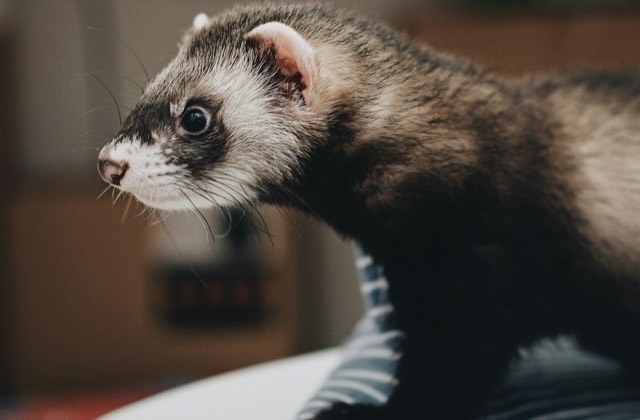
Ferrets are remarkably good at hiding pain, an instinct inherited from their status as occasional prey in the wild: showing weakness raises the risk from a predator. A Dutch research team developed a ferret grimace scale by comparing photographs of nineteen ferrets before and after surgical implantation of a telemetry probe, and found that tightening around the eyes was, on its own, the most reliable indicator for telling a painful animal from a resting one. Find more health pointers in the ferret care and grooming section.
Contents · 5 sections
Why pain so often goes unnoticed
Unlike a dog, which whines or limps openly, a ferret usually keeps an activity level and appetite close to normal even with real pain present, especially chronic or digestive pain. This discretion makes life harder for owners and vets alike, who have to rely on subtle signs rather than an obvious complaint.
Eye tightening: the most reliable indicator
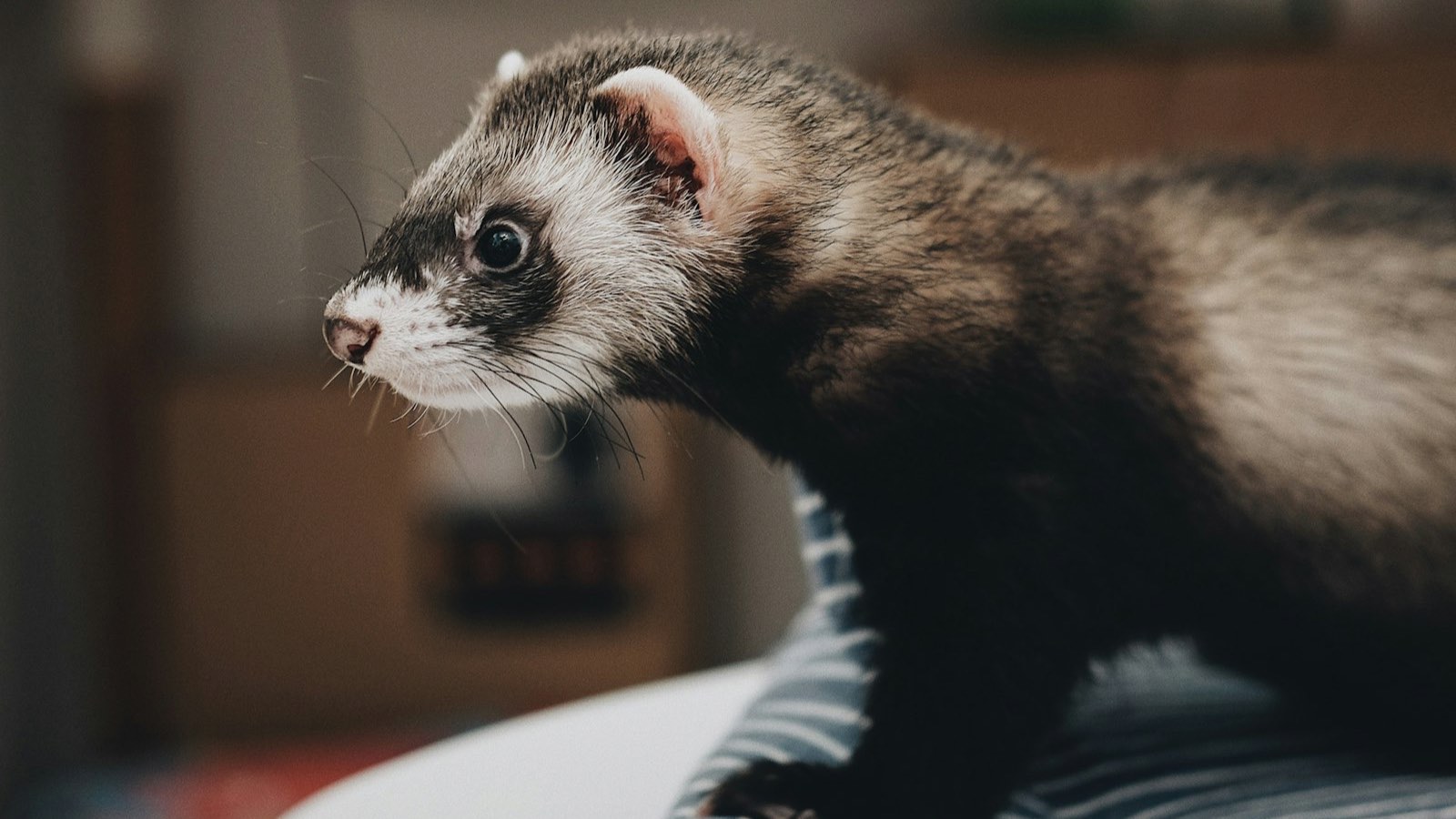
Among the five facial areas studied (orbital area, nose, cheeks, ears, whiskers), tightening around the eyes alone proved reliable enough to distinguish before-and-after photographs of a painful procedure with good accuracy. A ferret whose gaze suddenly looks more closed or tense, almost as if squinting, deserves close attention, especially if the change persists at rest.
Other behavioral signs worth watching
Beyond the face, reduced interest in play, a hunched or curled-up posture, refusing to be handled at one specific spot on the body, or unusually prolonged sleep even for an animal that already sleeps a lot, all rank among signs not to dismiss. These changes are often clearer over several days of observation than at a single moment.
What to do if a ferret seems to be in pain
A behavioral change combined with one or more of these signs warrants a vet visit rather than extended wait-and-see, since pain can point to anything from a digestive cause to a dental problem or an underlying disease. While waiting for the appointment, the basic supplies worth having on hand are covered in ferret first aid kit, and a senior ferret deserves closer attention as described in senior ferret care.
- Most reliable indicator: tightening around the eyes
- Other signs: hunched posture, localized refusal to be handled, unusually prolonged sleep
- Good habit: see a vet as soon as a change persists, rather than waiting for an obvious complaint
Frequently asked questions
Can a ferret still be in pain if it keeps eating?
Yes, appetite is often preserved despite real pain in this very discreet species; do not rely on that criterion alone.
Can owners use the grimace scale at home?
The authors note the tool still needs broader validation, but watching your ferret's eye area at rest already gives a useful baseline for spotting a change.
Does chronic pain look different from acute pain?
Yes, it often shows up as more subtle, gradual changes, such as a general drop in energy, rather than a sudden, localized sign.
See it in the Planète Pets shop: Bubble-window carrier backpack for dwarf rabbit, guinea pig or ferret (€47.90) · the whole shop
This guide is part of Planète Pets’s Ferrets universe. Our advice is general in nature: for any health concern, your veterinarian remains the only reference.