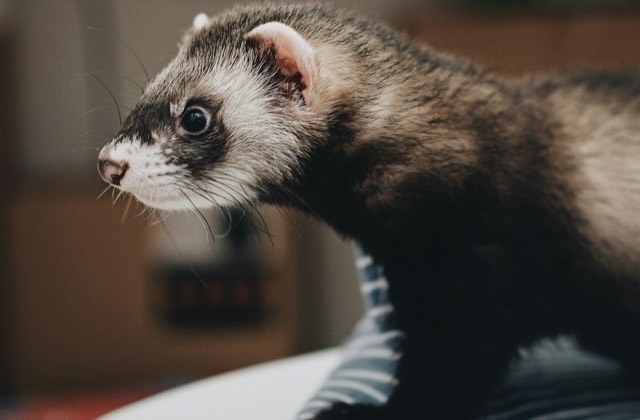
Senior ferret: what adjustments and care after age 4?
Published by Planète Pets · managing editor: Clément Lacaille · how our guides are written
How do you look after a senior ferret? From age 4 to 5, a ferret enters the second half of its life: it sleeps more, jumps less high and becomes prone to chronic diseases. Three projects are in order: lowering and securing its habitat, adjusting its diet and doubling the check-ups at the exotics vet.
Contents · 5 sections
How do you adapt an older ferret’s cage?
Arthritis and muscle weakness make upper levels dangerous. Rearrange things: hammocks hung low (15 cm off the floor at most), gentle ramps instead of ladders, non-slip fleece mats on the platforms, a litter box with a low entrance (5 cm rim). A bed at floor level prevents night-time falls. This equipment costs 20 to 50 € and can be found in our ferret care and grooming selection.
Should you change a senior ferret’s diet?
Ageing ferrets often lose appetite and muscle. Keep a ration very rich in animal protein, split it into several small meals, and moisten the kibble if the teeth are tiring. Home-made or shop-bought meat soups (2 to 4 € per portion) rescue many an old ferret’s appetite. Weigh the animal every week: a 10 % weight loss warrants an exotics consultation without delay.
What vet monitoring after age 4?
- two visits per year to an exotics vet, instead of one;
- annual blood panel with blood glucose: 60 to 120 €;
- insulinoma watch: weakness, drooling, staring into space;
- adrenal disease watch: hair loss on the tail and back;
- dental check and nail trims, as claws wear down less with reduced activity.
These expenses climb with age: our article on the ferret vet budget helps you anticipate them calmly.
How do you keep the animal active without exhausting it?
A senior still plays, in 10 to 20 minute sessions: short tunnels, gentle digging in a ball pit, exploration at its own pace. Cut out jumping games and keep an eye on cohabitation with an overly insistent young ferret, arranging separate nap spots. Heat also becomes harder to regulate: keep the room below 24 °C.
Frequently asked questions
At what age is a ferret considered senior?
Around 4 to 5 years old, for a life expectancy of 6 to 10 years. Some ferrets are still lively at 7: trust the behaviour as much as the age.
My old ferret sleeps almost all day, should I worry?
Sleeping 18 to 20 hours becomes normal. What should raise the alarm: difficulty waking, disorientation or refusing food, to be reported to the exotics vet.
Should you adopt a young ferret to stimulate a senior?
It cuts both ways: the stimulation is real, but so is the exhaustion. If you try the pair, give the senior refuges the youngster cannot reach.
See it in the Planète Pets shop: Bubble-window carrier backpack for dwarf rabbit, guinea pig or ferret (€47.90) · the whole shop
This guide is part of Planète Pets’s Ferrets universe. Our advice is general in nature: for any health concern, your veterinarian remains the only reference.