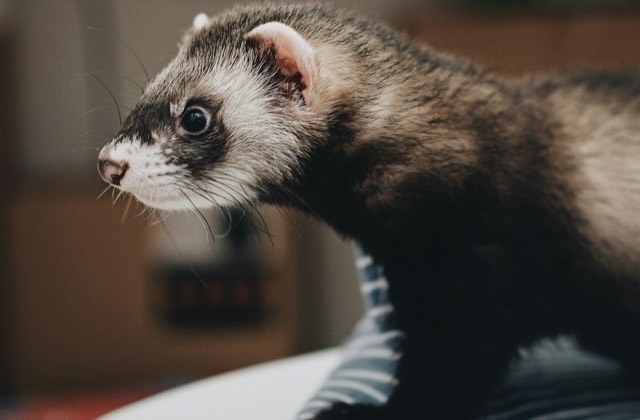
Ferret odor: why neutering changes everything
Published by Planète Pets · managing editor: Clément Lacaille · how our guides are written
The musky odor commonly associated with ferrets does not mainly come from the anal glands, contrary to a persistent myth, but from sebum produced by numerous sebaceous glands spread across the skin. A study in behavioral physiology on domestic ferrets (Mustela putorius furo) showed that sex steroids directly modulate scent-marking behavior and the intensity of this production. Find our other health pointers in the ferret care and grooming section.
Contents · 4 sections
A hormonal mechanism, not just a hygiene issue
In an intact ferret, testosterone and estrogens stimulate sebaceous gland activity, thickening the coat's oily film, slightly yellowing the fur and intensifying the odor, especially during the breeding season. This is a normal physiological process, not a hygiene failure: no amount of bathing, however frequent, can durably offset this hormonal drive. We detail complementary good habits in managing ferret odor.
What neutering actually changes
By removing the hormonal source, surgical neutering or a deslorelin implant markedly reduce sebaceous gland activity: the coat becomes drier and softer, and the background odor noticeably fades within a few weeks. This is not a total removal — a neutered ferret keeps a light, natural musky smell — but the gap with an intact animal is clear. Both neutering options are compared in deslorelin implant or surgical neutering.
Do not mistake it for a skin problem
An odor that suddenly worsens after neutering, especially alongside symmetric hair loss, should raise concern: it points more toward adrenal disease than a simple sebaceous phenomenon and calls for a vet visit rather than another bath. A vet can tell the two apart with a simple clinical exam, sparing you needless trial and error with grooming products.
Frequently asked questions
Does a neutered ferret really smell like nothing?
It keeps a light, natural musky smell typical of the species, but much fainter than an intact animal during breeding season.
Does bathing reduce sebum production?
No: bathing too often has the opposite effect, as it pushes the glands to overcompensate for the lost skin oil.
Should you neuter just for the smell?
No, odor is only one benefit among others: the decision should mainly weigh the ferret's health and the risk of adrenal disease at its age.
An accessory from our shop for this use: Bubble-window carrier backpack for dwarf rabbit, guinea pig or ferret (€47.90) · the whole shop
This guide is part of Planète Pets’s Ferrets universe. Our advice is general in nature: for any health concern, your veterinarian remains the only reference.