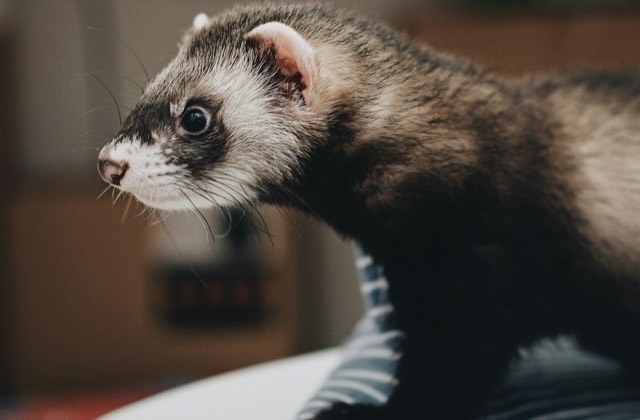
Play biting in ferret kits: how bite inhibition is learned
Published by Planète Pets · managing editor: Clément Lacaille · how our guides are written
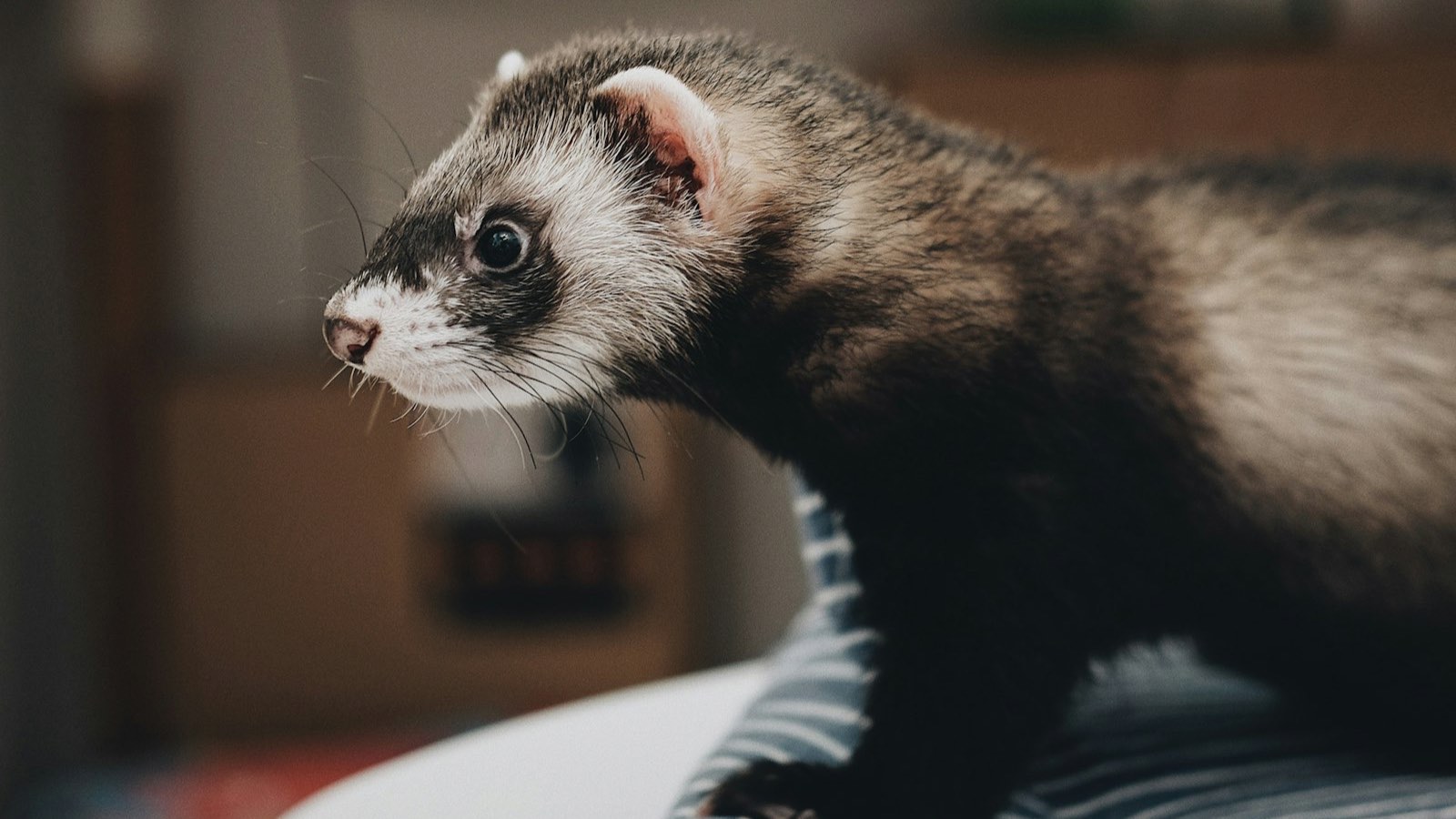
Ferret play — chases, hip-bumps, neck bites — naturally includes inhibited bites: a classic feature of domestic ferret (Mustela putorius furo) ethology, documented as early as the 1960s in a foundational study on the development of social behavior in this species. Find more play ideas in the ferret toys and enrichment section.
Contents · 4 sections
A lesson learned before weaning
It is by playing with its mother and littermates that a ferret kit learns to gauge the force of its bites: when it bites too hard, the bitten littermate squeals and stops playing, which naturally teaches the limit not to cross. A kit separated from its litter too early, before eight to ten weeks, often misses this essential lesson and arrives at its new home with incomplete bite inhibition.
What to do with a ferret that bites too hard while playing
The most effective response to an overly hard bite mirrors what a littermate would do: a short, sharp yelp, followed by immediately stopping the game and a brief time-out, without scolding or physical punishment. Applied consistently by the whole family, this method can recover much of the missed inhibition within a few weeks. Our ideas for suitable toys to channel this energy are gathered in ferret toys and tunnels.
Planning ahead before adoption
Before adopting, it is worth asking the breeder or shelter about the litter's weaning age and observing how the kit behaves with its littermates: an animal that already plays gently with them starts off ahead. Whether to get a same-species playmate is also worth considering, as we discuss in one ferret or two.
Frequently asked questions
Does my adult ferret still bite from a lack of inhibition?
It is possible if it was weaned very early or poorly socialized; the yelp-and-time-out method still works at any age, just with a bit more patience.
Should you pull your hand away when it bites hard?
No, that reflex often encourages the game to continue as if you were prey; better to stay still, yelp and stop the play.
Does a second ferret help fix the problem?
Often yes, since it reintroduces an immediate, consistent response when a bite is too hard, something a human finds harder to reproduce.
An accessory from our shop for this use: 2-in-1 felt tunnel and hideout for rabbits and ferrets (44 × 60 cm) (€37.90) · the whole shop
An accessory from our shop for this use: Electric pet heating pad 45 × 45 cm (17.7 in) with chew-resistant cord ($48.90, ships from the US) · the US shop
This guide is part of Planète Pets’s Ferrets universe. Our advice is general in nature: for any health concern, your veterinarian remains the only reference.