Toys and enrichment for your ferret

Boredom is the leading cause of behaviour problems in any ferret. Toys, occupation and environmental enrichment are not luxuries: they are needs. Our guides compare durability, safety and real-world interest — the kind your animal will still care about in a month.
🛒 Our picks from the shop
-
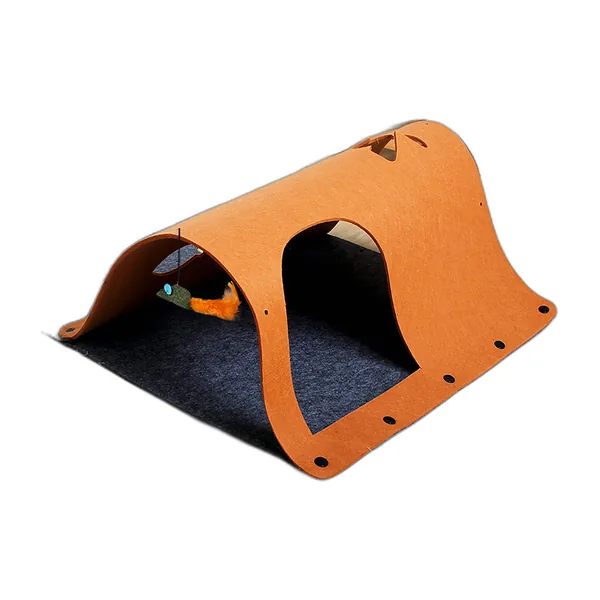 2-in-1 felt tunnel and hideout for rabbits and ferrets (44 × 60 cm)
€37.90
Choose an option -
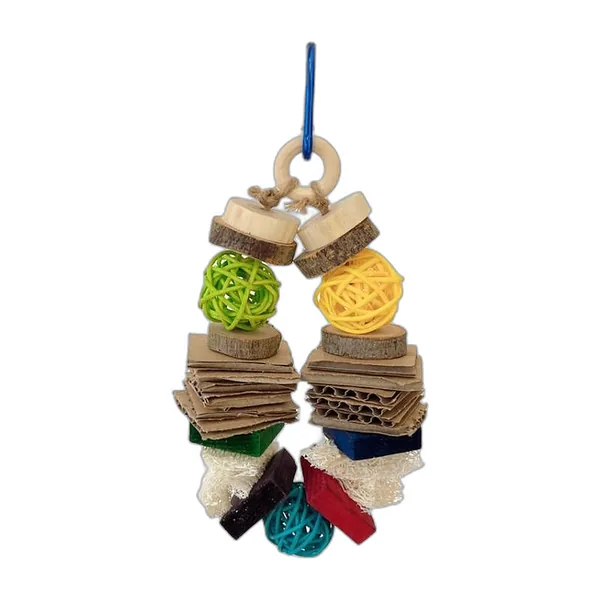 Hanging chew garland for rabbits and rodents
€17.90
Choose an option -
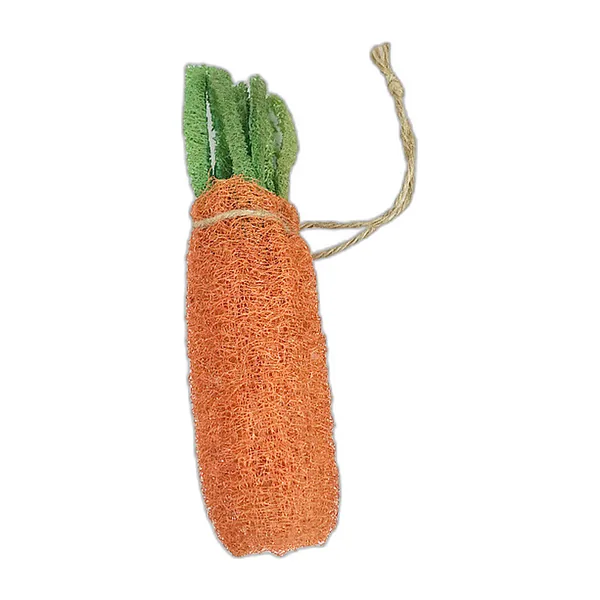 Natural loofah chew carrot for rabbits and rodents, 20 cm
€17.90
Delivery in 8 to 15 working days, free from €49 (otherwise €4.90). See the whole shop
🛒 Our picks shipped from the US
-
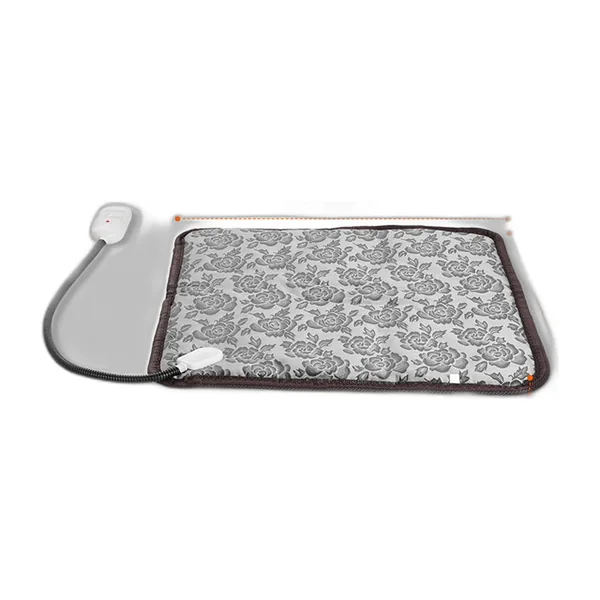 Electric pet heating pad 45 × 45 cm (17.7 in) with chew-resistant cord
$48.90
-
 Rolling 4-level ferret and chinchilla cage with hammock
$159.90
-
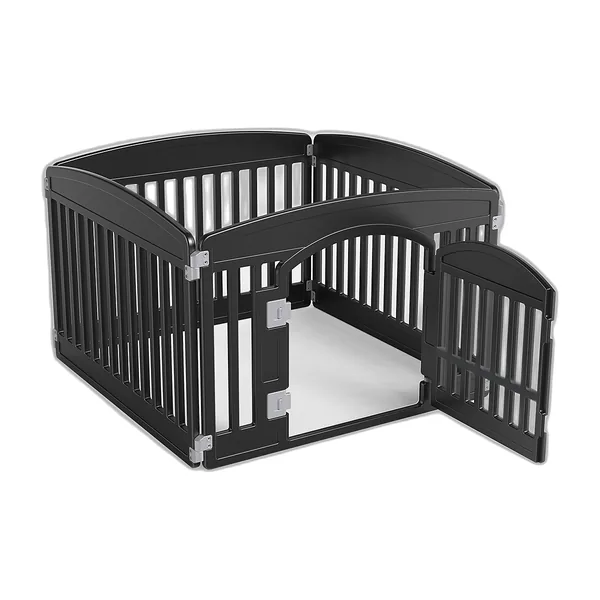 Modular plastic playpen for puppies and rabbits, 4 or 6 panels
from $87.90
Choose an option
Ships from a US warehouse in 4 to 10 business days, free delivery within the United States. See the US shop
The key point : Tunnels, balls, dig boxes: two to four hours of play and free time a day, or the cage becomes a prison.
Read first
Our dedicated guides
- Bell and sound toys for ferrets: engaging their sharpest sense
Wide hearing range, sharp sensitivity to high frequencies: what research shows about ferret hearing and how to choose the right sound toys.
- Which toy colors can a ferret actually tell apart?
Dichromatic vision, limited acuity: what research shows about ferret eyesight and how it should shape the toys you choose.
- Hammock, water bowl, or foraging toy: what ferrets actually prefer
A study with progressively weighted doors measured how hard ferrets will work for each type of enrichment — the results are surprising.
- Extraversion, sociability: what research says about ferret personality
743 owners, over 1,000 ferrets assessed: what research shows about the four main personality dimensions in ferrets.
- Hammock, bowl or dig box: which enrichment to prioritize according to a Dutch study on ferrets
A seven-chamber Dutch study reveals the real hierarchy of ferret enrichment preferences, from the hammock to foraging.
- Does a ferret recognize its owner? What a study comparing it to dogs reveals
A Hungarian study comparing ferrets, dogs and wild hybrids shows that ferrets form a genuine bond with their owner and follow their gestures, a basis for interactive enrichment.
- Ferret tooth fracture: the link with biting cage bars
A study on rescued ferrets found a high rate of canine tooth fractures, linked to biting cage bars: a case for rethinking the chew toys on offer.
- Is the ferret nocturnal? Understanding its crepuscular activity rhythm
Ferrets are often thought to be nocturnal. In reality they are mostly crepuscular and sleep enormously. Understand their activity rhythm to adapt play, outings and family life.
- Indoor ferret playpen: choosing an enclosure that is truly escape-proof
Minimum height, solid panels, protected floor: how to choose an indoor ferret playpen that resists escapes, with models from €40 to €120.
- XXL tunnels and modular play circuits for ferrets: building a hazard-free maze
Minimum 10 cm diameter, rigid PVC, bends and junctions: choosing XXL tunnels and modular play circuits for ferrets, from €15 to €80 depending on length.
- Dig box for ferrets: balls, rice, soil — what can safely go inside?
Plastic balls, rice, cork granules or potting soil: which filling to choose for a ferret dig box, the safety rules and a budget of €20 to €50.
- Safe ferret toys: why latex and foam are off the list
Latex, foam, soft rubber: these materials cause intestinal blockages in ferrets. How to recognise safe toys and which to buy between €5 and €20.
- Play biting in ferret kits: how bite inhibition is learned
In ferret kits, bite inhibition is mostly learned from the mother and littermates before weaning. Understanding this mechanism helps you respond better to play biting after adoption.
- Paper Bags and Cardboard: The Free Enrichment Ferrets Genuinely Love
No need to buy everything: kraft paper bags, cardboard boxes and empty tubes make safe, free enrichment that ferrets genuinely enjoy. How to use them without risk.
- Puzzle-Style Kibble Dispensers for Ferrets: Are They Worth It?
A puzzle feeder taps into a ferret's digging instinct and slows down fast eaters. What a UK survey on ferret enrichment found, and how to use one well.
- Play fighting or real aggression between ferrets? What a landmark polecat study teaches
A landmark study on the behavior of European polecats, the ferret's wild ancestor, spells out precisely which signals separate play fighting from real aggression.
- What enrichment do ferrets actually get? A multi-sector survey of owners, labs and shelters
A survey spanning pet owners, labs, zoos and shelters compares the enrichment ferrets actually receive across settings, useful insight into what's most often missing at home.
- A mirror for ferrets: what a study on their reaction to their own reflection shows
A study tested how ferrets react to a mirror: approach, sniffing and self-exploration, without proof of true self-recognition. What this means for using one as enrichment.
- Frustration and repetitive behaviour in farmed mink: what a landmark study teaches about ferret enrichment
A study published in Nature links the lack of access to natural activities like foraging or swimming to stereotypic behaviour in farmed mink, a strong signal for ferret enrichment, since this fellow mustelid is also driven by active foraging.
- Exercise wheel for a ferret: why it is a bad idea
Is an exercise wheel useful for a ferret? Why this rodent accessory is unsuitable, and which alternatives actually get a ferret running.
- Ferrets and children: from what age and with which rules?
Is a ferret compatible with children? Recommended age, handling rules, suitable games and mistakes to avoid for peaceful family life.
- Surgical or chemical neutering: what a landmark study shows about ferret play and aggression
A Dutch study compared intact, surgically neutered and chemically neutered male ferrets: it clarifies what neutering actually changes about aggression, sexual behaviour and, above all, the drive to play.
- Why varying treat hiding spots stimulates a ferret, according to a foraging-learning study
A study showed that ferrets adjust their search strategy depending on how food is spread out, a good reason to rethink how a dig box or snuffle mat is arranged.
- Why does a ferret explore everything without fear? What a comparative polecat study reveals
A landmark study compared exploratory behaviour in the domestic ferret, the wild polecat and their hybrids: domestication markedly changes how the animal relates to novelty and to humans.
- Does daily playtime really reduce boredom in ferrets? What a laboratory study shows
A study in a laboratory setting compared ferret behaviour with and without daily playtime: signs of boredom dropped markedly after one hour of play.
- Fearful or nippy ferret at adoption: how to earn its trust without rushing it
A skittish ferret that nips at adoption isn't a lost cause: the gradual method that works, backed by what research shows about ferret socialisation.
- Senior ferret: adapt play and enrichment to sensory decline instead of cutting it back
Fading vision and smell, less interest in familiar toys: what a veterinary review on brain ageing teaches about adapting enrichment for the senior ferret.
- Does your ferret actually hear that bell toy? What hearing research shows
Ferret hearing peaks between 8 and 12 kHz, well above the range where human hearing is sharpest. What a landmark study changes about choosing sound toys and locator bells.
- Punishing a ferret for stealing or biting: why it makes the problem worse
Yelling, flicking the nose, an abrupt time-out: why punishing a ferret that steals or bites doesn't correct anything, and what actually builds trust instead.
- Enrichment and aggression between ferrets: what a behavioural study shows
Hammock, water bowl, foraging ball: a Dutch study measures the real effect of enrichment on tension between cohabiting ferrets.
- Domestic ferrets and wild polecats: what a comparative study reveals about domestication
A landmark study compares domestic ferret behaviour to that of the wild polecat — with direct consequences for enrichment needs.
- The ferret's "dook": what this little chuckle reveals about its well-being
A scientific study shows that the ferret's signature chuckle, or "dook," is a reliable indicator of its psychological well-being during play.
- Can a ferret learn like a detection dog? What a study shows
A study trained ferrets to flag a specific odor through positive reinforcement, with real success — a fresh look at what this animal can learn at home.
- Does a daily play session really reduce a ferret's boredom? What a study shows
A laboratory study compared ferret behavior with and without a daily play session, with results that support the value of active playtime over toys simply left in the cage.
- Treat dispensers for ferrets: which ones actually work?
Treat dispensers for ferrets: which models really engage the digging instinct without frustrating or overfeeding your fuzzy.
- Dig boxes for ferrets: what a UK survey reveals about the most-loved enrichment
A survey of 754 ferret keepers ranks enrichment by observed enjoyment. The dig box comes in second place, just behind tunnels.
- Keeping a ferret busy all day while you're at work
How to keep a ferret busy alone for a full workday: cage setup, suitable toys and a routine that limits boredom.
- Why does my ferret dig mostly in the evening? What a wild black-footed ferret study reveals
In wild black-footed ferrets, nocturnal digging sessions last close to two hours on average — reason enough to rethink your ferret's dig box.
- Ferrets and catios: building a secure outdoor enclosure
Outdoor catio-style enclosure for a ferret: materials, escape-proofing and predator-proofing for safe time in the garden.
- Snuffle mats for ferrets: scent enrichment against boredom
Why foraging ranks among ferrets' top enrichment preferences according to research, and how to introduce a snuffle mat safely.
- Toys and tunnels for ferrets: the essentials of a happy little explorer
Tunnels, balls, puzzle toys: how to enrich a ferret's daily life, which materials to avoid and how much to budget for a complete starter set.