Toys and enrichment for your fish

Boredom is the leading cause of behaviour problems in any fish. Toys, occupation and environmental enrichment are not luxuries: they are needs. Our guides compare durability, safety and real-world interest — the kind your animal will still care about in a month.
🛒 Our picks from the shop
-
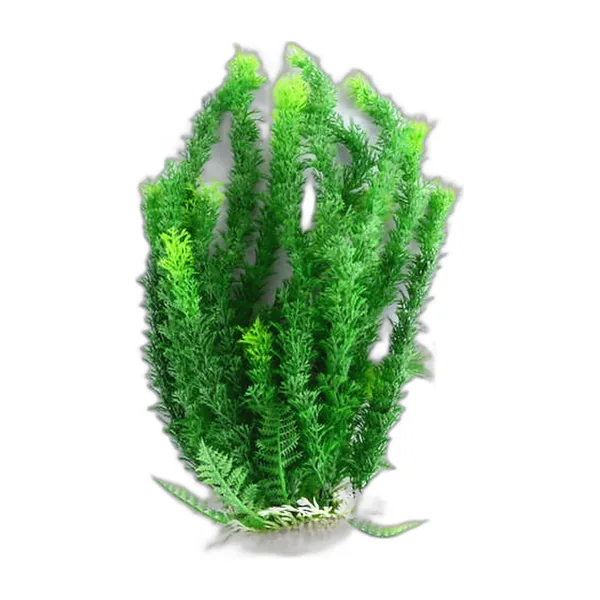 Tall artificial aquarium plant, 45 to 49 cm, weighted base
€23.90
Choose an option -
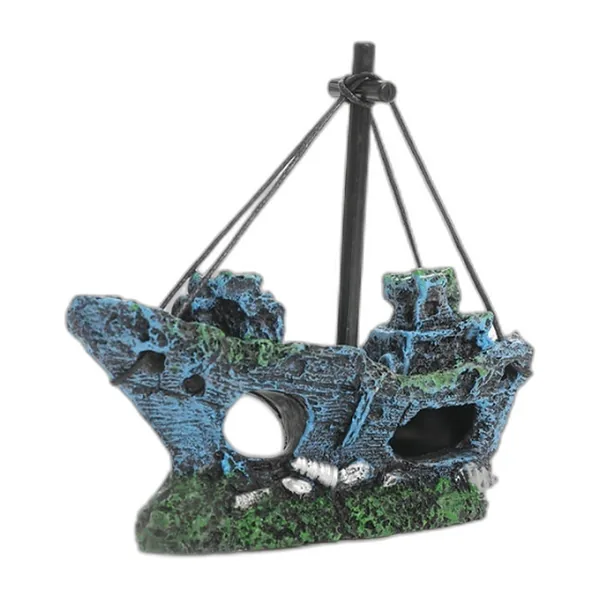 Resin shipwreck hide for aquariums, 4 models
from €26.90
Choose an option
Delivery in 8 to 15 working days, free from €49 (otherwise €4.90). See the whole shop
The key point : A tank’s enrichment is its plants, wood and hiding places: thoughtful hardscape reduces stress and aggression.
Our dedicated guides
- Best easy aquarium plants without CO2 for beginners
Which aquarium plants can you choose without CO2 injection? A selection of hardy, easy plants for a beginner's planted tank.
- Floating aquarium plants: which ones to choose and why?
Water lettuce, duckweed, salvinia: which floating plants should you choose for your aquarium, and what benefits do they bring?
- Hiding Spots and Enrichment for Shy or Stressed Fish
How do you reduce stress in a shy fish? Hiding spots, broken sightlines and a stable layout: the basics of aquarium enrichment.
- Fertilizer and CO2 for aquarium plants: start simple, skip the lab setup
Do aquarium plants need fertilizer and CO2? The simple starter method: liquid fertilizer, easy plants, and when injected CO2 actually becomes worthwhile.
- Driftwood and rocks for aquariums: which ones are safe for your fish?
Which driftwood and rocks are safe in an aquarium? Tannin-releasing woods, limestone rocks to avoid, the vinegar test and preparation: the complete guide.
- Sand or fine gravel for the aquarium: which substrate to choose?
Sand or fine gravel for your aquarium? Sand suits bottom-sifting fish, gravel makes maintenance easier. Complete comparison with prices per litre.
- Low-tech aquarium: the method to save money without shortchanging the fish
The low-tech aquarium bets on plants rather than technology: no CO2, sometimes no heater, reduced maintenance. Budget, suitable species and setup method.
- The Goldfish's Three-Second Memory: A Persistent Myth
No, a goldfish doesn't forget everything in three seconds. Science shows a far more developed memory, with real implications for enrichment.
- Boldness and Shyness in Guppies: A Real Personality
Some guppies explore without hesitation, others stay tucked behind a plant. Science confirms a stable personality in this popular fish.
- Can Fish Count? What a Study on Numerical Discrimination Shows
A behavioral study reveals that some fish instinctively distinguish the larger group, a reflex tied to survival against predators.
- Can an Archerfish Really Recognize a Human Face?
A study shows archerfish can distinguish human faces they have never seen before, a cognitive skill that informs tank enrichment.
- Can a Fish Learn Tricks? What Cognitive Training Studies Show
A rainbow trout study shows an enriched environment improves learning ability, an argument for stimulating your fish.
- 3D-Printed Aquarium Decor: Which Plastics Are Safe for Fish?
A 3D-printed cave, tower or reef: not all plastics are equal in an aquarium. Here's what's safe and what to avoid.
- The Cleaner Wrasse and Its Cleaning Station: A Case Study in Cooperation
On the reef, some fish clean others of their parasites in exchange for food: an example of cooperation closely studied by scientists.
- Feeding Enrichment Devices: What the Science Says About Foraging in Fish
Delivering food in a way that requires a bit of searching stimulates a fish far more than food dropped into the tank all at once.
- Decor, plants, rocks: what research says about structural enrichment
Hiding spots, plants and relief are not just decoration: a scientific review looks at what structural enrichment actually changes for fish welfare.
- Should you regularly change the aquarium's decor?
Rotating rocks, plants or hiding spots can stimulate fish used to a fixed layout — but a poorly handled change can also destabilise an established territory. How to tell the difference.
- Does mineral decor in a fry tank really change their brain?
Raising fry in a completely bare tank is common practice among fishkeepers. Two studies on young salmon show that a handful of stones on the bottom is enough to alter cerebellum growth and learning ability.
- Does a guppy prefer effort or ease? What the puzzle-feeder study shows
A foraging feeder that requires effort is often presented as ideal enrichment. A study on guppies shows the fish choose the most easily accessible food first, before turning to the toy.
- Does a structured decor make a danio shoal less aggressive? What a study found
A near-empty tank is easier to clean, but a study on danios shows a structured decor markedly reduces aggression between fish and how much dominant fish monopolize food.
- Does enrichment really protect a tank from chronic stress? A study on zebrafish
A fish exposed to repeated, unpredictable stress develops anxiety and a measurable physiological imbalance. A study on zebrafish shows an enriched tank markedly blunts these effects.
- Easy aquascaping: putting together a natural decor with no experience
Beginner aquascaping: three viewing planes, one focal point and a hierarchy of sizes are enough for a harmonious natural decor, no fancy gear or budget needed.
- Territorial cichlids: what a structured decor actually does to aggression
In the pearl cichlid, an aquarium enriched with rocks and driftwood allows cohabitation without injury where a bare tank almost always triggers a fight. A study runs against the most common intuition.
- Guppies: how much enrichment does the tank actually need?
A study compares three decor levels in guppies: none, 25% coverage and 75% coverage. Natural behaviours rise with more decor, but an unexpected side effect shows up at the richest level.
- Fry killing each other: tank colour and shelter change the outcome
A study on fish larvae shows that wall colour and shelter type strongly change how much fry attack each other — a practical lever to cut losses in a rearing tank.
- Aquarium light color: do fish actually have a favorite?
A landmark zebrafish study found a light color that dominates one test and loses its edge in another. Reason enough to be wary of lighting sold as “fish-preferred.”
- Structured décor in aquariums: a study compares how two species actually use it
A choice-test study finds zebrafish and checker barbs spend most of their time in a decorated compartment rather than a bare one — but not in the same way for each species.
- A laser pointer on the aquarium glass: what the researchers actually saw
Of 66 species tested, 58 reacted to the moving dot — the betta never did. And in the keenest, interest faded within two weeks.
- Should you play music to your fish? What a study on zebrafish and guppies found
A study tested four kinds of music on zebrafish and guppies: some lowered cortisol, others raised it. Tempo mattered more than genre.
- What background colour for an aquarium? What a goldfish study measured
White, black, blue or red: the aquarium's background colour is not just a decoration choice. A goldfish study measures its effect on growth, immunity and cortisol.
- Artificial plants in the aquarium: a real benefit for fish, or just less room to swim?
A year-long study on zebrafish found no measurable benefit from artificial plants on stress or reproduction — but did find reduced swimming space. What that actually means.
- Zebrafish aggression: does tank density matter more than decor?
A study comparing three rearing densities in zebrafish found that density outweighs enrichment by far when it comes to aggression — with a counter-intuitive twist.
- A guppy finds food faster by watching its tankmates, field study shows
Wild guppies in Trinidad preferentially enter the feeder already associated with a shoal of conspecifics. Group living passes on information, not just company.
- A clownfish without an anemone in the aquarium: what chemical host recognition reveals
A study showed that clownfish chemically recognise their host anemone as early as the end of their larval stage — a reason to question whether an artificial decoration truly replaces it.
- Mirror for a betta: useful stimulation or needless stress?
A mirror shown to a betta triggers an impressive display, but this stimulation must stay brief and rare to avoid tipping into chronic stress.
- Toys and enrichment for goldfish: what can you safely offer?
Floating rings, target training, varied decor: how to enrich a goldfish's daily life without risking ingestion or injury.
- Does a simple PVC pipe in the tank reduce zebrafish stress? What a study found
A study compared zebrafish raised with or without a simple PVC pipe over 90 days, then measured their stress response when moved to an unfamiliar tank.
- Live or Artificial Plants: What Should You Choose to Decorate Your Aquarium?
Real or artificial plants in an aquarium? Benefits, maintenance, easy species and budget: our comparison for a tank that is beautiful, healthy and enriching.
Toys & enrichment breed by breed: every fish profile covers this product family with that species’ own figures.