Low-tech aquarium: the method to save money without shortchanging the fish
Published by Planète Pets · managing editor: Clément Lacaille · how our guides are written
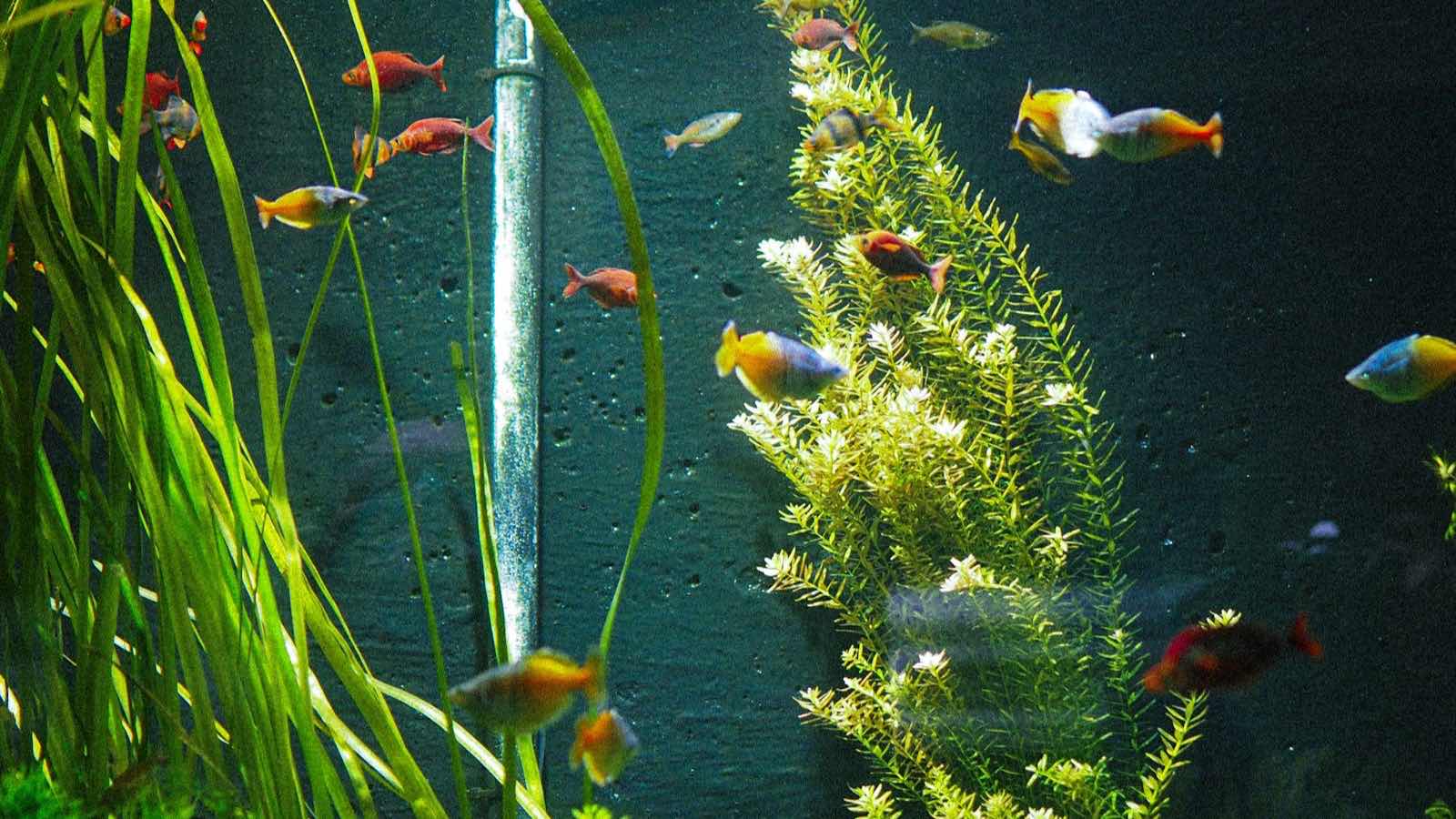
The low-tech aquarium replaces technology with plants: plenty of fast-growing vegetation, a rich substrate, moderate lighting, no injected CO2, and often no heater. The result: 5 to 8 € in monthly costs instead of 15 to 25, and maintenance cut in half. This isn’t organised neglect — it’s an ecosystem designed to balance itself.
Contents · 5 sections
How does a low-tech tank stay balanced without technology?
The plants do the equipment’s job: they absorb ammonia and nitrates (reducing the need for heavy filtration and water changes), oxygenate the water and starve the algae of nutrients. The condition: plant densely from day one — at least 60 to 70 % of the substrate — with fast-growing species. The plant decor becomes the main equipment, the heart of our plants and decor category.
Which plants and which substrate to start with?
- Floating plants: limnobium, duckweed — the system’s nitrate pumps.
- Fast stem plants: ceratophyllum, egeria, hygrophila (2 to 4 € a bunch).
- Unkillables: anubias, Java fern, Java moss on driftwood.
- Substrate: aquatic soil or nutrient substrate under 3 cm of sand or fine gravel, 25 to 40 € for 100 litres.
- Total plant budget: 30 to 50 €, or next to nothing via cuttings from an aquarist club.
Can you really do without a heater and CO2?
Without CO2, yes, by definition: you accept slower growth and choose undemanding plants. Without a heater, often: in a room at 19-21 °C, temperate-water fish (danios, White Cloud Mountain minnows) and most shrimp thrive. It’s the biggest electricity saving, costed in our monthly cost of an aquarium. A modest filter remains recommended for circulation, even though some very heavily planted tanks do without.
What maintenance is left in a low-tech tank?
A plant trim every two or three weeks, a 10 to 15 % water change every fortnight, and tests early on to validate the balance. The population must stay light: that’s the price of peace of mind. In return, the tank shrugs off a two-week absence — no small advantage at holiday time.
Frequently asked questions
Is low-tech suitable for a complete beginner?
Yes, it’s even an excellent school: less equipment to manage, more observation. The only requirement is patience during the 2 months it takes the balance to settle in.
Can the lighting be low-cost too?
A 10 to 20 W LED is enough for easy plants, 7 to 8 hours a day. Some tanks near a window with indirect light almost manage on that alone, at the cost of keeping an eye on algae.
Which fish should absolutely be avoided in low-tech?
Heavy polluters (goldfish, medium cichlids) and plant uprooters: they destroy the plant balance that holds the whole system together.
See it in the Planète Pets shop: Tall artificial aquarium plant, 45 to 49 cm, weighted base (€23.90) · the whole shop
This guide is part of Planète Pets’s Fishkeeping universe. Our advice is general in nature: for any health concern, your veterinarian remains the only reference.