Toys and enrichment for your cat
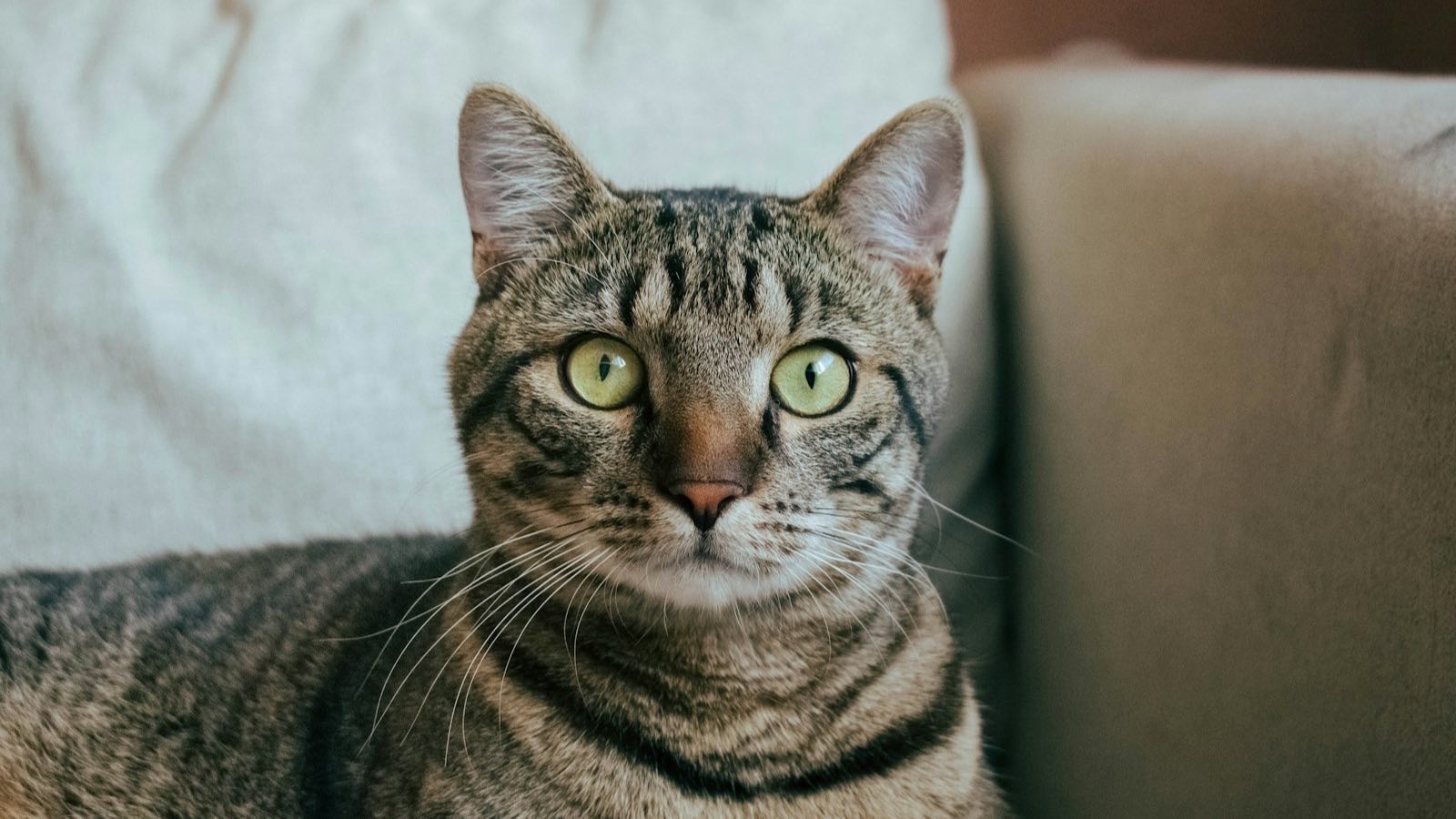
Boredom is the leading cause of behaviour problems in any cat. Toys, occupation and environmental enrichment are not luxuries: they are needs. Our guides compare durability, safety and real-world interest — the kind your animal will still care about in a month.
🛒 Our picks from the shop

Delivery in 8 to 15 working days, free from €49 (otherwise €4.90). See the whole shop
The key point : Fifteen minutes of hunting play a day (wand toys, circuits) is enough to turn a frustrated indoor cat into a contented flatmate.
Our dedicated guides
- A window bird feeder: real enrichment for an indoor cat
Why set up a bird feeder outside an indoor cat's window: behavioural benefits, safe installation, and budget.
- Cat Toy Subscription Boxes: Good Deal or Pricey Gimmick?
Monthly toy boxes for cats promise novelty and surprise, but are they really worth it compared with buying toys yourself? Here's our comparison.
- Bengal Cats: Channeling Their Energy with the Right Toys
The Bengal cat is a bundle of energy: which toys and play routine help channel such an active cat without frustrating it or fuelling mischief?
- Play Tunnel or Automatic Ball: Which Toy for a Cat Home Alone
Play tunnel versus automatic ball toy for a cat left alone during the day: what research on feline preferences actually shows.
- Food puzzles for cats: the best intelligence toys
Food puzzles for cats, treat balls, activity boards: how to choose them, difficulty levels and prices from 5 to 30 €.
- Laser toys and automatic cat toys: how to use them well
Are laser toys dangerous for cats? Usage rules, frustration, rotating automatic toys, motorised teasers and prices from 8 to 45 €.
- Cat exercise wheel: mistakes to avoid before investing in this bulky accessory
The hamster-style exercise wheel for cats appeals to owners of very active breeds, but it's a bulky, costly purchase. Size, space and how well the cat takes to it: the mistakes that lead to regret.
- Silvervine (matatabi): the catnip alternative for cats who don't respond to it
Roughly a third of cats show no reaction to catnip. Silvervine, a Japanese vine, triggers a different compound and wins over almost every cat.
- Why my cat loses interest in toys so fast (and how to bring it back)
A toy ignored after just a few days is not necessarily a bad purchase: it is habituation at work. Understanding it to bring back lasting interest in play.
- Cat toy rotation: the method to prevent boredom
A cat loses interest in a toy within days, not because it's a bad toy but because it becomes predictable. Regular rotation revives interest without buying more.
- Toys for an egyptian mau: keeping the sprinter of cats busy
Sprints at 30 mph and an intact hunting instinct: the egyptian mau needs chase games and real running space. Our toy picks.
- Cardboard or sisal scratcher: which one will your cat actually use?
Cardboard or sisal scratcher for your cat? Durability, orientation, price, feline preferences: the comparison to choose a scratcher that truly gets adopted.
- Equipping an apartment cat without a balcony: the complete guide
Equipping an apartment cat without a balcony: vertical space, observation posts, daily hunting play… The room-by-room setup plan, with a budget.
- Snuffle mat for cats: a food toy that's actually worth it?
The snuffle mat mimics ground-level hunting for your cat. How it works, which cats benefit, and is it better than a regular bowl?
- Oriental cats: channeling an intense need for play and communication
The Oriental cat is chatty and high-energy: what toys and how much availability does it need to meet its constant demand for contact?
- Toy budget for an indoor cat: how much should you set aside per year?
Between wand toys, automatic toys and monthly boxes, the toy budget for an indoor cat varies a lot. Here are realistic benchmarks to spend it well.
- Five to ten minutes of play a day: what a study shows about cats and prey brought home
A landmark study tested several interventions for a cat that hunts outdoors: daily play with a prey-like toy stands out as one of the most effective ways to reduce prey brought back home.
- Cat toys and young children at home: which ones to choose to avoid accidents
Small swallowable parts, strings, scratches during play: here's how to choose cat toys that are compatible with young children in the house.
- Turkish Van, the cat that loves water: what water play to offer at home
Unlike most cats, the Turkish Van actively seeks out water. How to channel this breed trait at home without the mess, and which gear to prioritise.
- Siamese cats left alone: why interactive toys aren't optional
Extremely communicative and not very self-sufficient, the Siamese copes poorly with solitude. Interactive toys, puzzle feeders and how to organize days away from home.
- Cat that nips during play: the mistakes that reinforce the behavior
Nipping hands mid-play session is a misdirected predatory reflex, not aggression. The common handling mistakes that unwittingly encourage it.
- Best toys for a senior or overweight cat: keeping them moving without frustration
Toys suited to a senior or overweight cat: how to restart gentle activity, which models to pick and what budget to plan for.
- Cat home alone all day while you’re at work: how to set your home up
Cat home alone all day, whether you work from home or the office: what equipment to plan to keep them occupied without overspending.
- Scratching post for a senior cat: which substrate to choose as they age
Scratching doesn't stop with age, but texture preferences shift. What a large survey on scratching posts reveals, and how to adapt a senior cat's setup.
- Cardboard box or store-bought toy: why your cat sometimes prefers the box
A 15-euro toy ignored in favor of the box it came in isn't a whim. What the science says about cats and cardboard boxes — and how to still make the purchase worth it.
- Tonkinese: a very demanding cat, and how to really keep it busy
The Tonkinese inherits the sociable, talkative character of the Siamese and Burmese. What research on feline behaviour genetics shows, and how to organise daily enrichment.
- Ragdoll: what the largest cat-behaviour study reveals behind its "floppy" reputation
Going limp in your arms is not proof of a relaxed cat. What the 2019 Salonen study on 5,726 cats actually measures about Ragdoll shyness, and the enrichment that helps.
- Ocicat: with no wild blood at all, what explains its spots and its need for intense play
The Ocicat looks like an ocelot but has no wild ancestor: its coat comes from a tabby-pattern gene identified in 2012. What that means for everyday enrichment.
- To a cat, a toy that rolls silently makes no sense: the Takagi experiment
An expectancy-violation experiment on 30 cats shows they infer an object's presence from sound alone, and stare longer when the noise and the object do not match.
- Horizontal or vertical scratching post for cats: which to choose based on scratching behaviour
Horizontal or vertical scratching post for cats: how to read your cat's scratching posture to pick the right format and finally protect the sofa.
- Your cat knows its own name — and the name of the other cat in the house
Two Japanese studies show a cat distinguishes its name from other words and links a housemate's name to its face. The effect appears only in cats living in homes.
- Scented cat toys: the smell only matters if the toy stays still
A moving toy draws more attention from a cat than a scented but stationary one, according to a recent study that separated movement from olfactory enrichment on otherwise identical toys.
- Wand toy or feather toy for cats: which one stimulates the hunting instinct best
Wand toy or feather toy for cats: a comparison to choose the interactive toy that best stimulates hunting instinct, based on your cat's profile.
- Petting, a toy, or the food bowl: what cats actually pick when given the choice
A study offered pet and shelter cats a choice between human interaction, food, a toy, and scent. The final ranking puts toy spending into perspective.
- Munchkin cats: the genetics behind short legs explains why some toys don't fit
A genomic study located the variant behind the Munchkin's short legs. Reason enough to rethink toy and cat tree choices rather than rule them out.
- A simple scented cloth: the cheapest enrichment trick according to a landmark study
A study tested cloths scented with catnip, rabbit and lavender on shelter cats. The result goes well beyond catnip alone.
- Automatic toys and robotic mice for cats: worth it while you're away?
Automatic toys and robotic mice for cats: available formats, prices, and how useful they really are for keeping a cat busy while you're out.
- Food puzzle toy for cats: what the science says about wellbeing
Food puzzle toy or classic bowl for cats: what studies show about food enrichment and feline wellbeing.
- Clicker training for cats: a method that actually works
Clicker training works for cats too: the principle, the gear you need, first exercises, and what studies show about how well it works.
- Toys for indoor cats: keeping your feline busy all day long
Wand toys, treat dispensers, ball tracks, puzzle feeders: how to keep an indoor cat entertained and prevent boredom, with budgets and routines.
- Cat grass and catnip: what is the difference and how to use them?
Cat grass for nibbling or euphoria-inducing catnip? Differences, effects, available forms and smart uses for play, the scratcher or the carrier.
🐈 Le Félin selection
-
 Arbre à chat design en bois naturel
from €119.99 at Le Félin
-
 Arbre à chat grande plateforme
from €119.99 at Le Félin
-
 Arbre à chat compact
from €74.99 at Le Félin
Le Félin is Gustave Lacaille’s cat tree shop, from the same family as Planète Pets. We earn no commission; we recommend what we know.
Toys & enrichment breed by breed: every cat profile covers this product family with that species’ own figures.