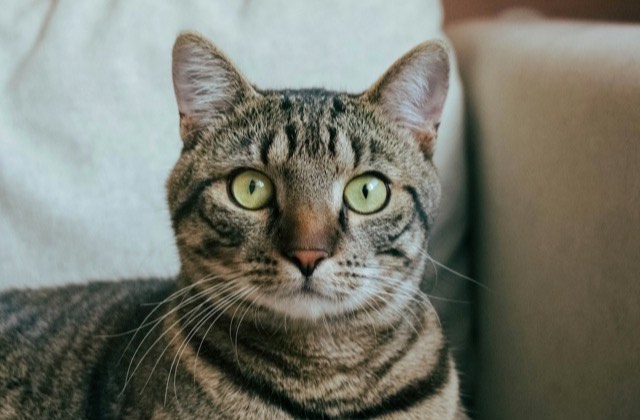
Scratching post for a senior cat: which substrate to choose as they age
Published by Planète Pets · managing editor: Clément Lacaille · how our guides are written
A senior cat keeps scratching, but often with less force and sometimes less interest in the roughest surfaces it once favored. An online survey by Wilson, Bain, DePorter, Beck, Grassi and Landsberg, published in 2016 in the Journal of Feline Medicine and Surgery, polled more than 4,100 owners and found that cats over ten years old favored carpet more than rope, unlike younger cats who clearly preferred rope. See more pointers in the toys and enrichment section.
Contents · 4 sections
Why does texture preference shift with age?
Claws that thicken and sometimes grow less evenly, along with more sensitive paw pads and joints, make a very rough surface like sisal rope less comfortable to scratch for long. A carpet or rug pad, softer underfoot, demands less effort while still offering enough resistance to wear the claws down.
Should you replace the scratching post or add to it?
Adding a second post rather than replacing the old one remains the safest choice, since a senior cat often keeps a strong attachment to a post already well marked with its scent. A low model, with no need to jump or stretch upward, usefully complements a vertical post that has become less accessible due to arthritis.
What gear should you actually prioritize?
- A horizontal corrugated-cardboard scratcher (8 to 20 €), placed on the floor near the bed, for effortless scratching with no stretching involved
- A carpet or thick rug pad added alongside a rope model already in place
- A lower vertical post height if the cat keeps using one, even moving it closer to a step or a low piece of furniture to make access easier
- More frequent nail trims, since a senior cat sometimes wears its claws down less efficiently than before
Our guide to steps and ramps for senior cats rounds out these adjustments, and the article on the horizontal or vertical scratching post covers the two basic formats.
Frequently asked questions
Does a senior cat scratch less often than a younger one?
Frequency generally drops a bit without ever disappearing entirely; a complete stop in scratching deserves a vet's opinion to rule out joint pain.
Does a cardboard scratcher wear out faster with a senior cat?
Not necessarily, since a senior cat often scratches with less force; replacement mostly depends on the visible condition of the post.
Should you remove old posts that have become hard to reach?
No, keeping them alongside a newer, more accessible model avoids disrupting the cat's landmarks.
See it in the Planète Pets shop: Automatic tail ball for cats (€17.90) · the whole shop
For your cat, at Le Félin (same family, zero commission): Arbre à chat gris (from €79.99)
This guide is part of Planète Pets’s Cats universe. Our advice is general in nature: for any health concern, your veterinarian remains the only reference.