Care and grooming for your cat: the gear that matters
Brushes, hygiene products, parasite control, habitat upkeep: your cat’s routine care happens at home, with the right equipment. Our guides separate the essential from the gimmick — and say when the vet, not the shop aisle, should have the answer.
🛒 Our picks from the shop
-
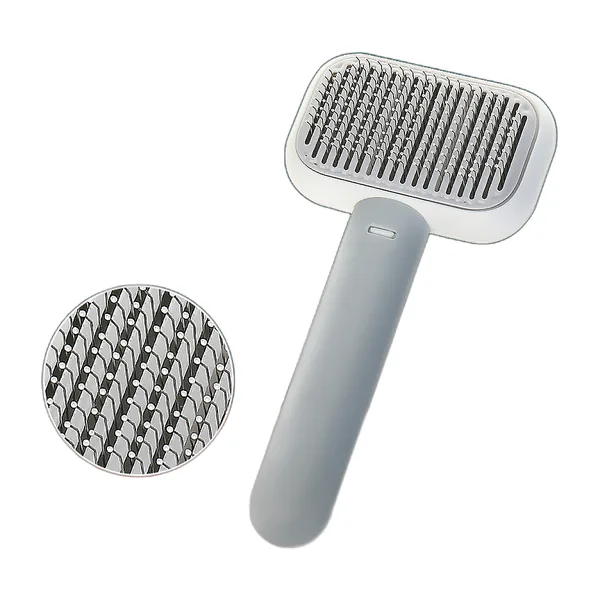 Stainless-steel pin brush for cats
€18.90
Choose an option -
 Scissor-style nail clipper for cats
€17.90
-
 Foldable double-layer cat litter mat
from €32.90
Choose an option
Delivery in 8 to 15 working days, free from €49 (otherwise €4.90). See the whole shop
🩺 Our hygiene and health advice stays general: it never substitutes for an examination by a veterinarian, the only person qualified to advise on your animal.
The key point : Litter is the most sensitive product in a cat household: substrate, box size and placement explain the vast majority of accidents.
Read first
Our dedicated guides
- Grooming a British Shorthair: shedding, brushing, and hairballs
The British Shorthair has a dense coat that needs regular brushing: how often, the right tools, managing the moult, and preventing hairballs.
- Professional Grooming or At-Home Grooming for a Cat: What's the Real Budget?
Grooming salon or brush at home: costs, frequency, and the cases where a professional groomer genuinely becomes worth the price.
- Grooming a Maine Coon: Keeping a Semi-Long Coat Mat-Free
How do you care for a Maine Coon's semi-long coat? Brushing frequency, mat-prone areas, hairballs, and the right tools for this large cat.
- Best Litter Box for a Senior or Arthritic Cat: Low-Entry Trays Explained
Litter box for a senior or arthritic cat: why a low-entry tray matters, what size to choose, and how to spot discomfort getting in and out.
- Cat Scratching Without Fleas: The Causes to Know Before Treating
A cat that scratches doesn't always have fleas: food allergies, environmental allergies or insect bites can also be the cause.
- How many litter boxes per cat, and where should they go?
How many litter boxes does a cat need? The N+1 rule, the best spots around the home and the mistakes that lead to accidents outside the box.
- Cat litter mat: no more granules all over the house
How do you choose an effective cat litter mat? Double-layer and honeycomb models, dimensions, cleaning and prices from 8 to 30 €.
- Cat nail clippers: trim your cat's claws without the stress
Which nail clippers should you choose for your cat, and how do you trim claws without hitting the quick? Clipper types, frequency, step-by-step technique and prices from 5 to 20 €.
- Cat drinking a lot: when excessive thirst should worry you
A cat that suddenly drinks far more than before may be signalling diabetes, kidney disease or a thyroid problem. How to measure water intake and when to see the vet.
- Grooming a Birman cat: keeping a semi-long coat mat-free
The Birman has a silky semi-long coat, easier to maintain than a Persian but still needing a regular routine. Brushing, sensitive spots and hairball prevention.
- Litter training a kitten: the gentle, step-by-step method
Kittens are naturally drawn to the litter box: the owner's job is mainly not to get in the way of that instinct. Box, substrate, placement and handling accidents.
- Sunburn in cats: why white cats with pale ears are at risk
The pale skin of white cats or pink-tipped ears copes poorly with UV: redness, crusting, and a risk of precancerous lesions with repeated exposure. How to protect them.
- Hyperthyroidism in senior cats: the early signs not to miss
An older cat losing weight despite a huge appetite isn't simply staying active for its age: it is often the first sign of hyperthyroidism, a common and treatable hormonal disease.
- Overgrooming in cats: when licking becomes a warning sign
Cats naturally spend a lot of time grooming, but compulsive licking that creates bald patches can signal underlying stress or pain.
- Siberian cat: health, heart and the truth about its hypoallergenic side
The Siberian cat is reputed to be hardy and low-allergen, but what does the science say? Cardiomyopathy, Fel d 1 and the care budget to anticipate before adopting.
- Russian Blue: a robust breed, but watch weight and urinary tract
The Russian Blue is a healthy cat with few hereditary diseases, but excess weight and urinary stones remain major feline risks. What to watch and budget for.
- Turkish Angora: white-cat deafness, heart and health to anticipate
In the blue-eyed white Turkish Angora, hereditary deafness is a real, testable risk. What to know, how to test, and the care budget to plan.
- Open or covered litter box: which does your cat really prefer?
Open or covered litter box for your cat? Odours, scatter, stress, upkeep: the honest comparison to choose a box your cat will actually use.
- Should you trim your cat’s claws? A case-by-case guide
Should you trim your cat’s claws? Indoor cat, outdoor cat, senior: when trimming helps, when to leave well alone, and the right technique.
- Scented cat litter: a bad idea in disguise
Scented litter masks odours for you but can drive your cat away from the box. Why it backfires and how to neutralise smells the right way instead.
- Cat litter: the real monthly cost, type by type
What does cat litter cost per month? Clay, clumping, silica, plant-based: real consumption, monthly price and tips to pay less without cutting corners.
- Stress-free cat grooming: glove or brush, how to get it right
Does your cat hate being brushed? Grooming glove or classic brush: how to lower the stress and make it a pleasant moment, step by step.
- Devon Rex and Cornish Rex: skin care and preventing dermatitis
Curly coat, oily skin: how to care for a Devon Rex or Cornish Rex day to day and spot the early signs of dermatitis to watch for.
- Selkirk Rex: caring for a curly coat without undoing the curls
Unlike the Devon Rex, the Selkirk Rex has a full, curly coat that genuinely needs upkeep. What method and tools avoid flattening the curls?
- Feline idiopathic cystitis: what a landmark study shows about environmental enrichment
For a cat prone to recurring idiopathic cystitis, changing the everyday environment isn't just extra comfort: a landmark study measured its effect on how often flare-ups occur.
- Cat cleaning wipes: a real help between baths or just marketing?
Dirty paws after the litter box, a greasy coat on an older cat that grooms less: cat wipes promise a lot. How do they actually compare to a cat's natural grooming?
- Nail clippers or an electric grinder for cats: which one to choose?
A standard nail clipper is enough for most cats, but an electric grinder avoids sharp edges on very thick claws. Comparison, prices and technique to keep the trim stress-free.
- Grooming a Sphynx: why a hairless cat still needs regular baths
With no fur to soak it up, a Sphynx's skin gets oily fast. Bathing frequency, the right products, and the day-to-day routine for a hairless cat's skin.
- Grooming a Balinese: the easy upkeep of a semi-long coat with no undercoat
Silky, semi-long fur, but almost no undercoat: the Balinese is far quicker to groom than it looks. Brushing frequency and the essentials to know.
- Autumn shedding in cats: why they lose more fur and how to help
The drop in daylight triggers a denser coat renewal each autumn. Understanding this natural mechanism and the gear that keeps fur off the furniture.
- Long-haired or short-haired cat: grooming routine and budget compared
Long-haired or short-haired cat: the right brush, how often to groom and a realistic budget, so you avoid mats without spending every evening on it.
- Deworming your cat: how often, what price and how to choose the right product
Deworming an indoor cat or one that goes outside: recommended frequency, tablet or spot-on, and a realistic budget for effective treatment.
- Ear infections in cats: symptoms, causes and what to do
Scratching ears, a tilted head, an unusual smell: the signs of an ear infection in cats, its most common causes, and what to do before your vet visit.
- Ingrown claws in senior cats: spotting and preventing them
Less scratching, less grooming: an older cat can let its claws curl into the paw pad without complaint. How to spot the problem and prevent it.
- Spaying or neutering a cat: preparing and managing recovery at home
Cone, confinement, adjusted feeding: what to prepare before a cat's spay or neuter surgery, and how to support recovery in the days that follow.
- Cat drooling excessively: possible causes and when to see a vet
A little saliva at the corner of a relaxed cat's mouth is rarely a concern. The most common causes of abnormal drooling in cats, and the point where it should worry you.
- Scottish fold: osteochondrodysplasia, pain and lifetime care costs
Scottish fold osteochondrodysplasia explained: the TRPV4 mutation, what studies show, spotting pain, lifelong management and what insurers typically exclude.
- American Shorthair: screening for hypertrophic cardiomyopathy
HCM predisposition in the American Shorthair: echocardiographic screening, warning signs, prognosis, follow-up costs and why insurance matters early.
- Birman cat health: inherited predispositions and DNA screening
Birman cat: congenital FOXN1 hypotrichosis, FIP risk, what to ask the breeder, DNA screening, veterinary budget and practical pet insurance advice.
- Burmese cat: hereditary WNK4 hypokalaemia, screening and care
Muscle weakness and low head carriage in Burmese cats: what the WNK4 mutation means, how DNA screening works, treatment options and likely costs.
- Devon Rex congenital myopathy: screening, treatment and budget
Spasticity, weakness and swallowing trouble in Devon Rex cats: the COLQ gene variant, DNA screening, lifelong follow-up and the costs to expect.
- Exotic Shorthair: flat face, tear staining and daily care
Tear overflow, nose fold, dense undercoat: why an Exotic Shorthair needs a daily hygiene routine, what veterinary imaging shows, and which signs should send you to the vet.
- Abyssinian: rdAc retinal atrophy and how to read the DNA test before you adopt
A recessive CEP290 mutation blinds an Abyssinian between three and five years old. What the studies measure about carrier frequency, what the test detects, and what to ask a breeder.
- Somali cat: pyruvate kinase deficiency, the anaemia that comes and goes
Episodes of lethargy, pale gums, jaundice: pyruvate kinase deficiency runs at roughly one Somali in six as a carrier. What the studies show about its course, and why the DNA test changes everything.
- Munchkin: what research has actually measured about those short legs
The UGDH gene, documented bone deformity, unproven arthritis: an honest look at Munchkin cat health — what the studies establish and what they do not allow anyone to claim.
- Chartreux: how much hair it actually swallows, and how to ease the transit
A cat sheds around 28 g of hair per kilo per year and swallows two thirds of it. On a dense woolly undercoat, here are the numbers, what brushing really removes and what fibre is proven to do.
- Mats in a long-haired cat: the worst spots are the ones they least like touched
In a Persian or a Maine Coon, mats cluster around the hindquarters and the base of the tail — exactly the area cats tolerate least when touched, according to a behavioural study.
- Tartar and bad breath in cats: toothbrush, dental gel or dental treats, what should you choose?
Dental tartar and bad breath in cats: comparing toothbrushing, enzymatic dental gel and dental treats, to slow down plaque without stressing your cat.
- Persian cats: that brown patch on the eye is not a tear stain, it is a corneal sequestrum
On CT scans, about 40% of a Persian cat’s eyeball sits outside the orbit, against 9 to 10% in a European shorthair. The lesion specific to the breed is not the brown mark in the fur, but a brown plaque on the cornea itself.
- What puts a cat off the litter box: not the smell, what is in the way
A study compared real waste, its odour alone and odourless fake deposits in litter boxes. Only the visible deposits changed which box the cats chose.
- Brown stains under a cat's eye: porphyrins were never actually found
The popular explanation of brown tear stains by porphyrins did not survive measurement: one study detected none at all in feline ocular tissues.
- Bathing a cat: when it's actually necessary and how to do it without trauma
Bathing a cat: the situations where it's genuinely useful, how often, and the method to wash a cat without stress or scratches.
- Your cat sniffs a stranger twice as long as you, and not with the same nostril
A Japanese study measures sniffing duration and nostril choice in 30 cats facing their owner's odour and a stranger's. What it shows, and what the press made it say.
- Clay, silica, or wood pellets: what a field study reveals about cats' real litter preferences
A study offered cats three litter substrates identical in every way except the material. The result nuances what many product sheets claim.
- Scruffing a cat: what the study measures, and what the “clipnose” clip is worth
A 2020 study compares scruffing, a dorsal clip and full-body restraint. The clip, sold as calming, ranks alongside the most aversive form of restraint.
- Poisonous houseplants for cats: the real dangers at home
Lilies, dieffenbachia, ficus... which houseplants are dangerous for a cat, the symptoms to watch for, and what to do after accidental ingestion.
- Cleaning a cat's ears: when and how to do it safely
Should you clean a cat's ears regularly? Frequency, the right product, step-by-step technique, and the signs of infection to watch for.
- Cat litter: clumping, silica or plant-based, which should you choose?
Clumping, silica or plant-based: compare cat litter types by odour control, maintenance, budget and your cat’s comfort to find the right fit.
- Parasite treatments for cats: spot-ons, collars or tablets?
Fleas, ticks, worms: an overview of cat parasite treatments, their formats, their limits and the dangerous mistakes to avoid, with veterinary advice.
Care & grooming breed by breed: every cat profile covers this product family with that species’ own figures.