Care and grooming for your reptile: the gear that matters
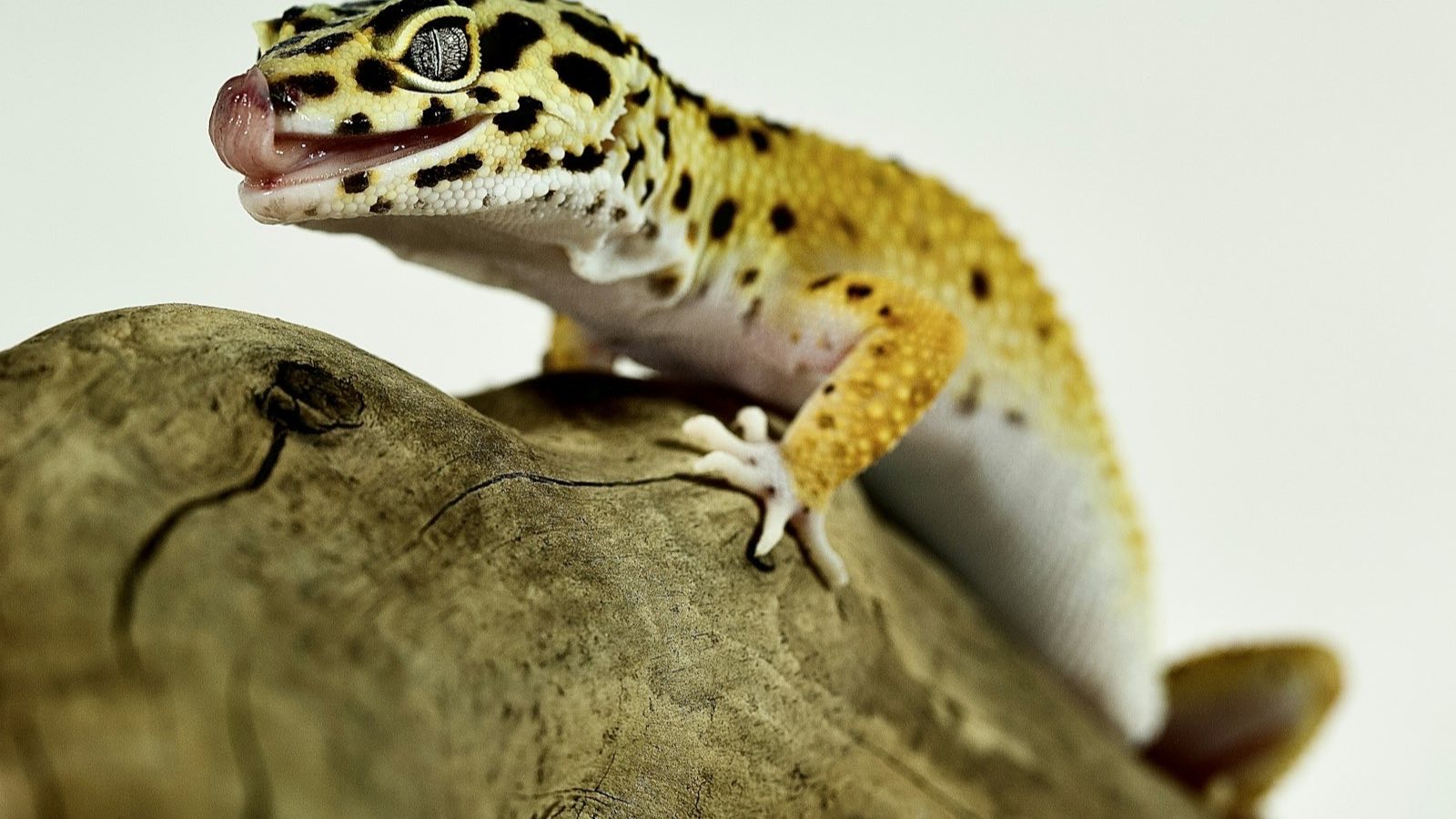
Brushes, hygiene products, parasite control, habitat upkeep: your reptile’s routine care happens at home, with the right equipment. Our guides separate the essential from the gimmick — and say when the vet, not the shop aisle, should have the answer.
🩺 Reminder: this page informs, it does not diagnose. For any symptom or health question, your veterinarian remains the only reference.
The key point : Reliable hygrometers and thermometers at both ends of the terrarium: without measurements, you cannot know whether your thermal gradient really exists.
Our dedicated guides
- Tail loss in crested geckos: why you should never grab one by the tail
Tail loss (autotomy) in crested geckos: why the tail never grows back in this species, what handling mistakes to avoid, and what to do if it drops.
- Humidity and Shedding in the Chinese Water Dragon: Avoiding Skin Problems
Why the Chinese water dragon needs high humidity, how to maintain it without stagnation, and the early signs of an incomplete shed.
- Pacman frog: preventing overfeeding and impaction
Pacman frog (Ceratophrys): why it never seems to stop eating, the real risks of obesity and impaction, and a feeding schedule matched to its age.
- Green iguana and metabolic bone disease: why calcium is central
Metabolic bone disease in the green iguana: why the calcium-phosphorus imbalance and missing UVB cause it, the warning signs, and how to prevent it.
- Carapace Pyramiding in Hermann's Tortoises: Causes and Prevention
Carapace pyramiding in Hermann's tortoises: causes linked to humidity and protein, prevention tips, and benchmarks for steady shell growth.
- Incomplete Shedding in Leopard Geckos: Toes and Tail to Watch
Incomplete shedding in leopard geckos: why toes and tail tips sometimes stay stuck, and how to spot and safely remove leftover shed skin.
- Humid hide: DIY or store-bought, which should you choose?
Humid shedding hide for geckos and snakes: build your own for 3 € or buy a moist cave for 15-30 €, plus substrates and maintenance.
- Tortoise hibernation: the essential equipment
Equipment for hibernating a tortoise: insulated box, substrate, alarm thermometer, scales and a 5 °C room, with a budget of 40 to 120 €.
- Cleaning the terrarium: which safe products should you use?
Safe terrarium cleaning: white vinegar, steam, reptile-specific disinfectants, products to ban and a weekly maintenance routine.
- Snake mites: detecting and eliminating the terrarium's parasites
The snake mite (Ophionyssus natricis) weakens the animal and spreads disease. How to spot an infestation, treat the snake and disinfect the terrarium.
- Bearded dragon black beard: stress, display, or a warning sign?
A bearded dragon that darkens its throat isn't always signalling trouble. How to read a black beard depending on context: shedding, thermoregulation, stress or display.
- Bearded dragon brumation: signs, precautions and should you prevent it?
Slowing down, refusing food, sleeping for long stretches: an adult bearded dragon's brumation is a natural phenomenon, but it calls for a precise protocol to stay risk-free.
- Taming a snake: how often to handle it without stressing it
Handling a snake too soon or too often stresses it; never touching it doesn't help tame it either. The right rhythm, precautions and signals to respect for a beginner snake.
- Stressed green anole: reading the signs of stress and good health
Colour turning brown, throat fan flaring, an animal permanently hidden: in the green anole, colour and behaviour reveal its state. The signals to read so you can react in time.
- Handling a green iguana: seasonal aggression and socialization
A puffed dewlap, head bobbing, tail whips: adult green iguanas often become more aggressive during the breeding season. Understanding the phenomenon and adapting handling.
- Deworming a Greek tortoise: why regular vet checks matter
Pinworms, roundworms, protozoa: Greek tortoises very often carry intestinal parasites, even when they look perfectly healthy. What a Moroccan prevalence study shows.
- Calcium sand for reptiles: the false good idea to avoid
Calcium sand for reptiles promotes intestinal impaction: why this so-called edible substrate is a trap and what to replace it with.
- Second-hand reptile equipment: bargains and pitfalls
Buying a terrarium or reptile gear second-hand can halve the bill: what to check, disinfect or walk away from.
- Reptiles and children: what hygiene and safety rules?
A reptile in a family with children is possible: anti-salmonella hygiene rules, suitable species, supervised handling and the parents' role.
- Adopting your first reptile early in your career: check exotic vet access first
Before falling for a terrarium, one criterion gets skipped too often: is there a competent exotics vet near you? What an Irish study on access to veterinary care for exotic pets reveals.
- Green anole: what happens if it loses its tail — does it grow back?
Unlike the crested gecko, the green anole can regenerate part of a lost tail. What a landmark review on lizard caudal autotomy reveals, and why the new tail is never quite the same.
- Veiled chameleon: why it should never see another chameleon
A veiled chameleon changes colour just from spotting another chameleon. What a US study reveals about visual communication and aggression in the species.
- Hermann's tortoise inactive in midsummer: warning sign or normal behaviour?
A Hermann's tortoise that vanishes at midday in summer isn't necessarily sick. What a French study using implanted temperature probes shows about its thermoregulation.
- Reptile with roommates: what rules to set before installing a terrarium
Off-limit zones, handwashing, a backup caretaker: the hygiene rules to set with roommates before adopting a reptile, backed by a 2017 study.
- Red-eared slider: why a too-cold basking spot weakens its immune system
A 2020 study on the red-eared slider's immune response to a virus shows just how much basking temperature shapes its ability to fight disease.
- Leopard gecko: why keeping an eye on tail diameter tells you a lot about its health
A 2025 study on wasting syndrome in leopard geckos shows that a shrinking tail diameter is an early, measurable warning sign.
- Hermann's tortoise: what a study on its seasonal hormones changes about health monitoring
A 2024 study tracked cortisol-family and thyroid hormones in Hermann's tortoises across all four seasons: juveniles do not respond like adults, a useful marker before hibernation.
- Ball python: what a nidovirus study changes about respiratory monitoring
A 2018 study experimentally infected ball pythons with the nidovirus behind their main respiratory disease, pinning down the very first signs to watch for.
- Corn snake: what an ophidiomycosis study changes about shedding and temperature
A 2020 study explored the links between brumation, temperature and the progression of ophidiomycosis (snake fungal disease) in corn snakes, with direct implications for shedding frequency.
- Leopard gecko: what a study on the detached tail changes about your reaction
A study filmed the behaviour of a leopard gecko's tail once separated from the body, revealing complex movement patterns that help explain why the animal reacts the way it does after autotomy.
- Tokay gecko: what a study on handler recognition changes about handling
A study tested whether Tokay geckos respond differently to a familiar handler versus a stranger, with results that shed light on day-to-day handling of this notoriously difficult species.
- Chinese water dragon: what a study on parthenogenesis changes for a solo female
A study genetically confirmed eggs laid by an isolated female Chinese water dragon with no male ever present: a finding that explains an unexpected clutch and clarifies when to actually worry.
- Tokay gecko: what a study on its distress calls changes about daily care
A study recorded the calls a Tokay gecko makes during routine handling, revealing three call types tied to its larynx. Reason enough to rethink how often it's restrained.
- Panther chameleon: what a study on UVB dose changes about female reproduction
An American study tracked female panther chameleons across nine different UVB environments. Reason enough to choose your lamp more carefully for both health and fertility.
- Savannah monitor: what a study on pentastomes changes about its quarantine
A study identified a previously unknown pentastome species in imported savannah monitors. Reason enough to tighten quarantine before introducing one into a collection.
- Incomplete shed in reptiles: causes and fixes
Incomplete shed in reptiles (retained rings, skin stuck on toes or eyes): the main causes and the steps to take without stressing the animal.
- Cryptosporidium in leopard geckos: a negative faecal test proves nothing
In one breeding colony, only a single gecko out of forty could be confirmed negative after repeated faecal exams and histology. Enough to rethink the quarantine protocol.
- Recognizing stress in a reptile: the checklist from a veterinary review
Gaping, flight distance, tonic immobility: a veterinary review lays out behavioural signals common to most reptiles for catching distress before it worsens.
- First year of ownership: 3.6 % mortality in reptiles, 28 % in chameleons
A survey of 6,689 reptiles quantifies reported mortality in the twelve months after acquisition. The gap between species groups is the real lesson.
- Reptile pain: what the research says, and what it has stopped saying
The painkiller long most used in reptiles is now recommended in no species at all. The questions to ask before a procedure.
- Overgrown claws in reptiles: should you trim them?
Overgrown claws in bearded dragons, geckos or tortoises: when a trim is actually needed, what tools to use, and how to avoid the quick.
- Salmonella linked to bearded dragons: a US outbreak shows risk without direct contact
A US public health investigation into a 2024 Salmonella outbreak linked to bearded dragons found young children infected without ever touching the animal themselves.
- Sick bearded dragon: what a review of 724 dragons seen in clinic reveals
An Australian study covering 724 bearded dragons and 1000 vet visits ranks the most common health problems seen in the species, based on real clinical records.
- Uromastyx: the hidden risk of housing it with a bearded dragon
A Belgian study finds that bearded dragons, healthy carriers of the bacterium Devriesea agamarum, can trigger severe dermatitis in uromastyx sharing their collection.
- Quarantining a new reptile: how long and what setup do you need?
Quarantining a reptile joining the household: how long to isolate it, with what simplified terrarium, to protect animals already settled in.
- Shed skin stuck around a reptile's eyes: what should you do?
Skin left stuck around the eyes of a gecko or snake after shedding: causes linked to humidity and safe steps to remove the residue.
- Chameleon drip system: hydrating an animal that won't drink from a bowl
Chameleon drip system: why a water bowl isn't enough, how to set up a dripper or mister, and how often to run it.
- Terrarium misting: hand sprayer or automatic system?
Hand sprayer, automatic misting system or fogger: how to manage terrarium humidity, at what price, and the mistakes that encourage mould.
Care & grooming breed by breed: every reptile profile covers this product family with that species’ own figures.