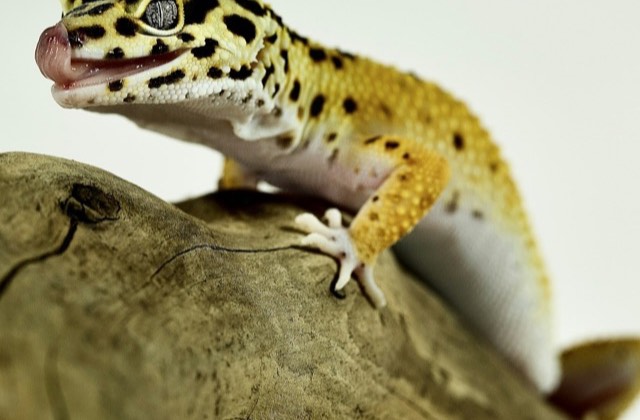
Green anole: what happens if it loses its tail — does it grow back?
Published by Planète Pets · managing editor: Clément Lacaille · how our guides are written
A dropped tail always startles a beginner, but it's part of the natural defence repertoire of many lizards, the green anole included. A review by Bateman and Fleming, published in 2009 in the journal Journal of Zoology, surveyed twenty years of research on caudal autotomy in lizards and confirms that this defence mechanism carries a real cost for the animal (lost energy reserves, shifted balance, a temporary drop in social status), while noting that regeneration ability varies widely between species (see the study). Find our other pointers in the care and grooming section.
Contents · 6 sections
A defence mechanism, not a random accident
In the green anole (Anolis carolinensis), the tail detaches at built-in fracture planes within the vertebrae, in response to a rough grab or an attempted predation. It isn't painful in the way we'd picture it for a mammal, nor is it in itself a sign of poor health: it's a survival strategy.
What grows back, and what never matches the original
Unlike the crested gecko, which never regenerates a lost tail at all, the green anole grows a new one within a few weeks to a few months. But that regrowth stays imperfect: the original vertebral skeleton is replaced with a simple cartilage rod, colour and scaling often differ slightly, and the new tail is generally shorter and stubbier than the original.
The real cost to the animal
The 2009 review notes that regeneration draws heavily on energy reserves, which can slow growth or reproduction during that period. An anole that has just lost its tail deserves a slightly more generous diet and less handling while it regrows.
How to avoid it happening in the first place
Never grab an anole by the tail, even gently: always scoop the body into your palm or let the animal climb onto your hand. Also avoid handling it near a dominant tankmate or during sudden stress (noise, abrupt movement), which can trigger a reflex autotomy without any direct contact at all.
Practical pointers
- Regrowth is possible in the green anole, unlike the crested gecko.
- Imperfect result: cartilage instead of bone, colour and shape often slightly different.
- Never grab by the tail, even softly, to avoid triggering the reflex.
- Rest and steady feeding during the weeks following the loss.
Stress and handling remain the two triggers to watch day to day; our article on signs of stress in the green anole helps spot risky situations before they escalate. See also our green anole profile for its full picture.
Frequently asked questions
Should the wound be disinfected after a tail drop?
The wound closes very quickly on its own in most healthy anoles; if bleeding persists or swelling appears, an exotics vet visit is preferable to a home remedy.
Can an anole lose its tail more than once?
Yes, but each new autotomy at the same spot regenerates an even lower-quality tail, and already-regenerated tissue doesn't always detach as easily as the original.
Does losing the tail affect the anole's balance or climbing?
Temporarily, yes, since the tail plays a balance role for this arboreal lizard; it's best to limit high branches and jumps for the first few weeks after the loss.
An accessory from our shop for this use: Ventilated clear box for feeder insects, transport and quarantine, 19 cm (€17.90) · the whole shop
This guide is part of Planète Pets’s Reptiles universe. Our advice is general in nature: for any health concern, your veterinarian remains the only reference.