Tokay gecko: what a study on its distress calls changes about daily care
Published by Planète Pets · managing editor: Clément Lacaille · how our guides are written
The Tokay gecko's powerful call during handling isn't just a show of bad temper: a recent study recorded these vocalizations to understand their mechanical origin, with direct implications for how routine care should be approached. Find all our care and grooming guidance in the reptile care and grooming section.
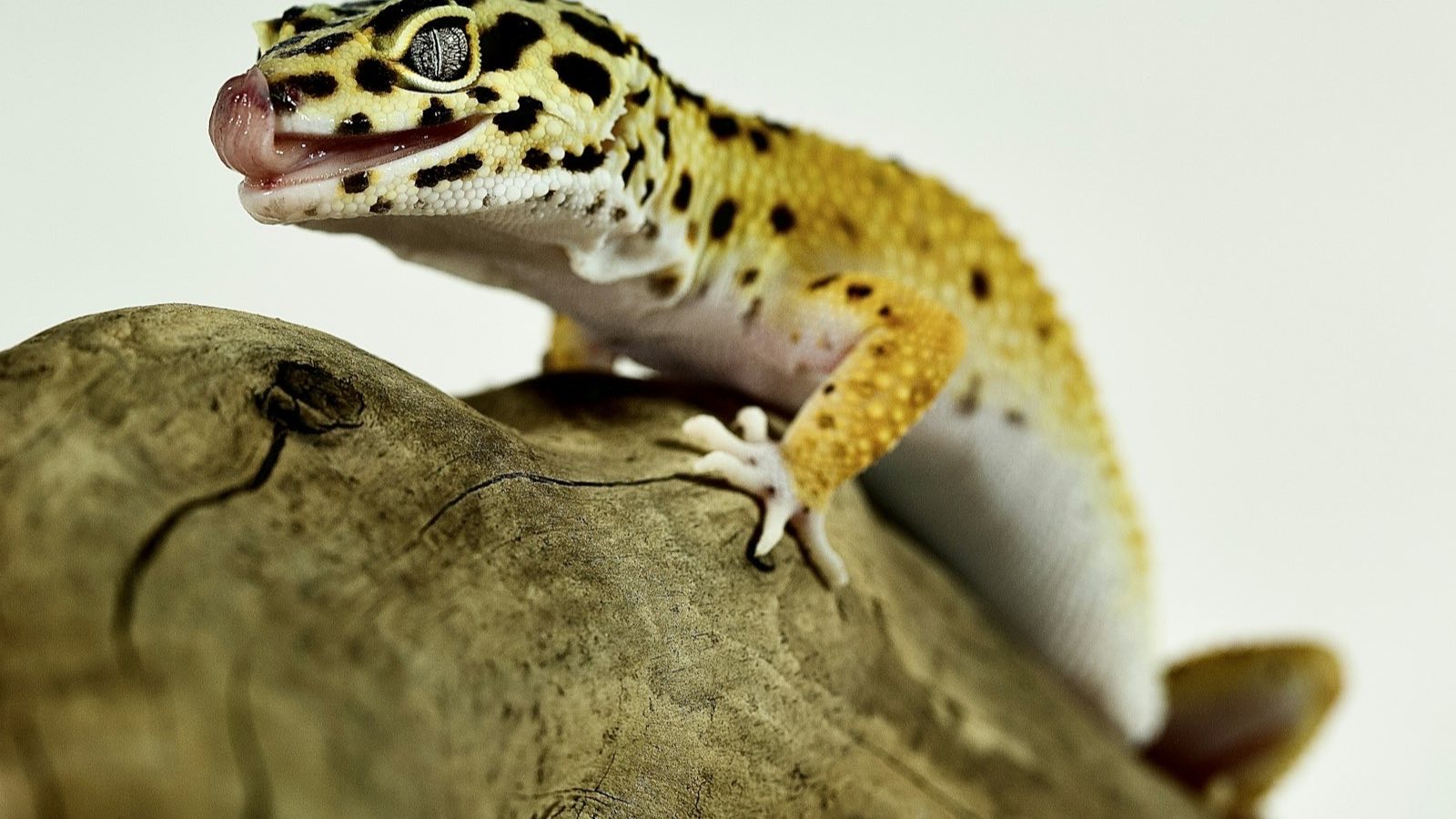
A study on the larynx and vocalizations of the Tokay gecko
Gutjahr, Kéver, Jonsson, Talamantes Ontiveros, Chagnaud and Herrel published a 2024 study in the Journal of Experimental Biology on the laryngeal mechanism behind Tokay gecko vocalizations (see the study). The calls studied were readily elicited by restraining the animals during routine maintenance tasks, which let the researchers record three distinct call types through acoustic analysis and cineradiography: a sinusoidal type, a type made of distinct pulse trains, and an intermediate type combining both, each tied to a specific movement of the larynx.
What this changes about how often you handle it
The fact that these complex vocalizations are triggered so readily by simple restraint confirms they are, above all, a distress signal linked to handling, not merely a personality trait. A Tokay gecko that vocalizes loudly as soon as it's grabbed is expressing genuine discomfort that's better limited than provoked out of habit.
- Reserve direct restraint for genuinely necessary tasks (a health check, an incomplete shed), rather than routine handling with no clear purpose.
- Favor a tube or transfer box for everyday moves, letting the animal walk in on its own rather than being grabbed.
- Treat a loud call as a cue to pause the task when the situation allows, rather than just background noise to ignore.
This reading of distress signals rounds out the guidance already covered in our articles on transporting a Tokay gecko and its handler recognition, both of which show just how poorly this species tolerates physical restraint.
Frequently asked questions
Do all Tokay gecko calls signal distress?
No, the nighttime territorial call that gives the species its name differs from the distress calls recorded during restraint; the context of the call matters as much as the sound itself.
Can a Tokay gecko be trained to stay quiet during handling?
Tolerance varies widely between individuals and the species as a whole stays largely averse to contact, which is exactly why restraint should be limited to essential tasks.
Does this distress signal relate to bite risk?
Yes, a loud call during restraint often comes with heightened agitation, a moment when bite risk also rises. Find all our guides in the reptile hub.
See it in the Planète Pets shop: Ventilated clear box for feeder insects, transport and quarantine, 19 cm (€17.90) · the whole shop
This guide is part of Planète Pets’s Reptiles universe. Our advice is general in nature: for any health concern, your veterinarian remains the only reference.