Humid hide: DIY or store-bought, which should you choose?
Published by Planète Pets · managing editor: Clément Lacaille · how our guides are written
A humid hide is a shelter whose substrate is kept permanently moist: it gives the reptile the microclimate it needs to shed in one piece. Homemade, it costs under 3 €; store-bought, expect 15 to 30 €. Both work, as long as you follow a few rules.
Contents · 5 sections
Why is a humid hide essential?
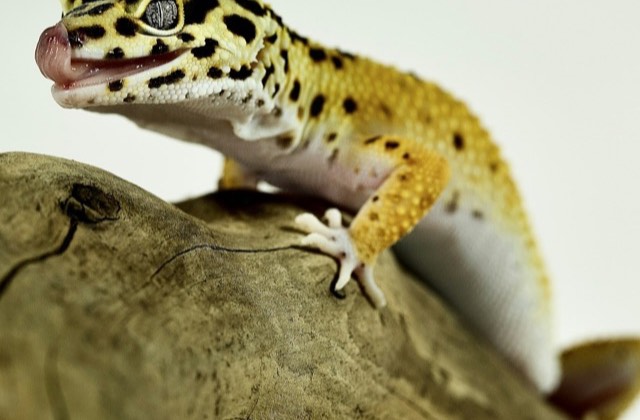
Leopard geckos, corn snakes and most dry-terrarium species suffer incomplete sheds when humidity is too low: retained skin on the gecko's toes (risk of necrosis) or a stuck eye cap in snakes. The humid hide prevents these accidents without soaking the whole terrarium, which would ruin a dry substrate and encourage mould.
How do you make a humid hide at home?
Take an opaque food container with a lid, cut a side entrance sized to the animal, sand the edges, and fill with 3 to 5 cm of moist substrate. Done. The criteria for a good hide:
- Opaque, so the animal feels hidden;
- Side entrance with non-cutting edges;
- Moisture-retaining substrate: sphagnum moss, coconut fibre or damp paper towel;
- Right size: the animal should fit coiled up, not swim in it;
- Placed in the lukewarm zone, between the warm spot and the cool area.
Are store-bought moist caves any good?
Ceramic or resin caves (15-30 €) look better and are more stable; some porous models release moisture slowly. Their drawback: cleaning is sometimes less convenient than a simple box that goes in the dishwasher. For a terrarium displayed in a living room, they blend into the decor better — see our ideas in the care and grooming category.
How do you maintain it day to day?
Re-moisten the substrate two to three times a week, replace it entirely every two to four weeks, and disinfect the hide with white vinegar rinsed thoroughly. A musty smell or fungus gnats signal an urgent change. More maintenance advice on the reptile hub.
Frequently asked questions
Should the humid hide stay in permanently?
For a leopard gecko, yes: it doubles as a shelter and, for females, as an egg-laying site. For a snake, some keepers only add it during shedding, as soon as the eyes turn bluish.
Which substrates should be avoided in the humid hide?
Sand and resinous wood shavings: the first sticks to damp skin and can be ingested, the second releases irritating compounds. Sphagnum moss and paper towel remain the safe bets.
See it in the Planète Pets shop: Ventilated clear box for feeder insects, transport and quarantine, 19 cm (€17.90) · the whole shop
This guide is part of Planète Pets’s Reptiles universe. Our advice is general in nature: for any health concern, your veterinarian remains the only reference.