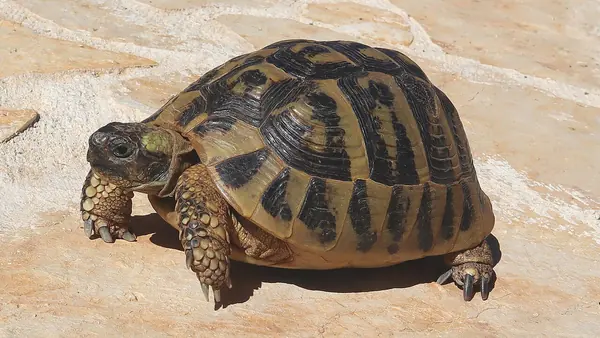
Tortoise hibernation: the essential equipment
Published by Planète Pets · managing editor: Clément Lacaille · how our guides are written
The equipment for tortoise hibernation comes down to four items: an insulated, ventilated box, a loose substrate, an alarm thermometer and a set of scales. Total budget: 40 to 120 €. The goal is to keep the animal between 4 and 8 °C for several weeks to several months, safe from rodents and frost. Hibernation is only for healthy tortoises — seek veterinary advice if in doubt.

Contents · 5 sections
What hibernation box should you prepare?
A wooden box, or two nested plastic tubs with insulation between them, pierced with fine ventilation holes. Fill with 15 to 20 cm of slightly moist soil or compost, topped with dead leaves or straw. A fine mesh cover on top is essential: rats seriously injure tortoises in dormancy. Place the box in a cool, stable room — a cellar or unheated garage — or, in the south, let the tortoise dig itself in within its outdoor enclosure under a rain-protected shelter.
Which monitoring instruments do you need?
- Probe thermometer with alarm (10-25 €): alerts below 2 °C and above 10 °C;
- Hygrometer: the substrate must neither dry out nor become waterlogged;
- Kitchen scales: weigh every 3 to 4 weeks — normal loss stays under 10% of body weight;
- Optional connected sensor, such as a smart hygrometer, to monitor the cellar remotely;
- Dedicated refrigerator (fridge method): very stable temperature for small animals, with a daily opening to refresh the air.
How do you prepare the tortoise before boxing it up?
Three to four weeks beforehand, gradually reduce food and then heating: the tortoise must hibernate with an empty digestive tract, or dangerous fermentation can occur. Lukewarm baths encourage emptying. A tortoise that is underweight, injured or ill must not hibernate: keep it awake and warm under a basking lamp all winter.
When and how do you wake the tortoise?
Once temperatures stay above 10 °C, or after the planned duration (8 to 16 weeks depending on age), move the box to a temperate room, offer a lukewarm bath and switch the heating and UVB back on. Appetite returns within a few days; if not, consult an exotics vet. All our tortoise guides are on the reptile hub.
Frequently asked questions
Should juveniles hibernate?
Yes for most Mediterranean species, but for shorter periods (4 to 8 weeks) and under closer supervision. Many breeders use the fridge method for its stability.
What if the cellar warms up in mid-winter?
A brief warm spell at 10-12 °C is not dramatic. If it lasts, move the box to a cooler room or switch to the refrigerator method.
An accessory from our shop for this use: Stick-on digital thermometer for aquarium and terrarium glass (€18.90) · the whole shop
This guide is part of Planète Pets’s Reptiles universe. Our advice is general in nature: for any health concern, your veterinarian remains the only reference.