Care and grooming for your rabbit: the gear that matters
Brushes, hygiene products, parasite control, habitat upkeep: your rabbit’s routine care happens at home, with the right equipment. Our guides separate the essential from the gimmick — and say when the vet, not the shop aisle, should have the answer.
🛒 Our picks shipped from the US
-
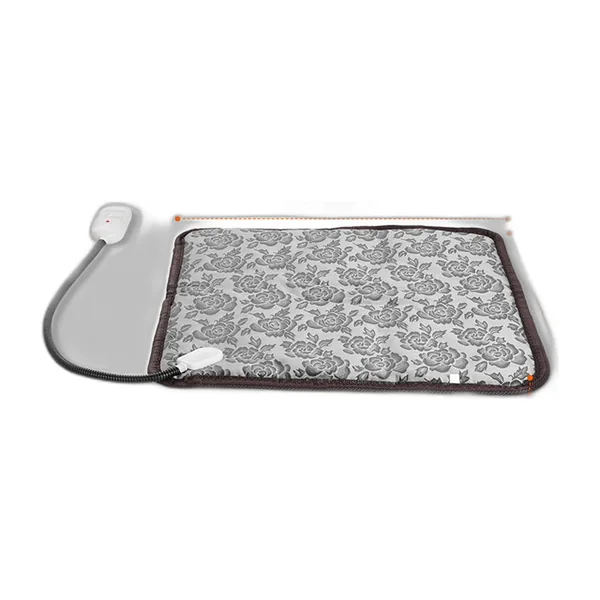 Electric pet heating pad 45 × 45 cm (17.7 in) with chew-resistant cord
$48.90
-
 Rolling 4-level ferret and chinchilla cage with hammock
$159.90
-
 Modular plastic playpen for puppies and rabbits, 4 or 6 panels
from $87.90
Choose an option
Ships from a US warehouse in 4 to 10 business days, free delivery within the United States. See the US shop
🩺 Our hygiene and health advice stays general: it never substitutes for an examination by a veterinarian, the only person qualified to advise on your animal.
The key point : Rabbits groom themselves, but moulting demands regular brushing — they cannot vomit hairballs, which can block the gut.
Read first
- Rabbit mites and mange: symptoms, treatment and prevention
- Spaying or neutering a rabbit: timing, risks and mistakes to avoid
Our dedicated guides
- Calming pheromone diffuser for a stressed rabbit: does it actually work?
Calming diffuser for an anxious rabbit: what the research says about space-related stress, when to consider one, and what it never replaces.
- Antibiotics dangerous for rabbits: which ones to avoid
Some antibiotics routine in dogs or cats trigger fatal enterotoxaemia in rabbits: which ones to avoid and what to do if you're unsure.
- Rabbit vaccination against myxomatosis and VHD: schedule and budget
Myxomatosis and VHD in rabbits: why vaccinate even an indoor rabbit, the booster schedule, and the yearly budget to plan for.
- Rabbit pododermatitis: spotting and preventing sore hocks
Pododermatitis in rabbits: which flooring encourages sore hocks, how to catch it early, and simple setup changes that prevent it.
- GI stasis in rabbits: the warning signs you shouldn't ignore
GI stasis in rabbits: why it's a life-threatening emergency, the early signs to watch for, and the first steps before reaching a vet.
- Grooming an Angora rabbit: mastering an exceptional coat
How do you care for an Angora rabbit's coat? Daily brushing, preventing mats and felting, shearing the wool, and the risk of digestive hairballs.
- Snuffles in rabbits (pasteurellosis): symptoms, contagion, and prevention
Sneezing, nasal discharge, and watery eyes: recognising rabbit snuffles, understanding how contagious it is, and limiting flare-ups.
- Ear infections in lop rabbits: why floppy ears make them more fragile
Lop rabbits develop far more ear infections than erect-eared breeds: what the research shows and how to monitor their ears day to day.
- Rabbit flystrike in summer: spotting the emergency and preventing it
Flystrike (myiasis) is a common summer emergency in rabbits. How to recognise it, act fast, and above all prevent it.
- Litter training your rabbit: the corner tray method, step by step
How do you litter train a rabbit with a corner tray? Step-by-step method, choosing the tray, the right litter, mistakes to avoid and the budget.
- Moulting tools for rabbits: glove, brush or comb — what do you really need?
Rubber-tipped glove, soft brush, fine comb: which moulting tools suit your rabbit's coat? Comparison, useful techniques, budget of 5 to 25 €.
- Nail clippers for rabbits: choosing the right tool and trimming without injury
Which nail clippers should you buy for a rabbit and how do you trim without hitting the quick? Clipper types, step-by-step technique, prices and when to see a vet.
- Hemp or flax litter for rabbits: the plant-based litter face-off
Hemp or flax: which plant-based litter should you choose for a rabbit? Absorption, dust, odours, price per litre and our verdict for your situation.
- Scales and weight tracking for rabbits: the most underrated health tool
Which scales should you use to weigh a rabbit, and why track its weight weekly? Choosing a model, reading the curve, alert thresholds and prices.
- Deworming rabbits: is it really necessary?
Unlike dogs or cats, rabbits do not follow a systematic deworming schedule. What to actually watch for, and when to see a vet.
- Rabbit cecotropes and soft droppings: understanding what the stool tells you
Rabbits produce two kinds of droppings, and eating them is normal and vital. Telling healthy cecotropes from abnormal soft stool and stuck clusters, and when to worry.
- My rabbit is sneezing: hay dust irritation or snuffles?
An occasional sneeze after dusty hay has nothing to do with contagious snuffles. How to tell simple irritation apart from a real warning sign.
- Heating pad for a sick or recovering rabbit: which to choose and how to use it?
A heating pad can help a fragile rabbit regulate its temperature, provided you choose a suitable model and always leave a cool retreat area.
- Diarrhea in rabbits: when to worry and what to do
True diarrhea, unlike uneaten cecotropes, is always an emergency in rabbits. Causes, warning signs and the right response.
- Taking your rabbit's temperature: how to tell if it has a fever
A rabbit's normal temperature sits between 38.5 and 40°C. Here's how to measure it without excessive stress, and when a deviation should raise alarm.
- How to hold and carry a rabbit without hurting it: the right grip
A rabbit's skeleton is fragile and its hindquarters powerful: the wrong grip can cause a spinal fracture. Here's the technique that protects both the animal and the handler.
- E. cuniculi in rabbits: the overlooked neurological parasite
Head tilt, incontinence, sudden cataracts: Encephalitozoon cuniculi affects a large share of pet rabbits, often without any visible symptom at all. What owners should know.
- The Rabbit Grimace Scale: spotting pain in an animal built to hide it
As a prey species, rabbits instinctively mask pain. The grimace scale developed by British researchers makes it possible to read it on their face before it gets worse.
- Wood shavings or plant-based litter for rabbits: the healthy choice
Wood shavings or plant-based litter for your rabbit? Respiratory risks of softwood shavings, price per litre, absorbency: the full comparison.
- Should you bathe your rabbit? Why baths are off-limits
Should you wash your rabbit when it gets dirty? No: bathing is dangerous. Hypothermia, stress, spot-cleaning alternatives — the complete guide.
- Rabbit vet budget: how much should you plan for each year?
What vet budget for a rabbit? Vaccinations, neutering, dental and digestive emergencies: real exotics-vet prices and how to plan for them.
- Rabbit grinding its teeth: a contented purr or a pain signal?
A soft, gentle grind often means a relaxed moment. A loud, prolonged one tells a very different story — one too few owners learn to recognise in time.
- Rabbit losing fur in patches: when should you worry?
A bald patch can come from an unbrushed moult, a parasite, or compulsive fur-pulling. Here's how to tell these causes apart and know when to see a vet.
- Rabbit drooling: is it a sign of dental malocclusion?
A constantly damp, sticky chin in a rabbit is almost never trivial. Here's why drooling often signals a dental problem, and how to react before it gets worse.
- False pregnancy in rabbits: why a doe builds a nest without being pregnant
Pulled fur, an improvised nest, swollen mammary glands: a doe can show every sign of pregnancy without ever having been bred. Here’s how to recognise a false pregnancy and what to do.
- Arthritis and spondylosis in senior rabbits: adjusting the home for comfort
A senior rabbit that jumps less, grooms poorly or hesitates at a low step may be dealing with arthritis or spondylosis. Here’s how to spot the signs and adapt its living space.
- Rabbit who has lost its companion: mistakes to avoid
A rabbit left alone after losing its lifelong companion often shows measurable signs of distress. Here are the common mistakes to avoid during this period.
- A new baby is coming home: how should you adapt your rabbit’s space?
A newborn arriving calls for a few hygiene and organisational precautions to keep cohabiting smoothly with a rabbit already in the household. Here’s what to plan for.
- Rex rabbit: the genetics behind its fur and preventing sore hocks
The Rex rabbit’s velvety fur comes from a specific genetic mutation, one that also leaves the underside of its feet more fragile. Here’s what the landmark study shows and how to prevent sore hocks.
- Polish rabbit and dental malocclusion: what the research actually shows
Very small breeds like the Polish rabbit have a reputation for skulls prone to malocclusion. A recent study of 435 rabbits nuances that common assumption.
- Lionhead rabbit: does its mane raise the risk of flystrike?
The Lionhead rabbit’s mane traps moisture and mess more easily. What a study on flystrike risk factors shows and how to protect its mane in summer.
- Fauve de Bourgogne rabbit: what the agouti gene explains about its coat
The Fauve de Bourgogne owes its shimmering coat to the agouti gene. What the landmark rabbit study shows and how to manage its moult.
- Britannia Petite rabbit: does early handling really reduce fear?
The Britannia Petite rabbit has a reputation for being flighty. What a landmark study on early handling of kits shows and how to apply it.
- Pet insurance for rabbits: what does it cost, and is it actually worth it?
Pet insurance for rabbits: plan prices, what is and isn't covered, and when it becomes worth it against real exotics vet bills.
- Does handling a kit right after nursing reduce its fear of humans?
Can a few seconds of contact at the right moment make a rabbit kit more confident as an adult? What a study on early handling shows.
- Restraining a rabbit: does the hold position change its stress level?
Holding a rabbit on its back or supported against you doesn’t have the same effect on its stress. What a study comparing behavioural responses across restraint methods shows.
- Angora rabbits: why does their wool need such intensive grooming?
The continuous growth of an Angora coat isn’t just a breed quirk: the genetics of fibre production explain the brushing schedule it demands.
- Chronic watery eye in rabbits: the overlooked link with teeth
A constantly weepy eye is almost never a simple eye problem in rabbits. What a recent CT study shows about the link between dentition and the tear duct.
- Does being petted by a stranger really stress a rabbit out?
At the vet, in boarding, or during a pet-sit, your rabbit is often handled by someone it doesn't know. A recent study measures the physiological cost of that.
- Rabbit coccidiosis: a common intestinal parasite that flies under the radar
Diarrhoea, stunted growth, sometimes a severe outcome in young rabbits: coccidiosis remains one of the most common parasitic diseases in the species. What veterinary research shows.
- Rabbit anaesthesia: a markedly higher risk than in dogs or cats
Spaying, a broken tooth, an abscess to remove: putting a rabbit under anaesthesia is not a routine matter. What the largest study ever run on anaesthetic mortality in veterinary practice shows.
- "Hypnotising" a rabbit on its back: a study measures what happens to its heart
Flipping a rabbit onto its back to trim its nails makes it go still and seems to calm it down. A cardiology study shows what is actually happening during this "trance".
- Uterine disease in does: what a study of 116 female rabbits reveals
Spaying a doe is sometimes seen as purely a matter of convenience. A prospective study of the uterus in 116 female rabbits shows how large the real risk is in an unspayed animal.
- Cheyletiella: the rabbit mite that makes its owner itch too
A Portuguese study screened 72 pet rabbits for skin parasites and found just one genus of mite. That parasite also transfers to the skin of people in the household.
- Which disinfectant should you use to clean a rabbit's cage or pen?
White vinegar, black soap or a dedicated small-pet disinfectant: which product to use safely for a deep clean of a rabbit's cage.
- Do rabbits live 4 years or 10? Where the numbers you read everywhere come from
4.3 years in English first-opinion practice, 7 years in a specialist Tokyo clinic: two solid studies give two very different figures, and the gap has an explanation.
- Why a rabbit's anti-inflammatory dose looks surprising: two pharmacokinetic studies
Rabbits clear meloxicam far faster than most owners assume. Two US studies explain why a dose that looks high is not necessarily high for this species.
- Rabbit off its food: stasis or obstruction, two opposite emergencies
A study of 907 rabbits shows a simple blood glucose reading separates gut stasis from intestinal obstruction — two situations whose treatments pull in opposite directions.
- First aid kit for a rabbit: what should it include?
A rabbit first aid kit should handle a small wound or a gut slowdown while waiting for the vet, and should never replace an actual consultation.
- Choosing a rabbit breed: what a veterinary study says about conformation-related health risks
A study following thousands of rabbits under veterinary care in the UK links several common health disorders to breed conformation. Worth weighing before adopting, beyond looks alone.
- Pregnant and living with a rabbit: risks and precautions
A study on Finnish pet rabbits measures how common two potentially transmissible agents are. Useful context for putting the real risks in perspective before a baby arrives.
- A rabbit's chronic stress leaves a trace in its fur, a study finds
A veterinary study measured corticosterone directly in the fur of companion rabbits, a marker of stress accumulated over several weeks rather than a single one-off episode.
- Rabbit teeth: how to monitor dental health day to day
A rabbit’s teeth grow throughout its life: hay alone doesn’t always wear them down enough, here are the signs to watch and habits that help prevent malocclusion.
- Rabbit Litter: Which Safe Materials Should You Choose?
Hemp, flax, recycled paper, wood pellets: a clear look at safe litters for rabbits and the ones to avoid at all costs, with indicative budgets.
- Rabbit Grooming: Brushing, Nail Trimming and Managing the Moult
The right brushes, nail clippers and moulting pitfalls: the essential grooming routines to keep a rabbit in top shape, without ever bathing it.
Care & grooming breed by breed: every rabbit profile covers this product family with that species’ own figures.