Fauve de Bourgogne rabbit: what the agouti gene explains about its coat
Published by Planète Pets · managing editor: Clément Lacaille · how our guides are written
The Fauve de Bourgogne is known for its uniform tawny coat, but each hair making it up isn't actually a single colour: it carries several alternating bands, a pattern known as “agouti”. A study by Fontanesi, Forestier, Allain, Scotti, Beretti, Deretz-Picoulet, Pecchioli, Vernesi, Robinson, Malaney, Russo and Oulmouden, published in 2010 in Genomics, characterised the rabbit ASIP (agouti signaling protein) gene and identified the mutation behind solid, non-agouti coats such as black or blue. Find all our care pointers in the rabbit care and grooming section.
Contents · 4 sections
What does the agouti gene change about the coat?
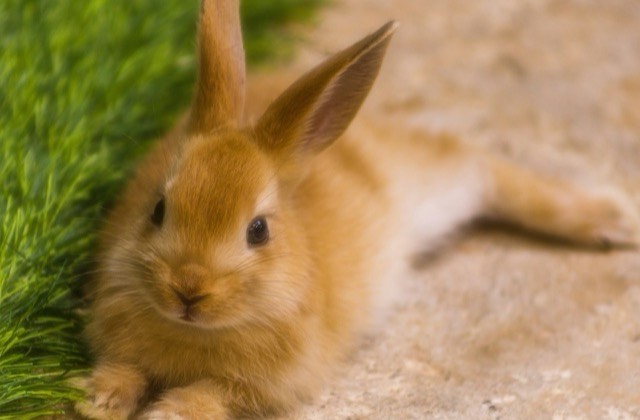
In a rabbit carrying the functional agouti allele, as in the Fauve de Bourgogne, each guard hair alternates dark zones with a golden-tawny band, producing the shimmering, non-uniform look typical of the breed. A rabbit carrying the non-agouti mutation identified by the study loses this alternation and shows a flat colour along the full length of the hair.
Does this genetics affect moulting?
The agouti gene mechanism doesn't directly change the pace of moulting, but a banded coat makes partial regrowth far more visible than a solid coat would: a moulting patch on a Fauve de Bourgogne can look duller or mottled without that being any cause for concern.
How to support a moult in this breed?
Regular brushing limits how much dead hair gets swallowed during the spring and autumn moulting peaks, an essential point since rabbits cannot vomit up swallowed clumps. Our article on moulting tools covers the right equipment for different coat lengths and densities.
- Agouti coat: several colour bands on each hair, behind the shimmering tawny look.
- Non-agouti mutation: responsible for solid coats such as black or blue.
- Moulting: more visible on a banded coat, with no direct link to the agouti gene itself.
- Care: regular brushing during moulting peaks to limit swallowed hair.
Understanding the genetics behind the Fauve de Bourgogne's coat mainly helps tell a naturally banded coat apart from a genuine skin issue, two things new owners sometimes mix up.
Frequently asked questions
Does the agouti coat change with age?
Kits are often born with a duller shade that gradually brightens after the first moults, without the banded hair structure itself changing.
Does a dull coat signal a health problem?
Not necessarily: a temporarily less shimmering coat during moulting is normal, but patchy hair loss warrants a vet's opinion.
Do all tawny breeds share this same mechanism?
The banded-hair principle is similar across most agouti-coated breeds, even though the exact shades vary depending on other modifier genes.
See it in the Planète Pets shop: Hanging chew garland for rabbits and rodents (€17.90) · the whole shop
This guide is part of Planète Pets’s Rabbits universe. Our advice is general in nature: for any health concern, your veterinarian remains the only reference.