Care and grooming for your fish: the gear that matters
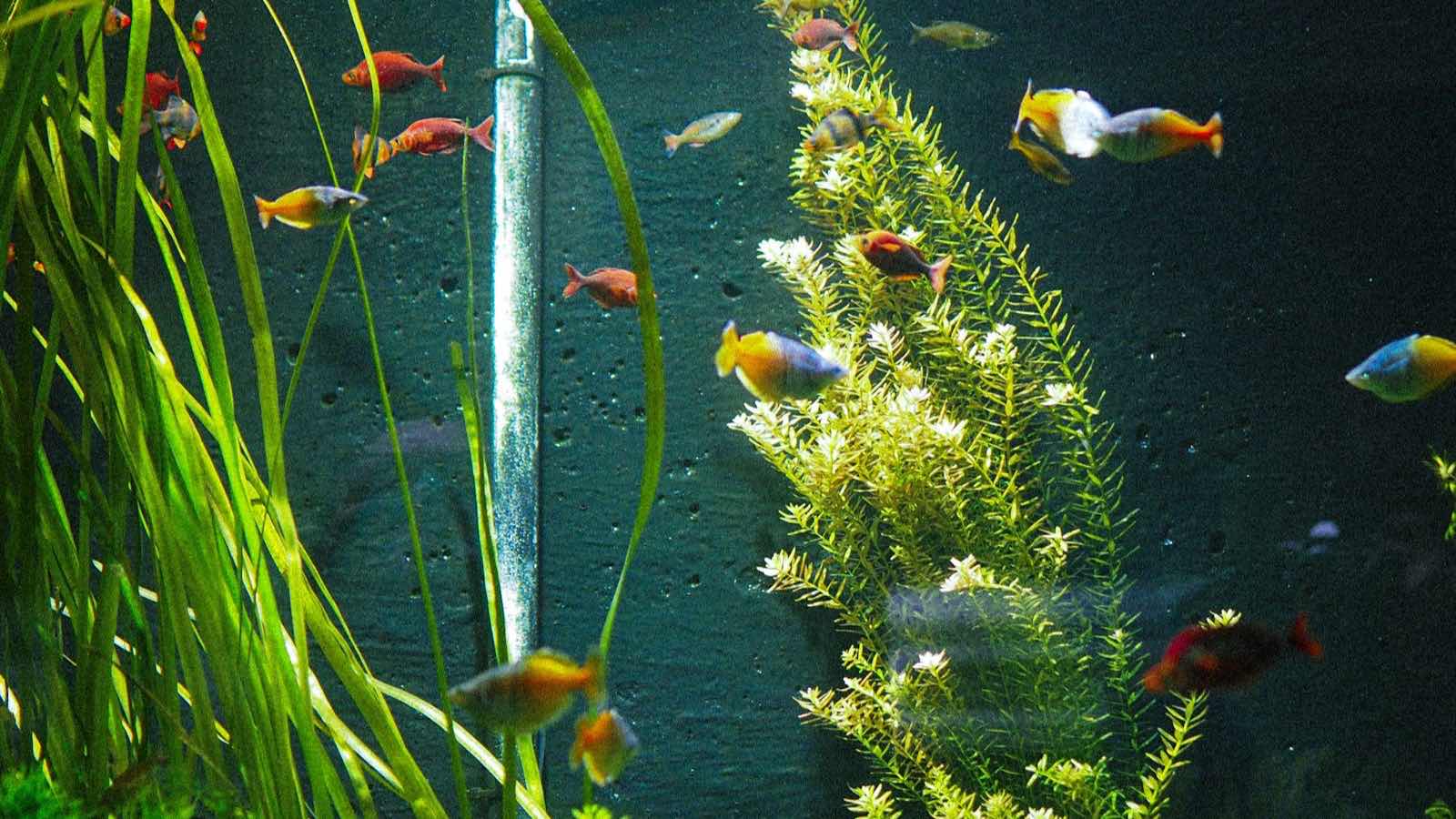
Brushes, hygiene products, parasite control, habitat upkeep: your fish’s routine care happens at home, with the right equipment. Our guides separate the essential from the gimmick — and say when the vet, not the shop aisle, should have the answer.
🛒 Our picks from the shop
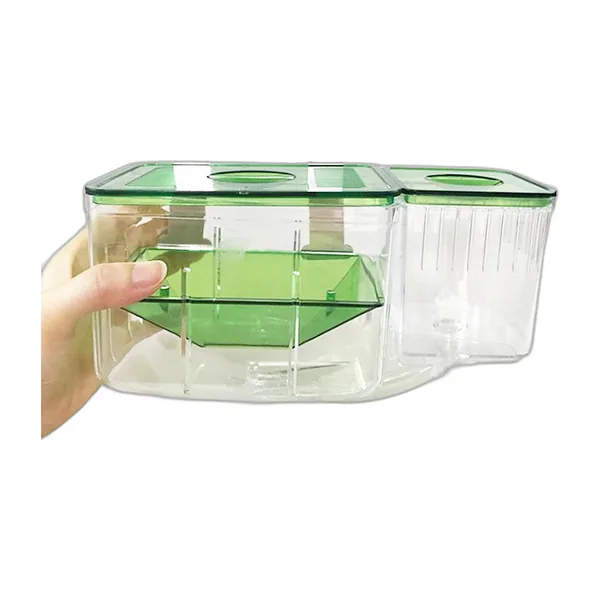
Delivery in 8 to 15 working days, free from €49 (otherwise €4.90). See the whole shop
🩺 Reminder: this page informs, it does not diagnose. For any symptom or health question, your veterinarian remains the only reference.
The key point : A test kit (NO2, NO3, GH, KH, pH) costs €15–30 and prevents most disasters — the nitrogen cycle is non-negotiable.
Our dedicated guides
- Changing filter media too often: the mistake that wrecks your aquarium's cycle
Why you should never replace all your filter media at once: nitrifying bacteria, replacement frequency and the right habits.
- Restarting a neglected aquarium: a step-by-step guide
How do you restart an aquarium that's been left neglected without endangering the fish? Steps, water changes and mistakes to avoid.
- GH, KH and pH: understanding and adjusting aquarium water hardness
GH, KH, pH: what do these three readings actually measure, and how do you adjust aquarium water hardness without stressing the fish?
- Betta fin rot: symptoms, causes and treatment
How do you recognize and treat fin rot in bettas? Bacterial causes, early warning signs and the right steps to take.
- Pest snails in the aquarium: where they come from and how to control them
Why pest snails take over an aquarium, whether you should worry, and how to control them: quarantine, predators, traps and simple good habits.
- Aquarium salt in freshwater: useful or dangerous for your fish?
Is aquarium salt in a freshwater tank useful or dangerous? What it really does, when it helps, and which species should never be salted.
- Axolotl Water Parameters: Temperature, Nitrite and Flow
What water parameters does an axolotl need? Cool temperature, zero ammonia and nitrite, gentle flow: the benchmarks for a sensitive amphibian.
- Algae-Eating Fish and Snails: Which Ones Should You Choose?
Otocinclus, bristlenose pleco, nerite snails: which algae-eating fish and snails should you pick depending on the algae type and tank size?
- Can You Hold an Axolotl? Handling, Risks and the Right Moves
Should you handle an axolotl? Fragile skin, protective slime coat, when and how to move it without harming or stressing it, and why to avoid taking it out of water.
- Chlorine and Chloramine in Tap Water: Why They Kill Your Fish
Chlorine and chloramine in tap water are toxic to fish and to your biofilter. Why you must condition water before every water change or new tank setup.
- RO units and reverse osmosis water in aquariums: who actually needs it?
Is reverse osmosis water essential for an aquarium? Find out who really needs an RO unit, how to remineralize and what budget to plan (unit or jerrycan).
- Water conditioner and starter bacteria: essential or just marketing?
Water conditioner and starter bacteria: what do they actually do? Chlorine, heavy metals, faster cycling: what to buy and what to skip.
- Aquarium UV sterilizer: the radical fix for green water
A UV sterilizer clears green aquarium water within days. How it works, wattage, prices and limitations: what to know before you buy.
- Hospital and quarantine tank: the kit that saves your fish (and your tank)
A hospital quarantine tank keeps diseases and parasites out of your main aquarium. The complete low-cost kit: tank, filter and heater.
- Test strips or liquid test kits: which should you choose for your aquarium?
Test strips or liquid test kits for your aquarium? Accuracy, cost per test, parameters covered: the honest comparison and the mixed strategy that works.
- Cloudy water in a new aquarium: the bacterial bloom explained
Milky, whitish water in the first days of a new aquarium is almost always a bacterial bloom. Why it happens and how to let it pass without making mistakes.
- Low oxygen in summer: why warm water suffocates fish
The warmer the water, the less oxygen it holds, while fish need more of it. How to recognise summer oxygen shortage and prevent it.
- Copper and algae treatments: what is deadly for Cherry shrimp
Dwarf shrimp like the Cherry shrimp are far more sensitive to copper than fish. Here is why, and how to avoid an accidental poisoning in a nano tank.
- Old tank syndrome: why a sudden big water change can do harm
A long-neglected aquarium adapts to high nitrates. A sudden large water change can then shock the fish rather than help them. Understanding this risk and avoiding it.
- Gravel vacuum: cleaning the substrate without breaking the nitrogen cycle
Running a gravel vacuum removes waste built up in the substrate without destroying the filter's useful bacteria. The right frequency and technique for effective, risk-free cleaning.
- Water parameters for shrimp (Neocaridina, Caridina): the beginner's guide
Tolerant Neocaridina or demanding Caridina: aquarium shrimp don't share the same needs. GH, KH, pH, temperature and the danger of copper, explained to succeed with a shrimp tank.
- Nitrite in the aquarium: why it poisons fish and what to do
Invisible but formidable, nitrite blocks oxygen transport in fish blood. Where it comes from, how to spot it and how to react fast to avoid a wipeout.
- Using Rainwater for Your Aquarium: Good Idea or Risk to Avoid?
Rainwater seems soft, free and chlorine-free, but it is far from neutral for an aquarium. What it actually contains, the real risks, and the cautious uses that remain possible.
- Goldfish Floating Upside Down or Stuck at the Bottom: Swim Bladder Disorder, Symptoms and Treatment
A goldfish swimming on its side or stuck at the surface is almost always dealing with a digestive swim bladder disorder. Causes, at-risk varieties, and treatment without medication.
- Neon Tetra Disease: Symptoms, and Why It's Often Misdiagnosed
Discoloration, erratic swimming, weight loss: neon tetra disease worries fishkeepers, but a study shows it is often confused with a different, far more common and treatable illness.
- Velvet Disease (Oodinium) in Fish: Spotting the Gold Dust and Treating It in Time
A fish rubbing against decor, its skin dusted with fine gold powder: velvet disease progresses fast and can wipe out a tank in days. Symptoms, diagnosis and treatment.
- Bacterial Biofilm on Aquarium Glass and Decor: Normal or a Sign of Trouble?
A clear, slightly slimy film often appears a few days after filling a new tank. Most of the time this bacterial biofilm is perfectly normal — here's when it actually deserves concern.
- Hang-on-back or internal filter: which to choose for your aquarium?
Hang-on-back or internal filter for your aquarium? The hang-on-back frees up space and is serviced without hands in the water, the internal costs less. Comparison.
- Buying the fish and the aquarium on the same day: why it is the fatal mistake
Buying fish and aquarium the same day exposes your fish to the ammonia spike: 3 to 4 weeks of cycling are essential. Explanations and timeline.
- Should you change all the aquarium water? No, and here is why
Changing all the aquarium water destroys the bacterial balance and stresses the fish. Best practice: 10 to 25 % per week. Method and special cases.
- Filamentous (Hair) Algae in Aquariums: Causes and How to Get Rid of It
Long green strands cling to plants and decor and grow back within days of every cleanup. Understanding why filamentous algae thrives before reaching for a lasting fix.
- High Nitrates in Your Aquarium: Where They Come From and How to Lower Them
Unlike nitrites, nitrates do not kill within hours, but a persistently high level stresses fish and weakens the tank. Where they come from and concrete ways to bring them down.
- Columnaris (Cotton Mouth Disease) in Fish: Spotting the White Threads and Treating Fast
Whitish threads around the mouth, fins fraying at the edges: columnaris can progress within hours. Symptoms, triggers and treatment.
- Hexamitosis (Hole-in-the-Head Disease) in Cichlids: Causes and Treatment
Small erosions appear on the head or lateral line of some cichlids: hexamitosis remains poorly understood but is often linked to diet and stress. What to know before acting.
- Using the Same Net for Several Tanks: The Mistake That Spreads Disease
A single wet net is enough to carry parasites and bacteria from one tank to another. Why dedicating equipment to each aquarium changes everything.
- Giving a Fish or an Aquarium to a Child: Good Idea or Bad Idea?
A goldfish won at a fair or a tank unwrapped at Christmas: charming on paper, but the day-to-day care almost always lands on the parents.
- Dropsy in Fish: Symptoms, Causes and Treatment
Pinecone scales, swollen belly... dropsy is a serious sign, not a disease in itself. How to recognise it and act fast.
- Noise and Vibration Near the Tank: A Real Stress Factor
Tapping the glass, an aquarium next to a speaker or a busy hallway: these disturbances genuinely raise stress levels in fish.
- Betta Bubble Nests: What Do They Actually Reveal?
A betta building a bubble nest isn't necessarily happier, but the behavior is tied to some interesting measurable traits.
- Power Outage: Why Goldfish Outlast Tropical Fish Without Aeration
A scientific discovery explains why goldfish survive longer than tropical fish during an aeration or filtration outage.
- Damaged Fin: How Does a Fish Actually Regrow It?
A scientific review explains how a fish regenerates an injured fin and what speeds up or slows down that regrowth.
- Sores That Won't Heal After Tank Work: The Fish Tank Granuloma Risk
A study documents fish tank granuloma, a skin infection aquarists can pick up by putting bare hands into the tank.
- Anchor Worms and Fish Lice (Argulus): How to Spot and Treat Them
A whitish thread stuck in the skin, or a small flat disc that moves around: two external fish parasites to recognize and treat quickly.
- Marine White Spot (Cryptocaryon irritans): How It Differs From Freshwater Ich
Marine tank white spot isn't caused by the same parasite as freshwater ich and doesn't respond to the same treatment: the key differences.
- Stocking Density and Fish Stress: What a Trout Study Shows
Beyond a simple liters-per-fish calculation, stocking density directly affects stress hormones and fish health.
- Quarantining a New Fish Before Introduction: Duration and Step-by-Step Protocol
Isolating every new fish for two to four weeks before adding it to the main tank remains the best protection against introducing a disease.
- Introducing Otocinclus Into a Too-Young Tank: The Mistake That Kills Them in Weeks
This small, unassuming cleaner fish is especially sensitive to the ammonia and nitrite spikes of a recently cycled tank.
- Aquarium and room humidity: when should you actually worry?
A large open tank releases water vapour continuously. In a poorly ventilated room, this humidity can over time favour mould on walls and wooden furniture.
- Ammonia in an aquarium: why the same reading is harmless at pH 6.5 and lethal at pH 8
A water test shows 0.5 mg/L of ammonia: the real danger depends almost entirely on the tank's pH and temperature. The reference calculations explain this hundredfold gap.
- Ich (white spot disease) in fish: recognising and treating the most common ailment
Ich (white spot disease) affects almost every fishkeeper at some point: tiny white spots, fish flicking against decor, usually clears up in 7 to 10 days.
- Treating in the main tank: the molecules that shut down your biofilter
A study tested fifteen medications against nitrification: seven clearly inhibit it, eight leave it alone. Enough to know when a hospital tank isn't optional.
- Mixing goldfish and tropical fish: the temperature mistake you should never make
Goldfish and tropical fish don't share the same temperature or the same needs: why this common beginner mix puts both at risk.
- Aquariums and pregnancy: what safety precautions should you take?
Aquarium maintenance during pregnancy: the hygiene precautions to know so you can keep looking after your tank without unnecessary risk.
- Microbubbles that will not clear: the fault no water test detects
A film of tiny bubbles that lingers on the glass can signal dissolved gas supersaturation. What two recent studies document about this phenomenon and its thresholds.
- Lights on around the clock, feeding at random hours: the hidden stress behind an overactive goldfish
A 2023 study tested constant lighting and unpredictable feeding times on goldfish: anxiety-like behaviour and elevated cortisol, with no equipment at fault.
- Cleaning your aquarium with soap or detergent: the mistake that can kill your fish
Why you should never clean an aquarium with soap or detergent: toxic residue, safe alternatives and good maintenance habits.
- Water Tests and the Nitrogen Cycle: The Essential Kit Before Adding Fish
Understand the nitrogen cycle and choose your water tests (strips or liquid drops): the guide to starting an aquarium without losing your first fish.
Care & grooming breed by breed: every fish profile covers this product family with that species’ own figures.