Fish Tank Granuloma: Symptoms, Treatment and Prevention
Published by Planète Pets · managing editor: Clément Lacaille · how our guides are written
Fish tank granuloma is a skin infection caused by Mycobacterium marinum, a bacterium found in aquarium water, that enters through a small cut on the hand. Weeks later, a reddish bump appears, usually on a finger or the back of the hand, and does not heal. It is treated by a doctor, generally with antibiotics for several months, and it is largely preventable with waterproof gloves. Find our other pointers in the care and grooming section and on the fishkeeping hub.
Contents · 6 sections
Fish tank granuloma symptoms
- A bump or nodule, red to purplish, that grows slowly, sometimes crusts or turns into a small sore that will not heal.
- Usually on the hand or arm: in a French national series of 63 cases published by Aubry and colleagues in 2002 in Archives of Internal Medicine, the upper limb was involved in 95% of patients (see the study).
- A link to the aquarium: in the same series, 84% of infections were related to fish tank exposure.
- Few general signs: often no fever, which is one reason the link to the tank is missed.
- Possible spread: in 29% of the French cases, the infection had reached deeper structures such as tendons or joints.
How the bacterium gets in
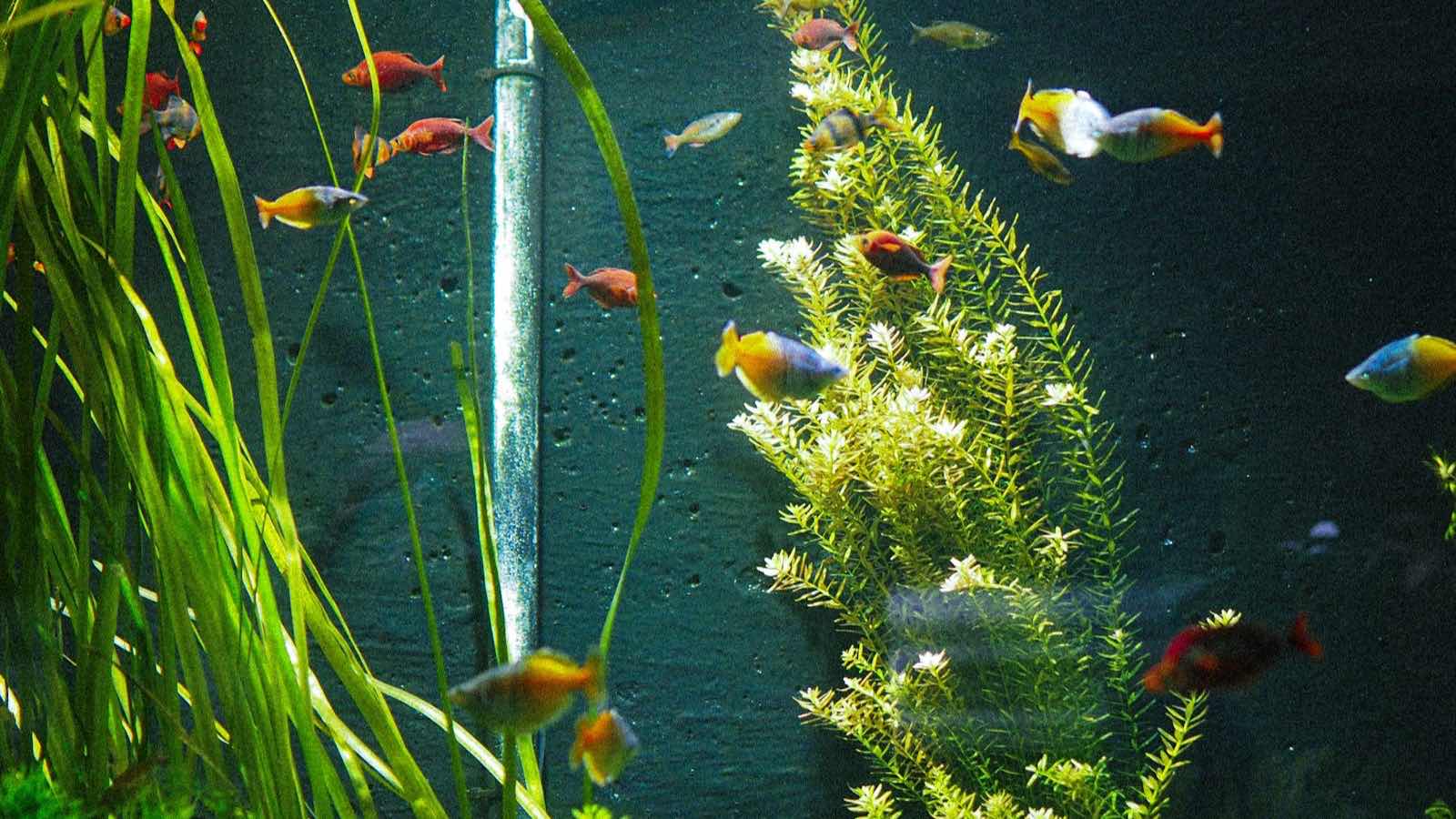
Mycobacterium marinum lives in the water and on the surfaces of aquariums, fresh or salt. The risk appears when a cut, a scrape or a prick from a fish spine or sharp decor stays in contact with tank water: the bacterium settles under the skin through this opening.
Why it is often diagnosed late
A study by Slany, Jezek and Bodnarova, published in 2013 in BioMed Research International, describes two aquarists infected with M. marinum; one was first treated for rheumatoid arthritis before the infection was identified, which delayed the right treatment (see the study). The first lesion often looks like a wart or a stubborn pimple. Telling your doctor that you keep an aquarium is the single most useful step, because it points towards the right tests.

Fish tank granuloma treatment
Treatment is decided by a doctor, usually after a skin sample is taken and cultured. In the Aubry series, all patients received antibiotics, for a median of three and a half months, the initial regimen was changed in about a third of cases, and 48% also had surgery. Cure was observed in 87% of patients; failures were linked to infections that had spread to deeper structures. Do not try to treat a suspicious lesion yourself: the earlier it is diagnosed, the simpler the treatment.
Preventing it day to day
- Long waterproof gloves for maintenance, especially when vacuuming the substrate or moving rocks and wood.
- No bare hands in the tank with a cut: cover it with a waterproof dressing, or wait.
- A net rather than your hand to catch a fish, including in a hospital tank.
- Wash your hands and forearms with soap after any work in the tank.
- Never start a siphon by mouth.
Frequently asked questions
Does the risk apply to small home tanks too?
Yes: it depends on contact between a wound and the water, not on tank size.
Is fish tank granuloma contagious between people?
It is caught from the water, not passed between people in everyday life.
Can I just disinfect the tank?
No: the bacterium lives in the stocked tank itself, so eliminating it is unrealistic. Prevention relies on protecting your skin. A sore that will not heal after tank work warrants a visit to the doctor, mentioning the aquarium.
This guide is part of Planète Pets’s Fishkeeping universe. Our advice is general in nature: for any health concern, your veterinarian remains the only reference.