Microbubbles that will not clear: the fault no water test detects
Published by Planète Pets · managing editor: Clément Lacaille · how our guides are written
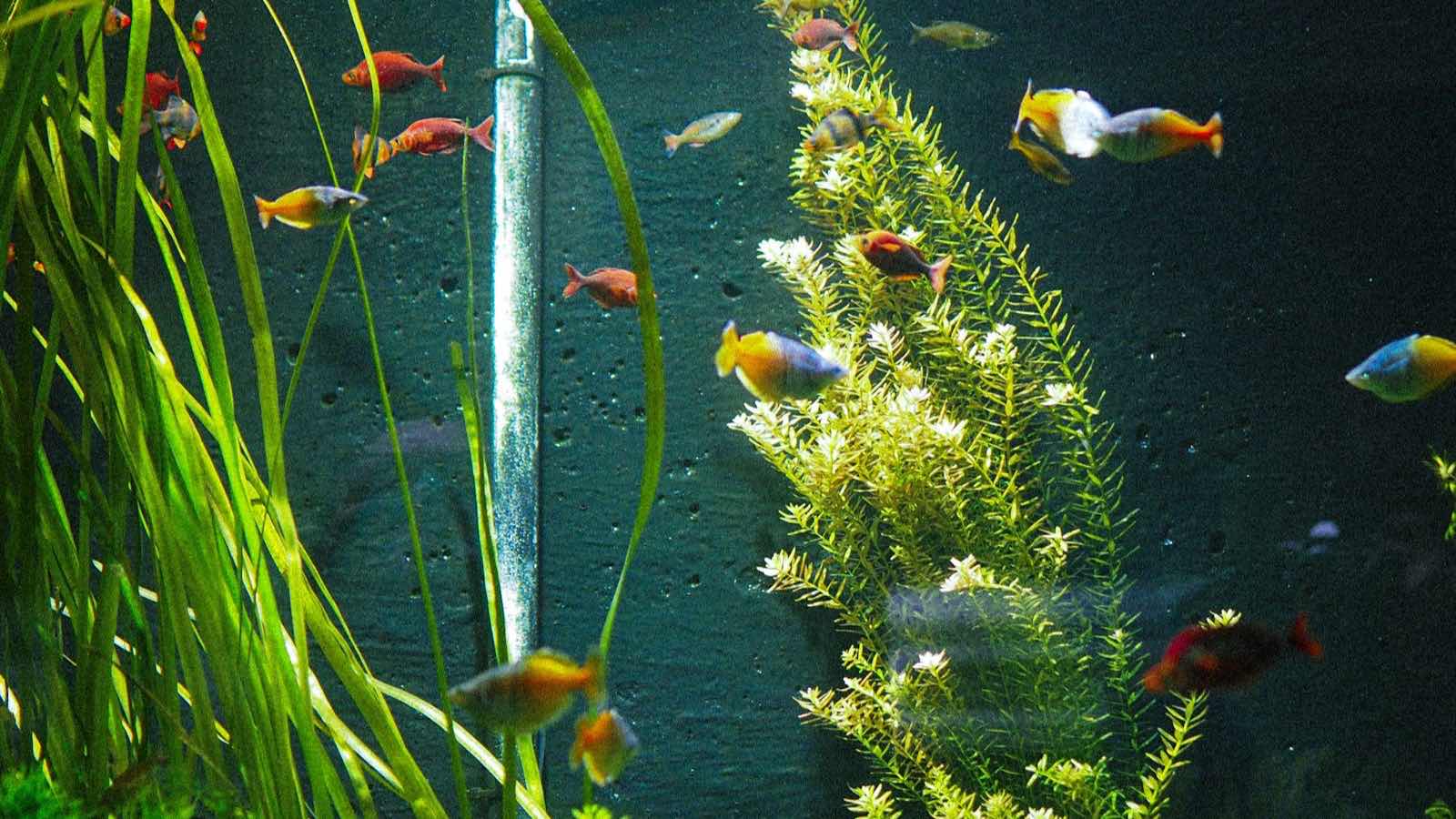
After a water change, a fine film of bubbles often settles on the glass and the decor, then clears within a few hours. When it does not clear, or when it keeps reappearing at the filter outlet, it is no longer an ordinary phenomenon. Our other maintenance guidance is gathered in the fish care section.
The phenomenon: water carrying too much gas
Water can carry more dissolved gas than atmospheric pressure allows it to hold at equilibrium. This imbalance typically occurs when cold pressurised water is warmed, or when a pump draws air through a faulty seal and shears it into microbubbles. The excess gas eventually comes back out — including inside the fish's blood and tissues, where it forms bubbles. This is gas bubble disease.
A documented case, caused by an equipment fault
A study published in 2024 by Hong and colleagues in the Journal of Aquatic Animal Health describes a mass mortality in golden trevally kept in a public aquarium (see the study, doi 10.1002/aah.10237). The fish showed abnormal swimming, lethargy and gas bubbles visible in the cornea, in the aqueous humour and in the oral mucosa; necropsy found them in various tissues. The cause identified by the authors is excessive microbubble formation due to structural defects in the water circulation system. This is a single case, with no measured dissolved gas value and no dose-response relationship: it documents a mechanism, not a threshold.
From what level? What the most complete trial says
A study published in 2026 by Isaksen, Pulg, Lennox and colleagues in PLOS ONE exposed 1,440 fish to total dissolved gas levels ranging from 100 to 120% (see the study, doi 10.1371/journal.pone.0342556). The acute form appears only in the largest Atlantic salmon and brown trout parr, between 115 and 120%, with gill gas emboli and subcutaneous emphysema within one to six hours. At 120%, those two species lose 1.2 to 7.5 dead or moribund fish per hour, against 0.5 per hour for the rainbow trout used as a reference trial on twenty-five individuals (p < 0.003), with a median lethal time of four to fifteen hours against twenty-five hours.
The most interesting result is the reassuring one: larvae, and the adult European minnow — the only cyprinid tested — show only low mortality and subacute effects up to 120%. No tropical ornamental species was tested: these thresholds cannot be transferred to a guppy or a neon tetra.
Why no water test sees it
This is what makes the problem insidious. Commercial kits measure pH, nitrite, nitrate, ammonia and hardness; none measures total dissolved gas, which requires a dedicated probe. A tank with perfect parameters can therefore be supersaturated. The only accessible clue is visual: microbubbles clinging to the glass, the plants and the fins, and persisting beyond a few hours.
What to look for, and what is not to blame
An air leak on the intake side — a dried-out seal, a cracked hose, a water level that has dropped below the strainer — is the first thing to check, in line with the mechanism described by Hong and coauthors. Filling directly from a pressurised cold water hose is a second, known to the veterinary literature but tested experimentally by neither of these studies: letting refill water stand remains a sensible precaution rather than a validated measure.
Conversely, an air pump is not to blame: it actually helps water re-equilibrate with the atmosphere, as we detail in our article on bubble size and oxygen transfer. The opposite problem, a lack of oxygen, follows an entirely different logic and is covered in our article on low oxygen in warm water.
Frequently asked questions
Are bubbles on the glass after a water change abnormal?
No, if they clear within a few hours. It is their persistence, or continuous release from the filter, that should prompt a search for an air leak.
Which signs in the fish should raise the alarm?
In the published case, bubbles were visible in the eye and in the oral mucosa, together with abnormal swimming and lethargy. These signs warrant veterinary advice without delay.
This guide is part of Planète Pets’s Fishkeeping universe. Our advice is general in nature: for any health concern, your veterinarian remains the only reference.