Air pump bubbles: does their size actually change oxygenation?
Published by Planète Pets · managing editor: Clément Lacaille · how our guides are written
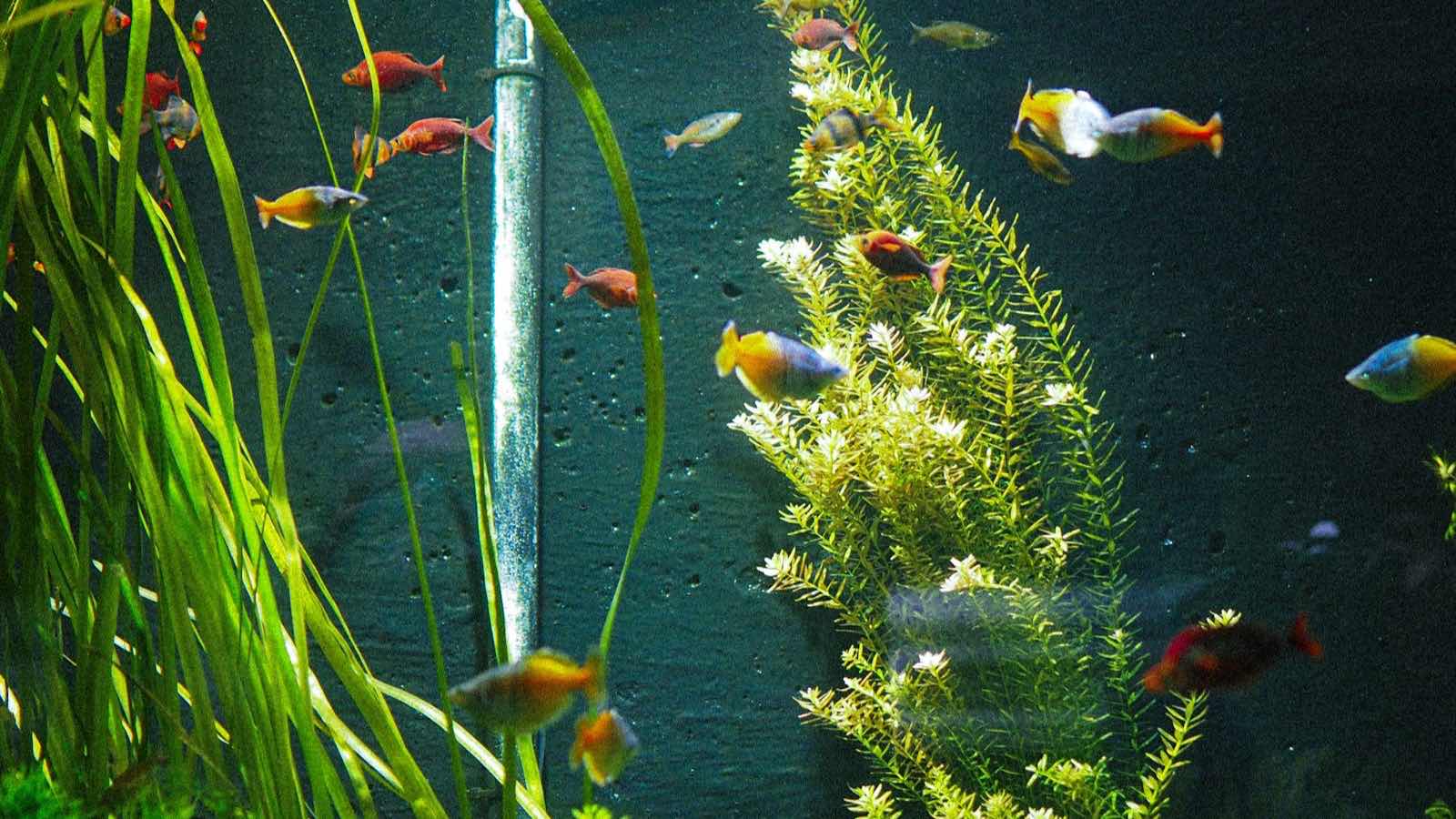
Fritted sand, bubble bar, ceramic diffuser: on the accessories shelf, every air pump looks much like the next. An aquaculture engineering study has actually measured, bubble by bubble, what really determines how much oxygen reaches the water. Useful once you have settled when an air pump is actually worth having.
Measuring bubbles one by one
Cruz, Marouchos and Bilton published a study in 2022 in Aquacultural Engineering validating an oxygen-transfer model for an economical porous diffuser, tested across three water volumes of 137, 160 and 192 litres — scales close to plenty of home aquariums (see the study). Using an image-processing tool built for the purpose, the authors measured the actual diameter of the bubbles produced at different airflow rates and diffuser depths, then compared those measurements against the model's theoretical predictions.
A model that holds up, with a known margin of error
The theoretical model proved reliable: the gap between predicted and measured oxygen transfer coefficients stayed within roughly 13% to 20% depending on conditions, a level considered satisfactory in aeration engineering. The physical principle running through this line of work is consistent: the smaller the bubbles produced, the larger their exchange surface relative to their volume, and the more efficient the oxygen transfer per litre of air pushed through — at the cost of higher pressure needed to force air through the diffuser.
What this means for choosing an air pump
A porous stone or fine fritted-sand diffuser produces smaller, more numerous bubbles than a simple plastic bubble bar: at the same airflow, it transfers oxygen more efficiently, but it also clogs faster and needs a slightly stronger pump to make up for the added resistance. For occasional back-up use (a heatwave, a filter breakdown), the difference stays secondary next to the basic move: agitating the surface, as covered in our accessories section. For a heavily stocked tank, though, a fine diffuser is worth the extra cost.
Limits of the comparison
This study covers an economical diffuser built for aquaculture, not a shoot-out of pet-shop air pumps: the tested volumes sit close to an aquarium's, but the hardware is not strictly the same. The physics of gas transfer does not change with scale, but the exact size of the gain with any given commercial diffuser would still need checking case by case. Worth repeating too, as our article on low oxygen in warm summer water details, that most gas exchange still happens at the surface, not inside the bubble column itself.
Frequently asked questions
Is a fine diffuser essential for an ordinary aquarium?
No: in a normally stocked tank already agitated by the filter, bubble size stays a fine-tuning detail, not a matter of survival for the fish.
Why does my diffuser produce bigger and bigger bubbles over time?
Its pores are gradually clogging: replace it rather than trying to clean it indefinitely, since its transfer efficiency drops mechanically as it fouls.
This guide is part of Planète Pets’s Fishkeeping universe. Our advice is general in nature: for any health concern, your veterinarian remains the only reference.