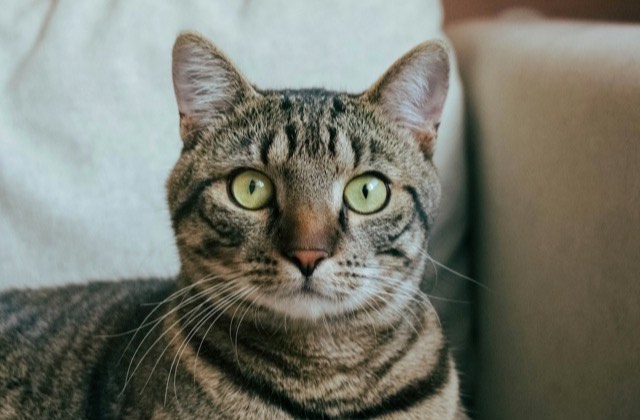
Stress-free cat grooming: glove or brush, how to get it right
Published by Planète Pets · managing editor: Clément Lacaille · how our guides are written
A cat that bolts the moment it sees the brush isn't necessarily a difficult cat: it's often the tool or the way it's used that's the problem. A grooming glove, gentler and closer to a stroke, is generally better tolerated on first contact than a classic brush. All our pointers are in the cat care and grooming section, on the cat page.
Contents · 5 sections
Why do some cats hate being brushed?
The brush can pull on painful mats, make an unfamiliar noise or sensation, or bring back a bad past experience (a snagged claw, too rough a motion). A cat in pain or an older cat with arthritis may also refuse to be handled in certain positions. A cat recovering after surgery can also become temporarily more sensitive to touch: our guide to the recovery bed covers how to adapt everyday handling during that period. In every case, physical restraint makes the rejection worse: the more force you use, the stronger the negative association gets.
Grooming glove or classic brush: which to choose first?
A silicone or rubber glove mimics the feel of a hand and suits fearful cats, kittens or a first session well. A pin brush or slicker brush stays more effective on medium or dense coats, once the cat is used to the motion. Many households use both: the glove for daily bonding and contact, the brush for a deeper session once or twice a week.
How to introduce brushing without stress
Professional guidelines for respectful feline handling, published in 2011 in the Journal of Feline Medicine and Surgery by Rodan and colleagues for the AAFP and ISFM, stress letting the cat approach voluntarily, avoiding any forced restraint, and respecting its stress signals to preserve trust (see the study). In practice:
- Pick a calm moment, never right after an exciting play session or a big meal
- Let the cat sniff the tool before you start
- Brush the areas it tolerates well first (back, cheeks), avoiding the belly at the outset
- Keep each session to two or three minutes at first, repeating more often instead
- Always end on a positive note, a treat or a stroke, before the cat shows signs of irritation
When to stop and get help?
If the cat scratches, bites or panics despite short, gradual sessions, it's better to see a vet to rule out underlying pain, or call in a professional groomer used to reluctant cats rather than forcing it.
Frequently asked questions
Does a grooming glove replace a brush?
Not entirely: it's ideal for getting a cat used to contact, but a brush or slicker remains more effective at removing dead undercoat on a dense coat.
How long should a brushing session last?
Two to three minutes is enough at first; short, frequent sessions beat one long session that builds up stress.
Does a cat that refuses all brushing necessarily have a behavior problem?
Not necessarily: pain, arthritis or a bad past experience are common causes to rule out before assuming it's simply stubbornness.
An accessory from our shop for this use: Stainless-steel pin brush for cats (€18.90) · the whole shop
For the gear, at Le Félin (same family, zero commission): Arbre à chat XXL solide (from €169.99)
This guide is part of Planète Pets’s Cats universe. Our advice is general in nature: for any health concern, your veterinarian remains the only reference.