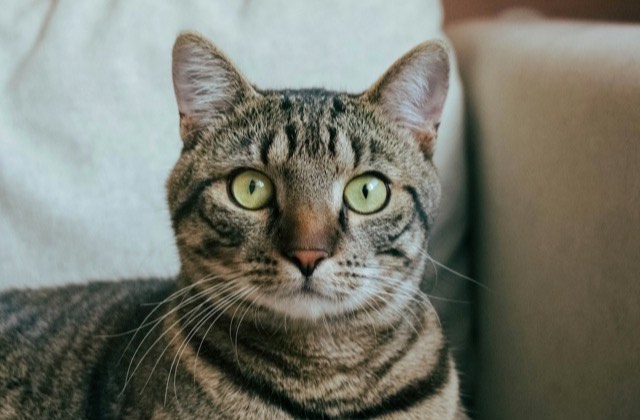
Somali cat: pyruvate kinase deficiency, the anaemia that comes and goes
Published by Planète Pets · managing editor: Clément Lacaille · how our guides are written
A Somali that goes through phases of unexplained tiredness with pale gums, then returns to normal for months, is not being seasonally moody. That sawtooth pattern is the signature of erythrocyte pyruvate kinase deficiency, an inherited red blood cell disorder well documented in the breed. The Somali breed profile sets the context.
Contents · 5 sections
What happens inside the red cell
Pyruvate kinase is the enzyme that supplies energy to the red blood cell. When it is missing, the cell lives less long and breaks down prematurely: the result is a regenerative haemolytic anaemia. The causal mutation, in the PKLR gene, was characterised by R. A. Grahn, Leslie Lyons and colleagues in a study published in 2012 in BMC Veterinary Research covering 14,179 American and European cats across 38 breeds (see the study). That same study supplies the single most useful figure on the subject: the mutant allele frequency reaches 8.53% in the Somali and 12.6% in the Abyssinian, while 25 of the breeds tested do not carry it at all. Across a population, that works out at roughly one Somali in six being a healthy carrier — enough for chance alone to produce affected kittens in a cattery that does not test.
A disease with many faces
That is what makes it hard to spot. Barbara Kohn and C. Fumi followed 25 deficient cats for 0.8 to 11.3 years in a study published in 2008 in the Journal of Feline Medicine and Surgery: eleven stayed completely asymptomatic, fourteen showed lethargy, diarrhoea, pale mucous membranes, inappetence, poor coat, weight loss, jaundice or pica (see the study). On bloodwork, 70% were anaemic, 94% showed reticulocytosis and 53% hyperbilirubinaemia. Symptomatic cats were between 0.1 and 5 years old, median 1.7 years, while some asymptomatic ones reached nearly eight. Diagnosis can therefore come very late: the first published Australian case, described by Caroline Mansfield and P. Clark in 2005 in the Australian Veterinary Journal, was a seven-year-old Somali presented for jaundice and severe anaemia with splenomegaly (see the study).
What can be done
There is no cure short of bone marrow transplantation, and management is symptomatic: transfusion during severe crises, regular haematological monitoring, and limiting the stress and intercurrent illness that trigger flare-ups. In the Kohn and Fumi cohort six cats out of twenty-five died or were euthanised, at a median age of 4.1 years, but the others lived close to a normal lifespan. In other words the prognosis is not uniform, and an early diagnosis avoids the badly prepared anaesthetic or surgery on an anaemic cat.
The test, and the questions to ask
The test looks directly for the PKLR mutation from a cheek swab or blood, at any mainstream feline genetics laboratory; budget around fifty euros and one to two weeks. Inheritance is autosomal recessive: a carrier is perfectly healthy, and only carrier-to-carrier matings produce, on average, a quarter of affected kittens. Ask for both parents' dated results. Financially, transfusions, repeat work-ups and hospital stays weigh heavily and are excluded if the disease is already known when you apply — our benchmarks are in insuring a Somali and in pet insurance for cats. For the daily life of a very active cat, see vertical space for a Somali and the cat care and grooming section.
Frequently asked questions
Can a carrier cat become ill?
No. Only homozygous cats, which inherited the mutation from both parents, develop the anaemia.
Which signs mean an emergency visit?
White gums, marked dullness, yellowing of the mucous membranes or fast breathing at rest. Haemolytic anaemia can decompensate quickly.
Are some procedures riskier in a deficient cat?
Any anaesthetic or surgery should be preceded by a recent complete blood count, and the vet must be told the cat's genetic status.
In our shop, for this use: Litter scoop with stand and bag roll in the handle (€20.90) · the whole shop
For your cat, at Le Félin (same family, zero commission): Arbre à chat beige (from €149.99)
This guide is part of Planète Pets’s Cats universe. Our advice is general in nature: for any health concern, your veterinarian remains the only reference.