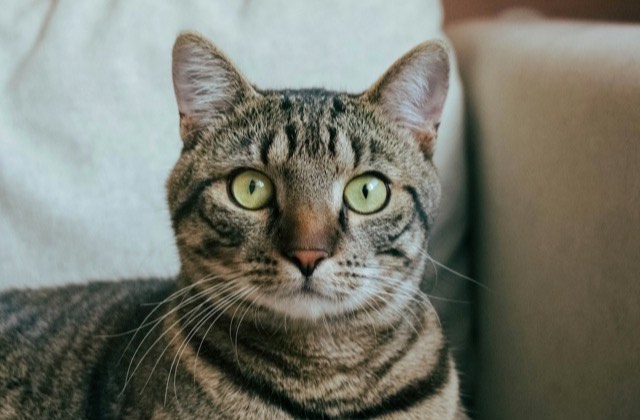
Munchkin: what research has actually measured about those short legs
Published by Planète Pets · managing editor: Clément Lacaille · how our guides are written
Few breeds divide opinion like the Munchkin, and few debates rest on so many unverified claims, on both sides. Yet precise scientific publications on its skeleton and genetics now exist. They say neither "everything is fine" nor "these cats suffer" — they say something more useful. The Munchkin breed profile describes the breed's build.
Contents · 5 sections
A gene identified, and a homozygote that does not exist
The team of A.-K. Struck, Julia Metzger and Ottmar Distl in Hanover published a study in 2020 in BMC Genetics linking the Munchkin phenotype to a structural variant of the UGDH gene. Across 260 genotyped cats — 42 standard Munchkins, 15 non-standard and 203 controls — segregation was perfect, but not a single homozygous mutant cat was observed. Combined with reduced litter sizes, that points to embryonic lethality in the homozygous state: the mutation is inherited dominantly and kills before birth when present in two copies. This is not an activist opinion, it is a published genetic finding — and it has a direct practical consequence: mating two standard Munchkins produces smaller litters.
Bone deformity measured in every limb
The most detailed skeletal study is by L. M. Anderson, Derek Fox, Leslie Lyons and colleagues, published in 2021 in Veterinary and Comparative Orthopaedics and Traumatology, comparing the limbs of disproportionate dwarf cats with those of normally built cats by radiography and MRI (see the study). The result is unambiguous: 100% of the limbs examined showed angular deformity — a sigmoid humerus, a radius with proximal varus and distal valgus plus consistent external torsion of the forearm, femoral coxa vara, proximal tibial valgus and distal varus. The authors conclude that feline disproportionate dwarfism causes significant deformity across all limbs.
And what those studies do not say
That matters just as much. In the same cohort, no radiographic sign of arthritis was found — the cats were young, and the authors only hypothesise that misalignment could predispose to secondary osteoarthritis, by analogy with the dog. The study assessed neither pain nor lameness. No spinal disease was detected on MRI, and the authors explicitly describe their disc degeneration data as inconclusive. Finally, no study has measured a Munchkin's jumping performance. What we do know is that in normally built cats take-off velocity depends on hind limb length and on the fat-to-lean mass ratio, as M. A. Harris and Karen Steudel showed in 2002 in the Journal of Experimental Biology across 18 cats (see the study). You can infer that a short-limbed cat jumps lower; you cannot put a number on it. Worth flagging too: those skeletal data rest on five cats radiographed and two scanned. That is a small sample.
What to do with all this day to day
Two conclusions hold up. First: excess weight is the only mechanical factor an owner genuinely controls, and it bears directly on jumping ability in every cat. Second: a Munchkin needs to reach height differently, via intermediate steps rather than leaps — which is the subject of our article on setting up a home for a Munchkin. Financially, a young and lightly studied breed calls for caution: our benchmarks are in insuring a Munchkin, and the rest in cat care and grooming.
Frequently asked questions
Does the Munchkin suffer because of its short legs?
No published study has measured pain in this breed. The bone deformities are documented; their long-term clinical consequences are not.
Can two Munchkins be bred together?
It is inadvisable: the complete absence of observed homozygotes in the 2020 study indicates embryonic lethality, with smaller litters as a result.
Should I have my Munchkin radiographed?
Not routinely. An orthopaedic work-up is justified by lameness, stiffness or a new reluctance to jump.
See it in the Planète Pets shop: Litter scoop with stand and bag roll in the handle (€20.90) · the whole shop
For the gear, at Le Félin (same family, zero commission): Arbre à chat petit espace (from €109.99)
This guide is part of Planète Pets’s Cats universe. Our advice is general in nature: for any health concern, your veterinarian remains the only reference.