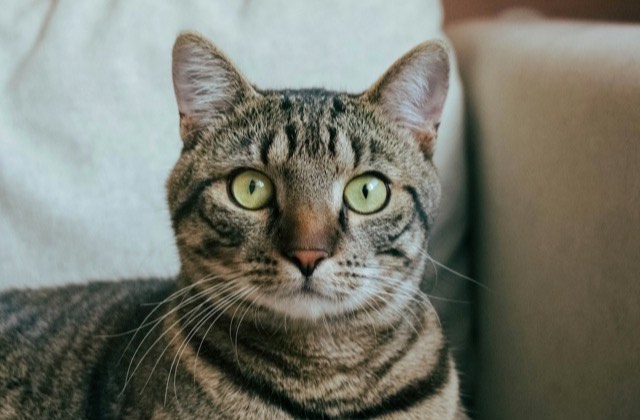
Grooming a British Shorthair: shedding, brushing, and hairballs
Published by Planète Pets · managing editor: Clément Lacaille · how our guides are written
The British Shorthair may be a short-haired cat, but its dense, plush coat sheds a lot, especially during seasonal moults. Regular brushing limits swallowed hair and therefore hairballs. A study published in 2014 in a nutrition journal on sugarcane fibre in cats showed that the control group excreted more large trichobezoars, absent in the group given more fibre — a reminder that coat care and diet work together. Our care guides are gathered in the cat care and grooming section.
Contents · 6 sections
Why this coat needs attention
The British Shorthair's coat is short but very dense, with an abundant undercoat. That density traps dead hair, which is swallowed during self-grooming and forms hairballs if nothing removes it regularly.
How often should you brush?
Brushing once or twice a week is enough in normal periods, stepping up during the spring and autumn moults, when a daily session becomes useful. Consistency matters more than the length of each session.
Which tools should you choose?
- A brush or comb able to reach the undercoat, covered in our guide on choosing a brush by coat type.
- A grooming glove for cats that tolerate a brush poorly, as a finishing touch.
- Gentle strokes in the direction of the coat, getting the kitten used to it early to make it a pleasant moment.
Preventing hairballs
Beyond brushing, good hydration and a suitable diet help the gut move swallowed hair through. Our guide on hairball prevention and treatment details the options, from malt to fibre.
Bathing and extra hygiene
The British Shorthair generally needs no frequent bathing: consistent brushing is enough to maintain its coat. As a complement, keep an eye on the eyes, ears, and claws as part of an overall care routine.
Frequently asked questions
Does the British Shorthair shed a lot?
Yes, especially during moults: it sheds noticeably more than you would expect for a short-haired cat.
Should you shave it in summer?
No, shaving is not recommended: its coat protects against heat as well as cold, and brushing is enough to thin the fur.
When should you start brushing?
From a young age, in short, positive sessions, so the cat associates grooming with a calm moment. Browse all our guides on the cat hub.
In our shop, for this use: Foldable double-layer cat litter mat (€32.90) · the whole shop
For your cat, at Le Félin (same family, zero commission): Arbre à chat pour chaton (from €69.99)
This guide is part of Planète Pets’s Cats universe. Our advice is general in nature: for any health concern, your veterinarian remains the only reference.