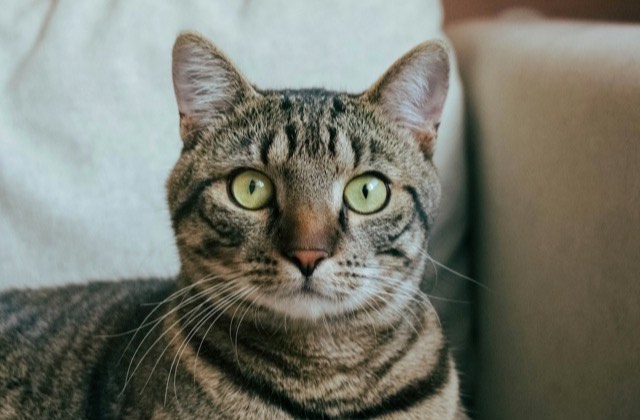
Russian Blue: a robust breed, but watch weight and urinary tract
Published by Planète Pets · managing editor: Clément Lacaille · how our guides are written
The Russian Blue is one of the healthiest cat breeds: few specific hereditary diseases are attributed to it. That does not remove the need to watch the two big risks of any indoor cat, excess weight and urinary stones, all the more so as this calm, home-loving cat moves little. All our pointers are in the cat care and grooming section, with the full profile on the Russian Blue page.
Contents · 5 sections
Excess weight, the first enemy
A placid cat, the Russian Blue easily gains weight indoors, and obesity opens the door to several diseases. A study by Scarlett and Donoghue, published in 1998 in the JAVMA, established that an overweight cat has a markedly higher risk of diabetes, skin disorders and urinary conditions (see the study). Precise portioning and encouraging play are the best prevention.
Urinary stones and diet
Urinary stones are a frequent feline emergency, partly diet-related. A study by Lekcharoensuk and colleagues, published in 2001 in the JAVMA, showed that dietary factors, notably the low moisture of dry food, strongly influence the risk of oxalate and struvite stones (see the study). Promoting hydration and a suitable diet lowers this risk.
And its low-allergen reputation?
Like the Siberian, the Russian Blue is sometimes billed as better tolerated by allergy sufferers. Here too, variability is individual: a study by Bastien, Gardner and Satyaraj, published in 2019 in the Journal of Feline Medicine and Surgery, showed very large differences in Fel d 1 production from one cat to another (see the study). There is no truly "hypoallergenic" breed.
What care budget to plan
A healthy breed, the Russian Blue costs mainly in prevention and routine care, barring accident or urinary disease. Our guide to pet insurance for cats helps you decide, and our page on insuring a Russian Blue spells out the useful cover.
Frequently asked questions
Is the Russian Blue a fragile breed?
No, on the contrary it is one of the healthiest breeds; the main risks are excess weight and urinary stones, common to all indoor cats.
How can excess weight be avoided?
By portioning precisely, avoiding constant free-feeding, and stimulating activity through play and enrichment accessories.
Should a healthy cat be insured?
Even healthy, a cat can have an accident or develop a costly disease: cover taken out young smooths that risk and avoids exclusions.
See it in the Planète Pets shop: Litter scoop with stand and bag roll in the handle (€20.90) · the whole shop
For the gear, at Le Félin (same family, zero commission): Arbre à chat petit espace (from €109.99)
This guide is part of Planète Pets’s Cats universe. Our advice is general in nature: for any health concern, your veterinarian remains the only reference.