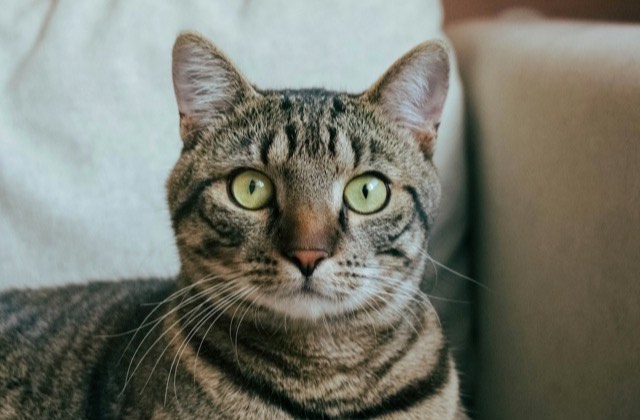
Best Litter Box for a Senior or Arthritic Cat: Low-Entry Trays Explained
Published by Planète Pets · managing editor: Clément Lacaille · how our guides are written
For a senior or arthritic cat, the litter box that helps most isn't necessarily one with different litter, but one with a low, easy-to-step-over entry. A study published in The Veterinary Journal reviewed radiographs of 100 cats aged six and older: 61% showed osteoarthritis in at least one joint, most often the shoulders, elbows, hips, or hocks, without it always showing as visible lameness (see the study). In other words, a cat can be in pain without showing it clearly — which is why adapting the litter box before obvious signs appear is worth doing. Our full care guides are gathered in the cat care and grooming section.
Contents · 4 sections
Why the box entry becomes an obstacle
A standard box, with a 15-20 cm rim to step over several times a day, puts strain on the shoulders and hips with every pass. In an arthritic cat, this repeated motion alone can be enough to put them off using the litter box and lead to accidents outside it — a behaviour often misread as a cleanliness problem rather than pain.
Which box to choose
An open box with at least one side lowered to 5-8 cm lets the cat step in without lifting a paw too high. Boxes designed for kittens, often low-rimmed, work well as a stopgap but are sometimes too small for an adult cat: aim for a size at least one and a half times the cat's length, nose to tail base, the general rule detailed in our guide open or covered litter box for cats.
Adding boxes rather than replacing just one
- One box per cat, plus one extra, remains the baseline rule
- Spreading boxes across different floors saves a stiff cat long trips
- Avoid spots that require climbing stairs or going through a cat flap
- Fine clumping litter stays more comfortable than coarse gravel under sensitive paws
The number and placement of boxes often matter as much as their shape; our guide how many litter boxes and where to place them details the ideal setup. For the full picture of a senior cat's home layout, our article senior cat home adaptations rounds out these tips.
Frequently asked questions
How can I tell if my cat is in pain getting into the box?
Hesitating before jumping, meowing while stepping over the rim, or unusual postures while urinating are signs to watch for. When in doubt, see the vet.
Do I need a box specifically labelled "senior"?
Not necessarily: a classic open box with a low rim is often enough, no need to overpay for a "senior" label.
Can a covered box work for an arthritic cat?
Only if its entry stays low; many covered models actually have a raised rim that makes them poorly suited.
See it in the Planète Pets shop: Litter scoop with stand and bag roll in the handle (€20.90) · the whole shop
For your cat, at Le Félin (same family, zero commission): Grand arbre à chat (from €179.99)
This guide is part of Planète Pets’s Cats universe. Our advice is general in nature: for any health concern, your veterinarian remains the only reference.