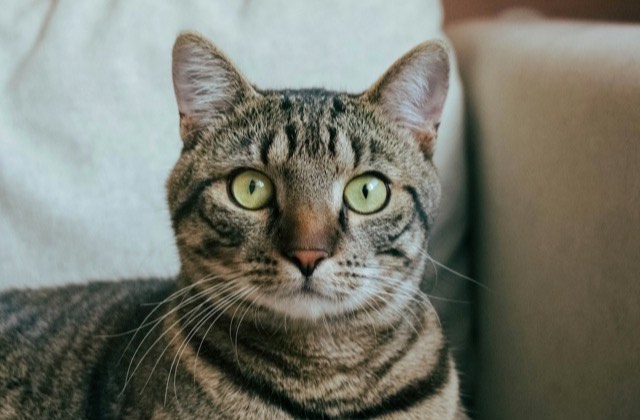
Overgrooming in cats: when licking becomes a warning sign
Published by Planète Pets · managing editor: Clément Lacaille · how our guides are written
An adult cat spends on average 30 to 50% of its waking hours grooming, a normal and even self-soothing behaviour. But when licking becomes repetitive, localised, and creates bald patches, it's known as psychogenic alopecia or overgrooming, often behavioural in origin. A study by Waisglass and colleagues, published in the Journal of the American Veterinary Medical Association, found that a significant share of cats presented for compulsive licking actually had an underlying medical cause (allergy, pain) rather than a purely behavioural disorder. Find more health pointers in our care & grooming section.
Contents · 5 sections
Spotting the typical areas
Overgrooming most often affects the belly, inner thighs, flanks, or base of the tail, areas the cat can easily reach while lying down. Purely behavioural cases usually show thinning fur or bare skin without sores or scabs — redness or lesions point more towards a medical cause (fleas, allergy, joint or digestive pain).
Stress and environmental change
A move, a new pet or baby arriving, territorial tension with a cat seen through the window: these events can trigger compensatory licking in an anxious cat. Our guides on life transitions, such as moving house with your cat or introducing a second cat, cover how to limit this kind of stress in advance.
Always rule out a medical cause first
Before concluding it's a purely behavioural issue, a vet check is needed to rule out fleas, ringworm, food or skin allergy, or pain (cystitis, arthritis). Excessive belly licking, for instance, can mask urinary discomfort. Only once these have been ruled out does a behavioural origin become the most likely explanation.
Reducing stress day to day
Once a medical cause has been ruled out, enriching the environment helps channel anxiety: hunting-style toys, scratching posts, multiple hideouts. Our article on one hiding spot per room covers how to spread these safe zones around the home. A calming pheromone diffuser can also support this period; see pheromone diffuser for stress relief.
Frequently asked questions
How can you tell normal grooming from overgrooming?
Frequency and location: normal grooming stays spread across the whole body, while overgrooming targets one or two specific spots until it creates bald patches.
Should you always see a vet?
Yes, as a first step, to rule out a medical cause before considering a behavioural origin and stress-relief support.
Is stress the only possible behavioural cause?
No: boredom and lack of stimulation can also trigger compulsive licking, which is why enriching the environment helps even without an identified stressor.
An accessory from our shop for this use: Scissor-style nail clipper for cats (€17.90) · the whole shop
For your cat, at Le Félin (same family, zero commission): Petit arbre à chat compact (from €84.99)
This guide is part of Planète Pets’s Cats universe. Our advice is general in nature: for any health concern, your veterinarian remains the only reference.