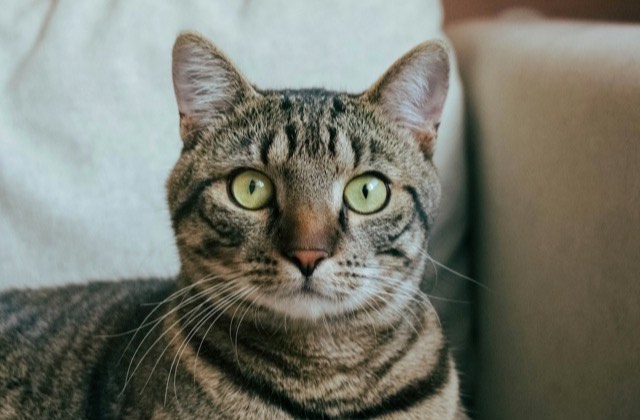
American Shorthair: screening for hypertrophic cardiomyopathy
Published by Planète Pets · managing editor: Clément Lacaille · how our guides are written
Hypertrophic cardiomyopathy, or HCM, is by far the most common heart disease in cats, and its defining feature is silence. In the CatScan study by Payne, Brodbelt and Luis Fuentes, published in 2015 in the Journal of Veterinary Cardiology, 780 apparently healthy adult cats underwent echocardiography: 14.7 % already showed an HCM phenotype with no symptoms at all (see the study). In other words, a cat can live for years with a thickened heart muscle without anything being visible at home. In the American Shorthair, an otherwise sturdy and long-lived breed, this is the number one medical watch point, and it can be monitored long before the first signs appear.
Contents · 5 sections
A documented familial predisposition in the breed
The American Shorthair is among the breeds historically linked to a familial form of HCM. Meurs, Kittleson, Towbin and Ware described in 1997, in the Journal of Veterinary Internal Medicine, a family of American Shorthairs in which hypertrophic cardiomyopathy and systolic anterior motion of the mitral valve appeared to be inherited as an autosomal dominant trait. One important caveat: this predisposition rests on family observations rather than on large breed prevalence studies. More importantly, unlike the Maine Coon or the Ragdoll, no mutation usable as a DNA test has been identified in the American Shorthair. A breeder who sells you a kitten as genetically clear of HCM is therefore promising something that does not yet exist for this breed.
Screening relies on echocardiography
Only echocardiography performed by a vet trained in cardiology can measure ventricular wall thickness and stage the disease. Auscultation is not enough: many affected cats have no murmur at all, and many cats with a murmur have a normal heart. A blood NT-proBNP test can act as a triage tool, but it does not replace imaging. In practice, a first examination at around 2 or 3 years of age, then a check every one to two years, is a sensible rhythm for a pet cat; breeding cats are screened annually. Screening is also worthwhile before any planned anaesthetic, such as neutering or the dental scaling discussed in our cat care and grooming section.
Warning signs and prognosis
Two emergencies must prompt an immediate consultation: rapid, abdominal or open-mouthed breathing at rest, which suggests pulmonary oedema; and sudden hindlimb paralysis with vocalising and cold footpads, which points to aortic thromboembolism. The REVEAL study by Fox, Keene, Lamb and colleagues, published in 2018 in the Journal of Veterinary Internal Medicine, followed 1,730 cats: among the 1,008 cats with preclinical HCM, 24.2 % developed congestive heart failure, 11.6 % arterial thromboembolism and 27.9 % died of cardiovascular causes, compared with under 1 % cardiovascular deaths in healthy cats. These figures show the disease is serious, but also that most cats screened early stay symptom-free for a long time. Only a vet can make the diagnosis and decide on treatment.
Follow-up costs and insurance
A screening echocardiogram is an outlay in the region of a hundred euros, with wide variation by area and practice. Repeated every one to two years, it stays moderate. The real cost comes later: lifelong daily cardiac medication, closer monitoring and, above all, hospitalisation for pulmonary oedema or thromboembolism, which runs into hundreds of euros. That is exactly why cover must be taken out early: any abnormality already on record becomes a pre-existing condition and is routinely excluded. Insuring a kitten before any abnormal screening is the only way to be covered for later HCM. Compare policies on our American Shorthair pet insurance page and check cardiac waiting periods in our guide to pet insurance for cats.
Frequently asked questions
At what age should I screen my American Shorthair?
A first examination between 2 and 3 years of age is a good compromise, as the disease rarely shows earlier. If your kitten comes from a line where a case has been reported, an earlier first scan followed by annual monitoring is justified.
Does a heart murmur always mean HCM?
No. Many feline murmurs are benign or linked to the stress of the consultation, and conversely an affected cat may have no murmur at all. A murmur is a reason to scan, not a diagnosis.
Can I still insure a cat that has already been diagnosed?
You can usually still insure it, but HCM and its complications will be excluded as a pre-existing condition. Other areas of care remain covered, which keeps real value without solving the cardiac cost.
In our shop, for this use: Stainless-steel pin brush for cats (€18.90) · the whole shop
For your cat, at Le Félin (same family, zero commission): Arbre à chat en bois massif (from €179.99)
This guide is part of Planète Pets’s Cats universe. Our advice is general in nature: for any health concern, your veterinarian remains the only reference.