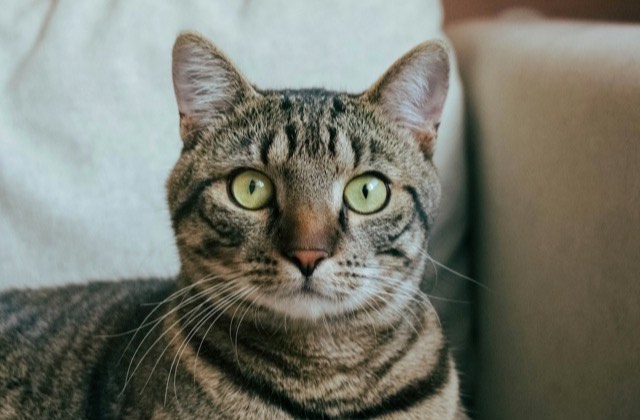
Ingrown claws in senior cats: spotting and preventing them
Published by Planète Pets · managing editor: Clément Lacaille · how our guides are written
A senior cat that climbs the scratching post less and grooms itself less flexibly naturally wears its claws down less, a change that often goes unnoticed until a curled claw eventually pierces the paw pad. A study by Bennett, Zainal Ariffin and Johnston, published in 2012 in the Journal of Feline Medicine and Surgery, notes that feline osteoarthritis remains widely under-diagnosed in older cats, largely because its effects on mobility and self-care are subtle and easily mistaken for ordinary ageing. Find all our health guides in the cat care and grooming category.
Contents · 4 sections
Why are older cats more at risk?
A cat's claws normally wear down through scratching and walking. In a senior cat whose joints have become painful, that activity drops off, while claw growth itself does not slow down to match. The result: a claw that is no longer trimmed or worn down naturally can curl into a spiral until it presses into, then pierces, the corresponding paw pad.
How to spot an ingrown claw
A subtle limp, a cat that keeps licking one particular paw, a swollen pad, or a faint unusual smell from one toe are all worth checking. Gently spreading the toes apart usually reveals a badly curled claw touching or embedded in the skin; the area is often tender to the slightest touch, so the check should stay gentle.
How to prevent the problem
- Check claw length every three to four weeks in a senior cat, versus every few months in a young, active cat
- Trim the clear tip of the claw regularly, always staying well clear of the pink, blood-supplied quick
- Offer a low, easily reached scratching post suited to reduced mobility, rather than one that requires climbing
- Ask the vet to check claws at every routine visit, especially if osteoarthritis has already been diagnosed
Our guides to cat nail clippers and steps and ramps for senior cats round out these preventive steps.
Frequently asked questions
Is an ingrown claw painful for a cat?
Yes, often far more so than the cat's quiet behaviour suggests, since cats are known for masking pain; a claw that has pierced the pad needs prompt veterinary care.
Can an ingrown claw be removed at home?
No, this should be handled by a vet, especially once the claw has already broken the skin, to avoid unnecessary pain and limit the risk of infection.
Are back claws affected the same way as front claws?
Yes, even though they tend to wear down slightly more through walking; a full check of all four paws is still needed in a senior cat that is not very active.
See it in the Planète Pets shop: Scissor-style nail clipper for cats (€17.90) · the whole shop
For your cat, at Le Félin (same family, zero commission): Arbre à chat XXL solide (from €169.99)
This guide is part of Planète Pets’s Cats universe. Our advice is general in nature: for any health concern, your veterinarian remains the only reference.