Sunburn in ferrets: a real risk in a catio or garden?
Published by Planète Pets · managing editor: Clément Lacaille · how our guides are written
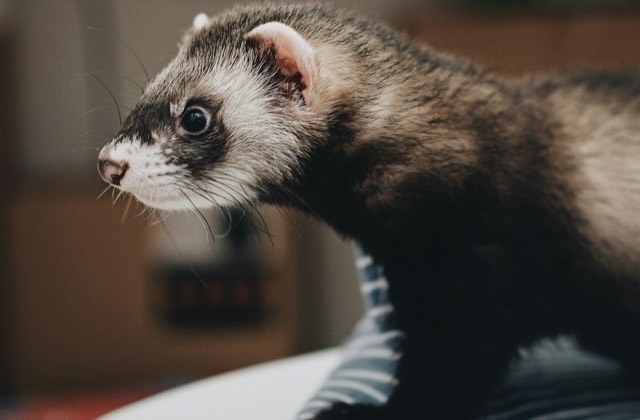
A ferret soaking up the sun in a catio or during a supervised garden outing seems well protected by its coat. Yet certain thinly-covered patches of skin remain exposed to ultraviolet rays, a risk still barely documented in this species but very real from a physiological standpoint. Find all our care guidance in the ferret care and grooming section.
Contents · 5 sections
Which parts of a ferret are vulnerable to the sun?
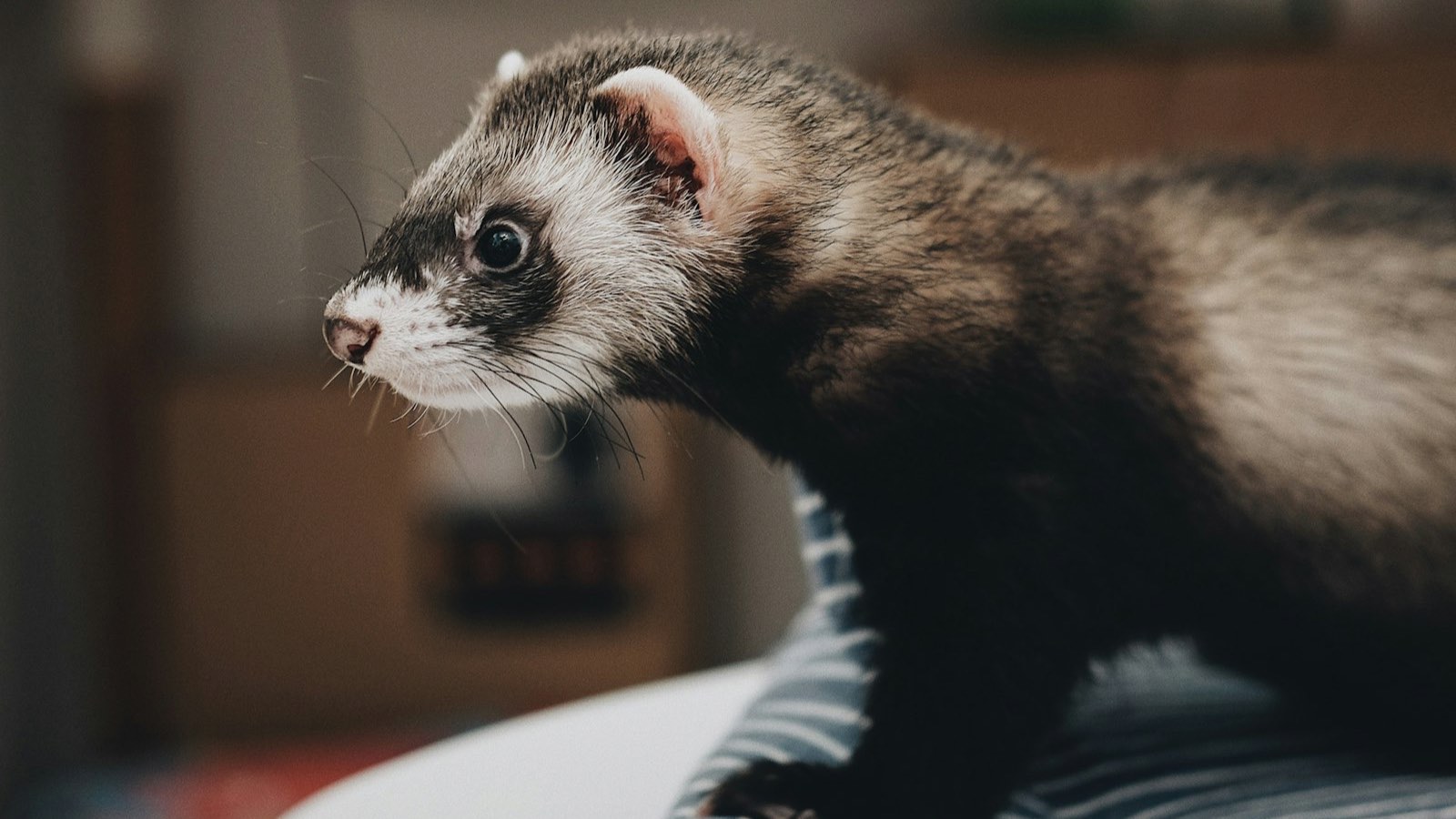
The nose, the inner ears, and, in some pale-coated or thin-coated individuals, the belly and groin stay poorly protected by fur. A ferret that lingers in direct sun on these areas faces the same skin-burn mechanism as any mammal with exposed skin.
What does research show about UV's effects on skin?
A review by Lopes and McMahon, published in 2016 in CNS Neuroscience & Therapeutics, details how UVB rays trigger sterile skin inflammation and a dose-dependent painful sensitization, a mechanism well documented in humans and laboratory animal models (study on Wiley Online Library). The authors show that the energy absorbed from UV directly damages DNA and cellular proteins, generating oxidative stress that harms cell membranes well beyond simple visible redness. No comparable study exists specifically in ferrets, but a mammal's skin remains subject to the same physical laws of UV absorption regardless of species.
What signs point to sunburn in a ferret?
- Redness or tenderness to the touch on the nose or thinly-covered areas, sometimes paired with unusual licking of the spot.
- Peeling fur or skin a few days after prolonged exposure, a sign of a superficial burn healing.
- Avoidance of light after exposure, not to be confused with ordinary fatigue after a lot of play; our article on the catio and safe outdoor time covers the right setup habits.
How can you cut the risk without cutting out outdoor time?
Set up a permanent shaded area in the catio, limit outings to the hours when the sun is weakest, and keep a closer eye on ferrets with pale coats or thinned fur from a seasonal shed. These precautions overlap with those already needed to avoid heatstroke, covered in our article on keeping a ferret cool in a heatwave.
Frequently asked questions
Can a ferret stay in a catio all day in summer?
It's better to limit outings to the coolest hours and always provide a shaded spot accessible at all times, whatever the season.
Should sunscreen be applied to a ferret?
Not without a vet's guidance, since many human sunscreens contain compounds that are toxic if ingested when a ferret licks them off.
Are dark-coated ferrets fully protected?
No, dark pigment partially protects fur-covered areas but not the nose or thinly-furred spots, which stay vulnerable regardless of coat color. Find all our guides in the ferret hub.
An accessory from our shop for this use: Bubble-window carrier backpack for dwarf rabbit, guinea pig or ferret (€47.90) · the whole shop
This guide is part of Planète Pets’s Ferrets universe. Our advice is general in nature: for any health concern, your veterinarian remains the only reference.