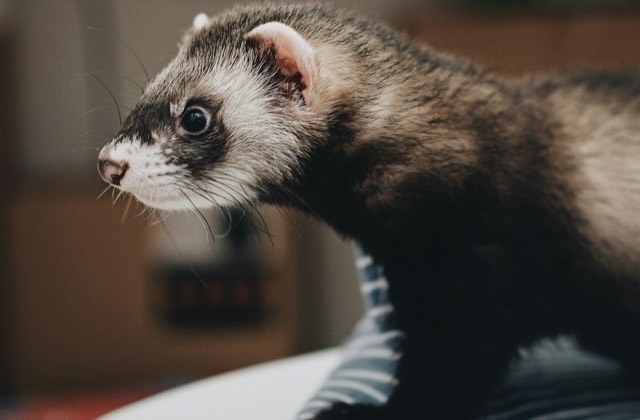
What nesting substrate does a ferret actually prefer? A lab rodent study offers clues
Published by Planète Pets · managing editor: Clément Lacaille · how our guides are written
A ferret that pushes and packs down its bedding before burrowing into it isn't just after a warm spot: it's expressing a genuine nest-building behaviour, documented in other small mammals by a landmark study on substrate choice. Find all our habitat guidance in the ferret bedding and habitat section.
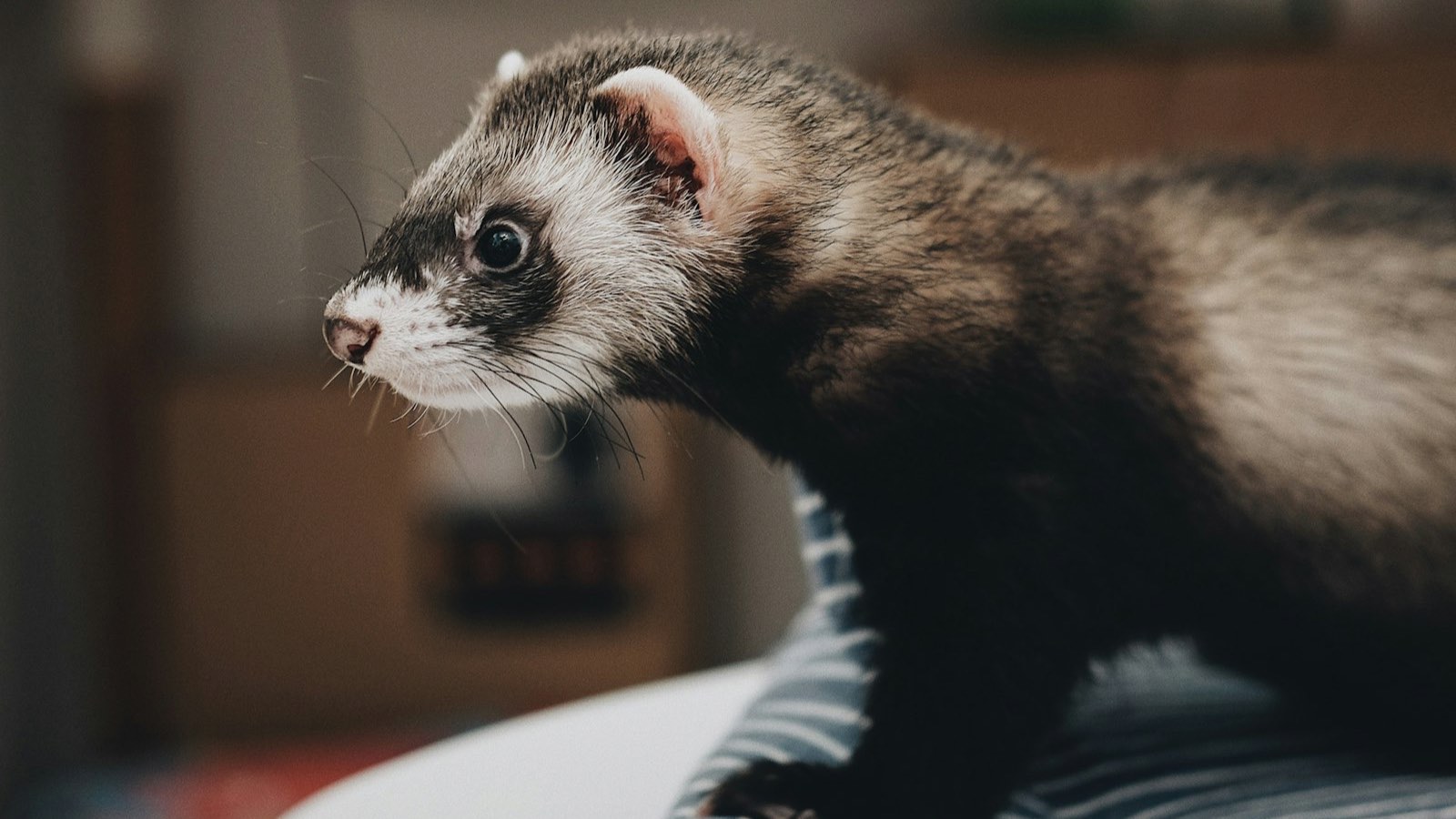
Contents · 4 sections
What a landmark study shows
A study by Blom, Van Tintelen, Van Vorstenbosch, Baumans and Beynen, published in 1996 in Laboratory Animals, compared laboratory mice and rats' preference for several types of nesting substrate, measuring which one they chose and used most to build shelter (see the study). Soft, easily shreddable materials, such as cut paper or fine shavings, were markedly preferred over coarser or more compact substrates, largely because they let the animal actively shape a closed nest rather than simply lying on top of it.
Why this principle applies to ferrets
- Ferrets actively manipulate their bedding with their front paws and snout, a nest-building behaviour close to what was observed in the rodents studied.
- Bedding or fabric that's too rigid limits this ability to shape a nest, even if the shelter still feels warm and comfortable to the touch.
- Texture matters as much as warmth: a material a ferret can push, pack down and rearrange meets a behavioural need, not just a thermal one.
How to choose the right substrate in practice
Favouring a thick, easily mouldable fleece, or soft plant-based litter underneath the nest, lets a ferret reproduce this nest-building behaviour, on top of a suitable sleep sack or hammock for the season. Watch out, though, for untreated softwood shavings, whose volatile compounds carry a documented risk covered in our article on pine and cedar shavings and the landmark study on phenols.
Frequently asked questions
Is a simple hammock enough without a material to manipulate?
A hammock provides shelter, but fabric or litter a ferret can push and pack down also meets its need to build a nest.
Does this kind of substrate need replacing often?
Yes, a soft material wears out and gets dirty faster than a rigid fabric, so regular upkeep is still needed for hygiene.
Was this preference tested directly in ferrets?
The study covers laboratory rodents; it illustrates a transferable principle rather than a direct measurement in ferrets.
Does every fleece fabric work well for nest-shaping?
Thick, soft fabrics pack down more easily than a thin, smooth one, which tends to slide under the paws instead. Find all our guides in the ferret hub.
See it in the Planète Pets shop: Double-layer plush hammock for rats, squirrels or ferrets (€18.90) · the whole shop
See it in the Planète Pets shop: Electric pet heating pad 45 × 45 cm (17.7 in) with chew-resistant cord ($48.90, ships from the US) · the US shop
This guide is part of Planète Pets’s Ferrets universe. Our advice is general in nature: for any health concern, your veterinarian remains the only reference.