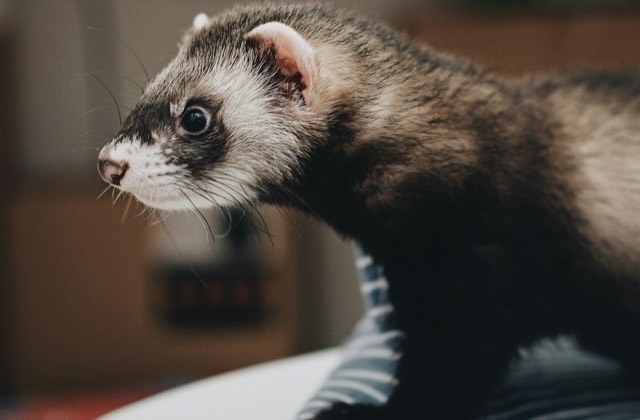
Ferret sleeping a huge amount: why it's normal and when to worry
Published by Planète Pets · managing editor: Clément Lacaille · how our guides are written
A ferret that spends most of the day deeply asleep, sometimes looking almost lifeless when it wakes, often worries new owners. Yet this behaviour is one of the most characteristic traits of the species, widely documented by research. All our habitat guides are gathered in the ferret bedding and habitat section.
Contents · 5 sections
What does research show about ferret sleep?
A study by Marks and Shaffery, published in 1996 in the journal Sleep, measured ferret sleep by polygraphy and found one of the highest proportions of REM sleep known among carnivores, with a daily sleep average well over half the day (study on Oxford Academic). This physiological trait explains why a perfectly healthy ferret can seem to sleep far more than a dog or cat of the same size.
How many hours does a ferret really sleep?
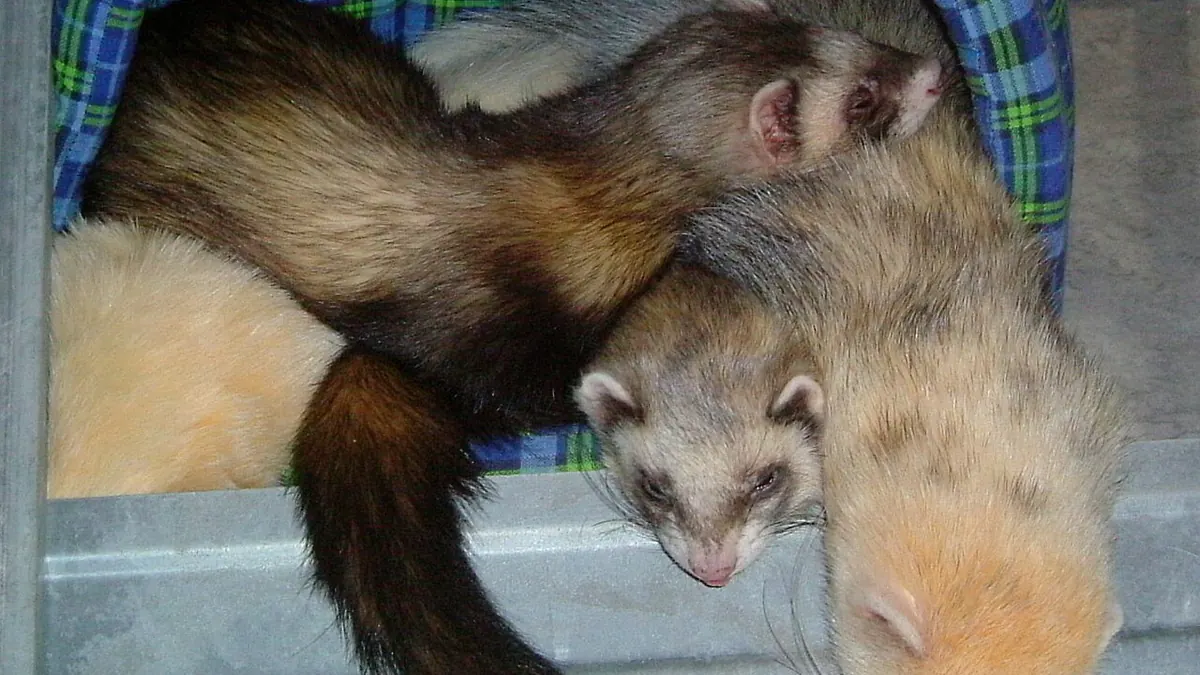
- 14 to 18 hours a day: the range generally observed in adult pet ferrets, with wide individual variation.
- Very deep sleep: some ferrets are hard to wake and can seem floppy or disoriented for a few seconds afterward, without it being abnormal.
- Short bursts of activity: between sleep phases, a ferret packs in intense play sessions, a rhythm very different from activity spread evenly through the day.
How do you set up bedding suited to this need?
A hanging hammock or a dark, cosy sleep tunnel, away from direct light and household bustle, supports quality sleep close to its natural need. Keeping a stable cage temperature also prevents wake-ups caused by thermal discomfort.
What signs should raise concern beyond normal sleep?
Unusual lethargy outside sleep phases, an associated loss of appetite, hind-leg weakness, or difficulty waking up fully can point to hypoglycaemia linked to insulinoma, a condition common in senior ferrets covered in our senior ferret care guide. These signs call for a prompt vet visit rather than simple observation.
Frequently asked questions
Is a ferret that sleeps a lot less sociable?
No, sociability plays out during its waking phases, generally intense and playful, regardless of total sleep volume.
Should you wake a ferret for its meals?
No, a healthy ferret wakes naturally when hungry; forcing it needlessly disrupts its natural sleep cycle.
Does sleep decrease with age in ferrets?
It tends to become even more pronounced in senior ferrets, which then needs to be told apart from pathological lethargy through regular veterinary follow-up. Browse all our guides on the ferret hub.
See it in the Planète Pets shop: Double-layer plush hammock for rats, squirrels or ferrets (€18.90) · the whole shop
See it in the Planète Pets shop: Electric pet heating pad 45 × 45 cm (17.7 in) with chew-resistant cord ($48.90, ships from the US) · the US shop
This guide is part of Planète Pets’s Ferrets universe. Our advice is general in nature: for any health concern, your veterinarian remains the only reference.