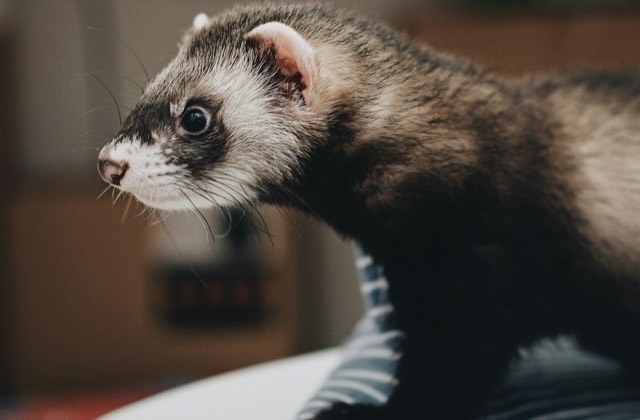
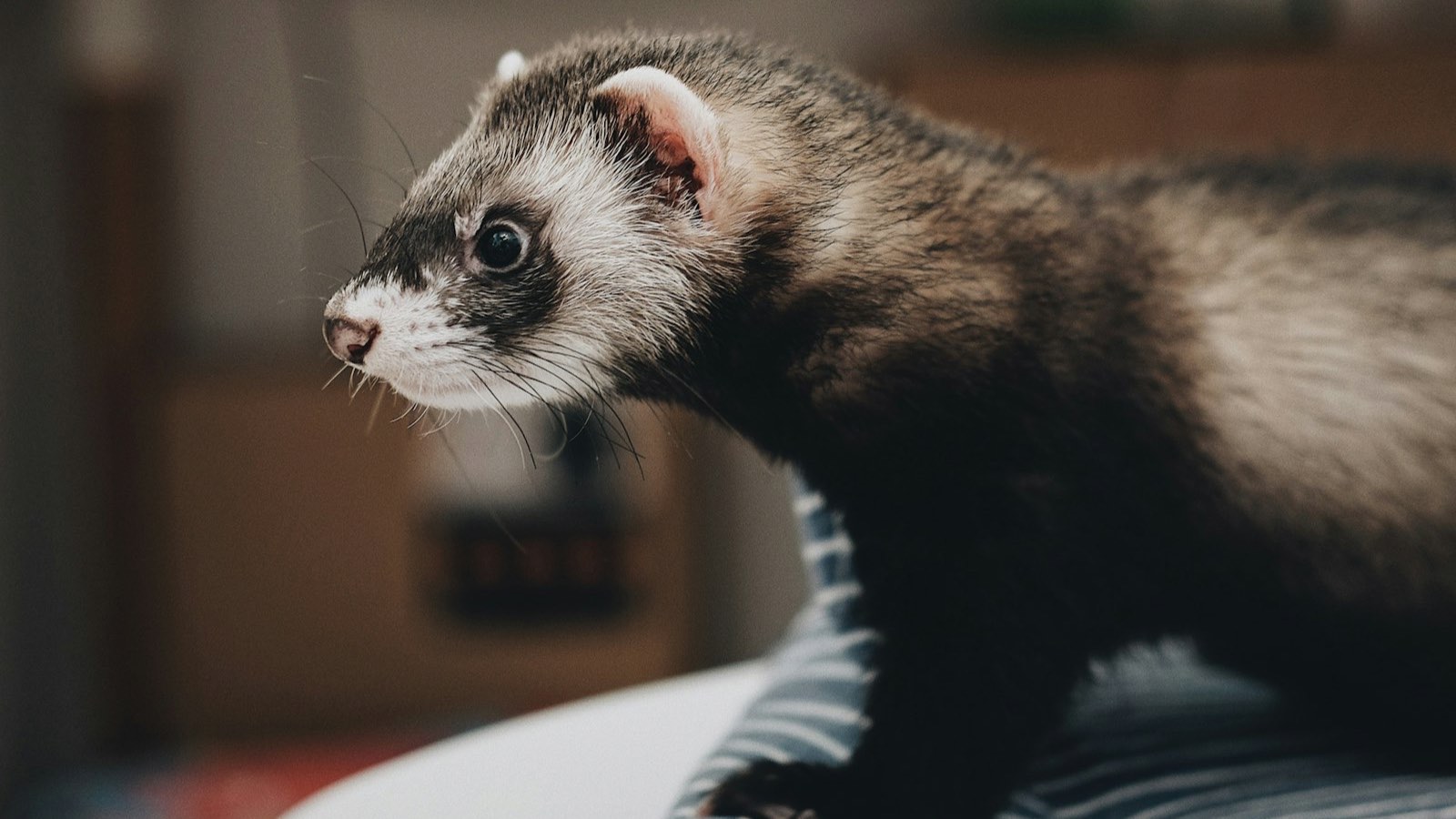
My ferret gains weight in winter and slims down in summer: a study explains this natural cycle
Published by Planète Pets · managing editor: Clément Lacaille · how our guides are written
A ferret that visibly bulks up as winter approaches, then seems to "melt away" by spring with nothing changed in its bowl, often worries its owner. A landmark study shows this is in fact a perfectly normal physiological cycle in this species. Find all our guidance in the ferret food section.
Contents · 5 sections
Why does a ferret's weight swing so much with the seasons?
Like many mustelids living at latitudes with marked seasonal shifts in daylight, the ferret inherited a biological clock set by day length. That clock drives weight gain, undercoat growth and, in unneutered animals, reproductive activity — even in a pet that never goes outdoors but is still exposed to natural light shifts through the home's windows.
What does the reference study on seasonal ferret weight show?
A study by Jones, Poole, Sollini, Town and Bizley, published in 2020 in the journal PLOS ONE, tracked the weight of 39 female ferrets over more than two years at an animal facility (study on PLOS ONE). The notable finding: individual weight fluctuated between roughly 80% and 120% of the animal's long-term average across seasons, a swing far larger than what's seen in a cat or dog of comparable size. The authors note that this natural variation complicates using weight alone as a health indicator without accounting for the season it was measured in.
How should you read the scale without jumping to conclusions?
- Compare weight to the same period the previous year, rather than to last month's figure, to judge a genuine gain or loss.
- Don't cut rations in winter based solely on a higher number on the scale: a moderate seasonal gain falls within the normal range this study describes, distinct from true excess weight covered in our article on the overweight ferret and safe weight loss.
- Keep feeding consistent, quality food year-round, a benchmark detailed in our picks for the best kibble for a neutered ferret.
Is this cycle connected to light-related ferret diseases?
The underlying mechanism, driven by melatonin and light exposure length, is the same one involved in adrenal disease in neutered ferrets, covered in our article on artificial light and adrenal disease. The two shouldn't be confused, though: the seasonal weight variation described here affects healthy ferrets and stays reversible, unlike the symptoms of adrenal disease, which set in and worsen over time.
Frequently asked questions
Does this cycle affect a neutered ferret?
Yes, to a lesser degree: neutering reduces the reproductive component of the seasonal cycle, but the light-driven clock still influences weight and coat growth in most animals.
At what point should weight change prompt a vet visit?
Rapid weight loss, thinning outside of spring, or any accompanying change in appetite should always be checked, regardless of season.
Does this cycle also exist in cats or dogs?
It's far less pronounced in those species, which is why the usual weight benchmarks don't translate directly to ferrets. Find all our guides in the ferret hub.
See it in the Planète Pets shop: 2-in-1 felt tunnel and hideout for rabbits and ferrets (44 × 60 cm) (€37.90) · the whole shop
This guide is part of Planète Pets’s Ferrets universe. Our advice is general in nature: for any health concern, your veterinarian remains the only reference.