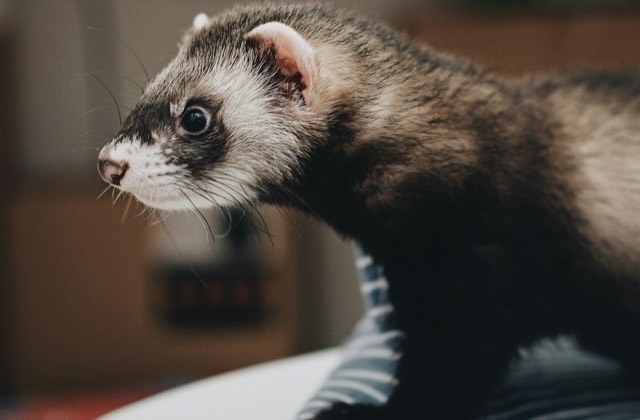
Why does my ferret's coat change so much in winter? What day length explains
Published by Planète Pets · managing editor: Clément Lacaille · how our guides are written
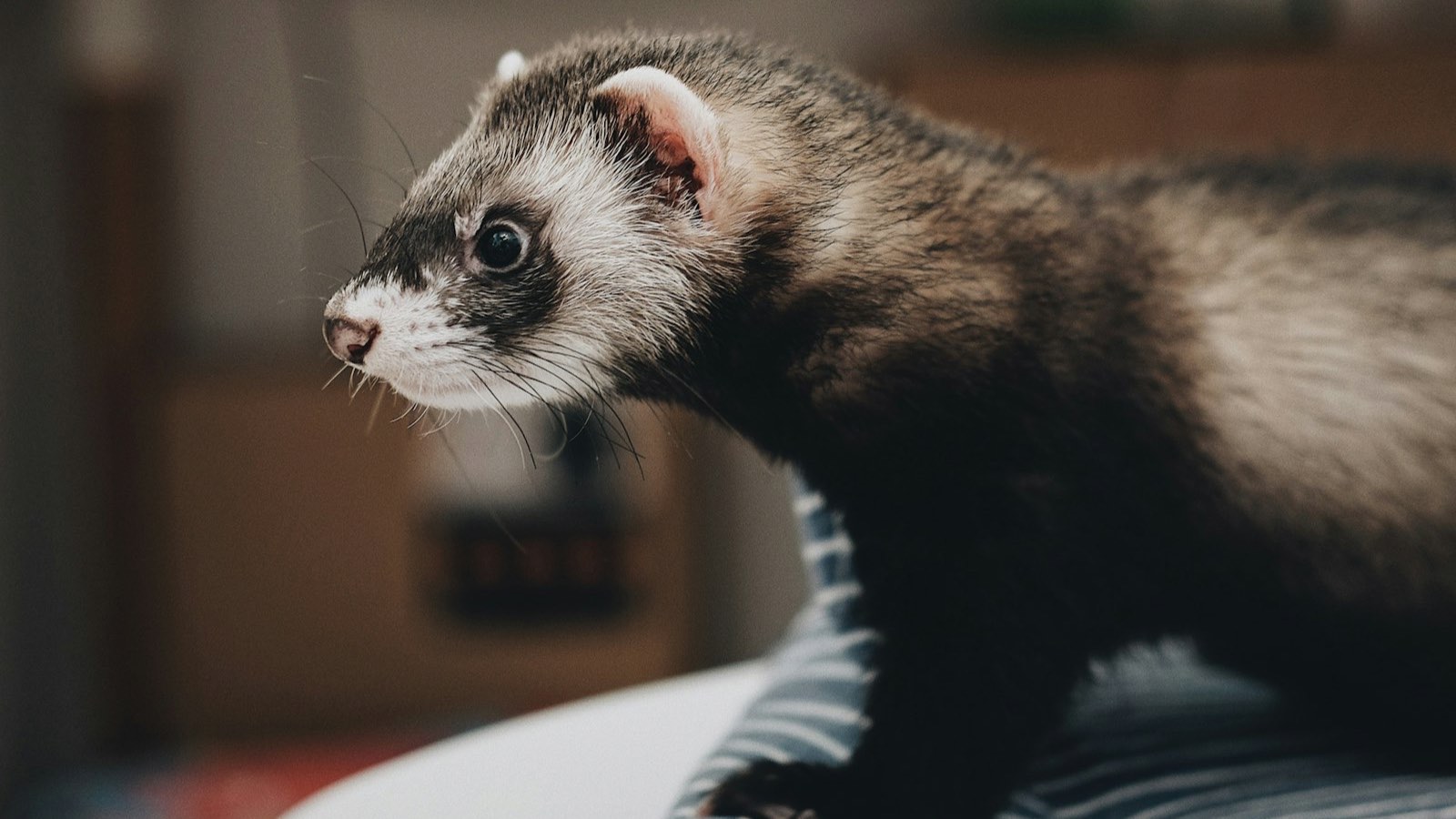
A ferret whose coat suddenly turns denser, longer and oddly paler as winter approaches hasn't had a personality change: it's following an ancient biological rhythm driven by light rather than temperature. Find all our housing guidance in the ferret bedding and habitat section.
Contents · 5 sections
Why does day length affect a ferret's coat?
In ferrets, as in their ancestor the polecat, a shrinking daily period of daylight triggers a hormonal cascade via melatonin that prepares the body for winter: growth of an insulating undercoat, a paler coat, and slowed reproductive activity.
What does the scientific literature show about this mechanism?
A review by Pramod and colleagues, published in 2024 in the journal Laboratory Animal Research, gathers the available data on ferret physiology in captivity (review on Laboratory Animal Research). The authors note that once daily light exposure drops below roughly 12 hours, the resulting fall in melatonin secretion triggers, in ferrets, growth of a longer, paler winter coat, weight gain and a pause in reproductive activity — a coordinated set of changes rather than a simple reaction to ambient cold.
What does this mean in practice for a pet ferret's housing?
- Place the cage near a source of natural light rather than in a permanently windowless room, so this seasonal rhythm can express itself normally, a point covered in our guide to the ideal location for a ferret cage.
- Plan for more frequent brushing during molting periods in autumn and spring, as detailed in our article on ferret brushing and shedding.
- Avoid artificial lighting left on continuously at night near the cage, which would disrupt this natural signal without any benefit to the animal.
Is this coat change different from pathological hair loss?
Yes: seasonal molting stays even across the whole body and resolves on its own within a few weeks, unlike localized or persistent hair loss, which should raise suspicion of a hormonal cause, as discussed in our article on artificial light and adrenal disease in ferrets.
Frequently asked questions
Should winter's lower light levels be offset with a special lamp?
That isn't necessary for a healthy pet ferret; the natural light coming through the home's windows is enough to sustain this rhythm.
Does seasonal molting also affect neutered ferrets?
Yes, coat growth stays tied to light regardless of reproductive status, even though the reproductive hormonal component itself fades after neutering.
How long does a full molt take in ferrets?
It typically spreads over several weeks in spring and autumn, peaking in intensity around the midpoint. Find all our guides in the ferret hub.
See it in the Planète Pets shop: Double-layer plush hammock for rats, squirrels or ferrets (€18.90) · the whole shop
See it in the Planète Pets shop: Electric pet heating pad 45 × 45 cm (17.7 in) with chew-resistant cord ($48.90, ships from the US) · the US shop
This guide is part of Planète Pets’s Ferrets universe. Our advice is general in nature: for any health concern, your veterinarian remains the only reference.