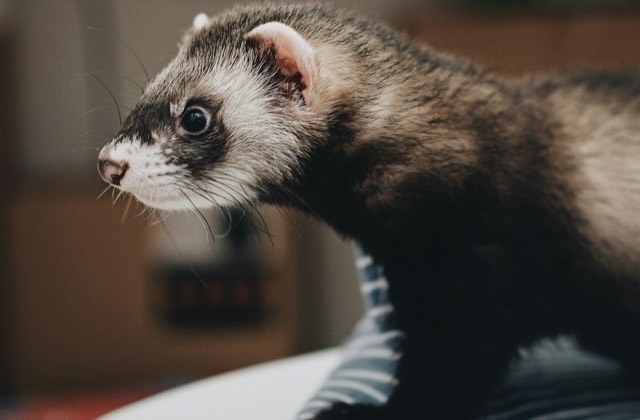
Ferret hair loss: seasonal shed or adrenal disease?
Published by Planète Pets · managing editor: Clément Lacaille · how our guides are written
Twice a year, a ferret's coat changes along with the shifting daylight — a normal process that still worries owners more often than it should. Knowing how to spot a genuine problem avoids both needless vet visits and delayed diagnoses. All our grooming guides are gathered in the ferret care and grooming section.
Contents · 5 sections
Seasonal shedding is normal
In spring, a ferret sheds its thick winter coat for a thinner, lighter one; in autumn, the process reverses. This hair loss stays temporary, spread evenly across the body, and regrowth is visible within a few weeks.
What research shows about adrenal disease
A study by Rosenthal, Peterson and Quesenberry, published in 1993 in the Journal of the American Veterinary Medical Association, reviewed fifty cases of adrenal tumour or hyperplasia in ferrets and identified hair loss as one of the most consistent clinical signs of this hormonal condition, which is especially common in neutered ferrets (original study).
How to tell the two apart
- Location: adrenal disease typically starts at the base of the tail and moves forward, unlike a shed, which affects the whole coat evenly.
- Duration: hair loss that lingers beyond a few weeks with no regrowth is a red flag.
- Associated signs: vulval swelling in females, urinary difficulty in males, or behaviour changes often accompany pathological hair loss — never a simple shed.
What to do if you're not sure
A veterinary exam, with hormone testing if needed, can settle the question quickly. In senior ferrets, this kind of vigilance goes hand in hand with other recommended adjustments, and the cost of hormone testing or a possible procedure is often a good reason to look into pet insurance early on.
Frequently asked questions
Does early neutering raise the risk?
It's identified as a contributing factor in ferrets, without that undermining its overall benefits for health and behaviour.
Is adrenal disease painful?
The hair loss itself isn't, but the associated urinary complications can be, and need prompt attention.
Can it be prevented?
There's no guaranteed prevention, though a lighting environment that respects a natural day/night cycle is sometimes cited as a protective factor. Browse all our guides on the ferret hub.
In our shop, for this use: Double-layer plush hammock for rats, squirrels or ferrets (€18.90) · the whole shop
This guide is part of Planète Pets’s Ferrets universe. Our advice is general in nature: for any health concern, your veterinarian remains the only reference.