Male or Female Ferret: The Real Differences Before You Adopt
Published by Planète Pets · managing editor: Clément Lacaille · how our guides are written
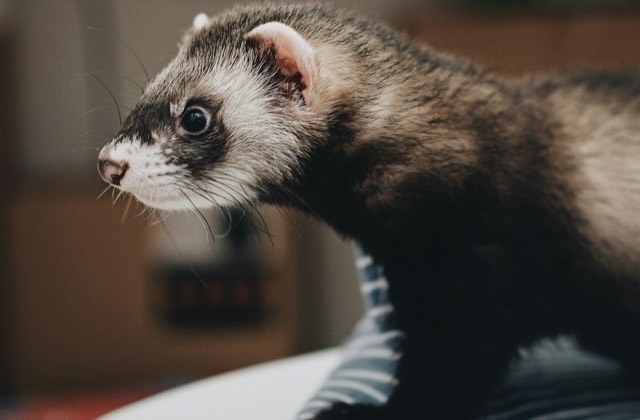
With ferrets, the clearest difference between males and females is not temperament but size: a hob (male) weighs on average nearly twice as much as an adult jill (female), one of the most pronounced size gaps found anywhere in the carnivore order. A landmark study on sexual dimorphism in mustelids, a family that includes the ferret and its wild ancestor the polecat, links this weight gap to feeding strategies and breeding systems across the family. Find more pointers before adopting in the ferret accessories and daily life section.
Contents · 5 sections
Size and weight: a genuinely marked gap
An adult hob typically weighs between 1 and 2 kg, versus 600 g to 1.1 kg for a jill: the gap shows up by six months of age and stays stable throughout adulthood. In practice, this affects cage choice — a sturdy male benefits from an extra level, as described in best cage for a ferret — as well as harness size and, to a lesser extent, the amount of kibble served each day.
Temperament: myth or reality?
Behaviorally, sex-linked differences remain modest compared with individual differences: a hob can be just as playful, cuddly or independent as a jill from the same litter. There is only a mild, non-systematic tendency for some intact adult hobs to become a bit calmer past the age of one, while jills often keep a more constant play drive.
Odor and scent-marking: the intact male is clearly stronger
Odor is where the gap widens most before neutering: an intact hob during breeding season gives off a noticeably stronger musky smell than a jill, and marks its territory more. The hormonal mechanism behind this is detailed in ferret odor: why neutering changes everything, a point worth factoring into the adoption budget covered in ferret price by adoption source.
Does the gap remain after neutering?
Neutering nearly erases the odor and marking difference between the sexes, but it changes nothing about the adult size already reached: a neutered hob stays a large ferret, a neutered jill a small one. So it is really this irreversible size factor that should weigh most in the choice — everything else evens out largely once neutering and training are in place.
A few pointers to keep in mind before choosing:
- Adult hob: 1 to 2 kg, a cage and harness sized up
- Adult jill: 600 g to 1.1 kg, a more compact build
- Odor and marking: markedly reduced after neutering, regardless of sex
- Temperament: varies far more by individual than by sex
Frequently asked questions
Is a male harder to train than a female?
No, learning litter habits and bite inhibition depends mainly on early socialization, not the animal's sex.
Do you have to neuter a hob just because of the smell?
It is not mandatory, but it is the most effective way to markedly reduce marking and odor in an intact adult male.
Can an unneutered hob and jill live together safely?
No, this risks unwanted litters and, in an unmated female, a serious risk of anemia linked to prolonged heat; consult a vet before any mixed cohabitation.
An accessory from our shop for this use: Bubble-window carrier backpack for dwarf rabbit, guinea pig or ferret (€47.90) · the whole shop
This guide is part of Planète Pets’s Ferrets universe. Our advice is general in nature: for any health concern, your veterinarian remains the only reference.