Ferrets and rodents (rats, mice, guinea pigs): why cohabitation is dangerous
Published by Planète Pets · managing editor: Clément Lacaille · how our guides are written
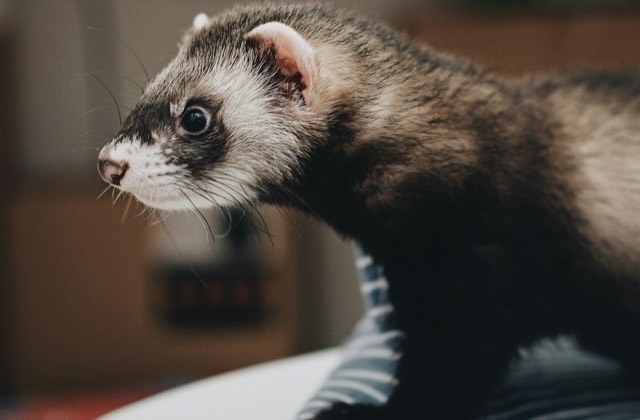
Adopting a ferret when you already own a rat, a mouse or a guinea pig raises a safety question that should never be brushed aside: a ferret remains, by instinct, a natural predator of small rodents. Find all our cohabitation guidance in the ferret travel and safety section.
Contents · 5 sections
Why does a ferret see a rodent as prey?
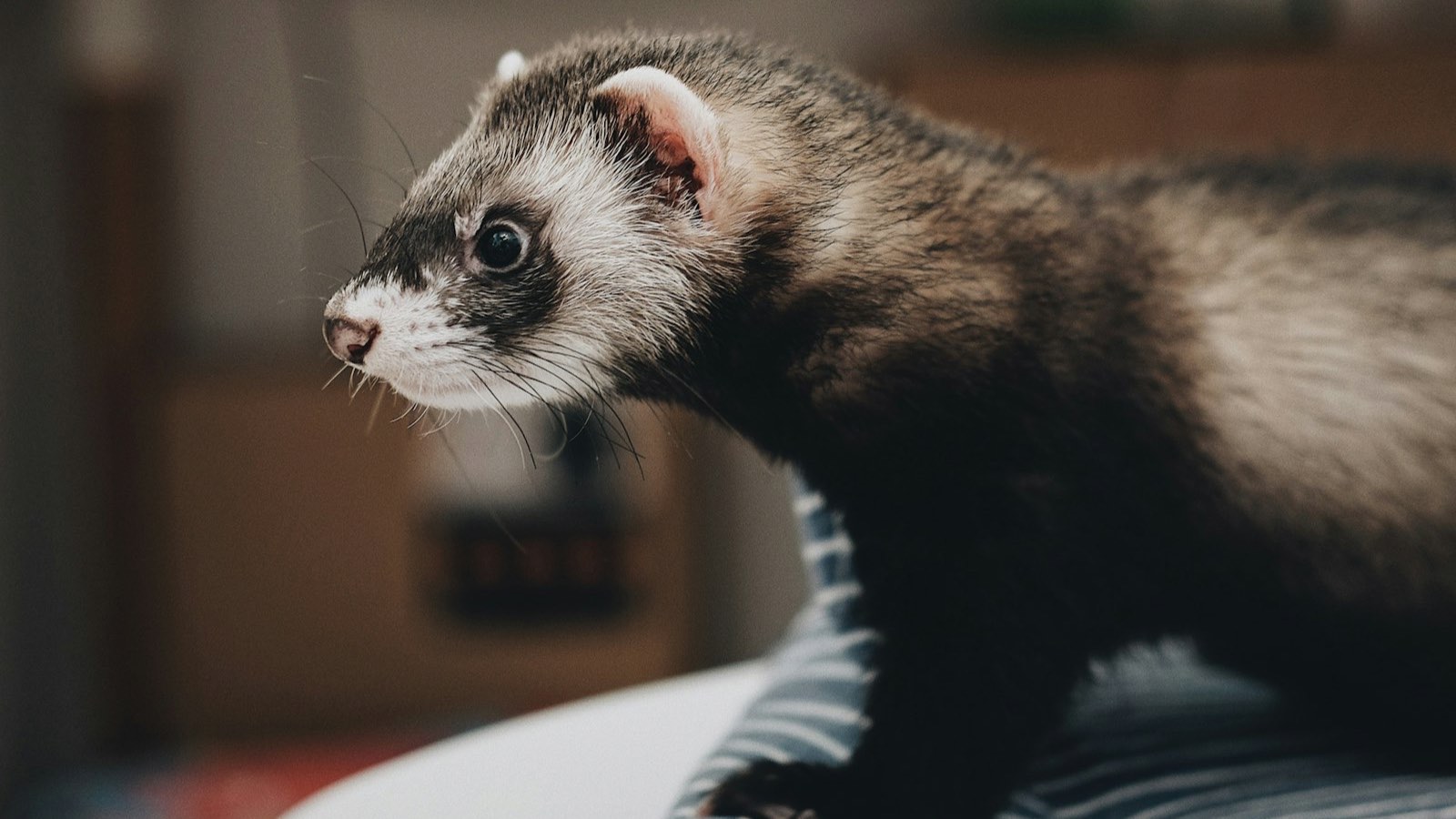
The domestic ferret descends from the European polecat, a small hunting mustelid whose natural diet relies heavily on rodents. That predatory sequence — spotting, chasing, a bite to the nape — remains an instinctive behaviour in the domestic ferret, regardless of how well socialised it is with humans or other pets in the household.
What does research show about predatory behaviour toward rodents in ferrets?
A study by Apfelbach, published in 1978 in the journal Psychopharmacology, analysed the predatory sequence of ferrets confronted with laboratory rats in detail (study on Springer). The author showed that this sequence relies on instinctive motor patterns triggered by simple cues — movement, size and scent of the prey — and that capture success varied mainly with the rodent's size relative to the ferret's, not with any prior learning. In other words, a ferret born and raised indoors, having never hunted, still carries this instinctive trigger intact when faced with a moving rodent.
Does this danger also apply to a rabbit or a guinea pig?
Yes, to a lesser extent for a large adult rabbit, whose size discourages a spontaneous attack, but the risk stays real for a young rabbit, a guinea pig or any small rodent; our article on adopting a ferret with a rabbit at home covers the nuances specific to that particular pairing.
What safety rules apply if both live under the same roof?
- Never leave a ferret and a rodent loose in the same room, even under direct supervision, since human reaction time is always too slow against a predatory reflex.
- Keep the habitats physically separate, in a different room or on a different floor, since a ferret's scent alone is enough to stress a rodent for a long time, even without contact.
- Always lock both cages, since a curious, agile ferret can often work open a poorly secured latch.
These precautions build on the ones already covered in our article on ferrets, dogs and cats living together, even though the risk there is generally less direct than with a small rodent.
Frequently asked questions
Is a neutered ferret less of a predator toward rodents?
No, neutering affects hormone-driven behaviours, not the predatory instinct, which stays independent of the animal's reproductive status.
Can a ferret be trained to ignore a rodent?
No, this instinctive reflex doesn't fade with habituation; strict, permanent separation of the two species remains the only reliable solution.
Does the risk also apply to a fish or a bird in the household?
Yes, the same predatory instinct applies to any small, moving prey, which calls for the same strict separation precautions. Find all our guides in the ferret hub.
An accessory from our shop for this use: Bubble-window carrier backpack for dwarf rabbit, guinea pig or ferret (€47.90) · the whole shop
This guide is part of Planète Pets’s Ferrets universe. Our advice is general in nature: for any health concern, your veterinarian remains the only reference.