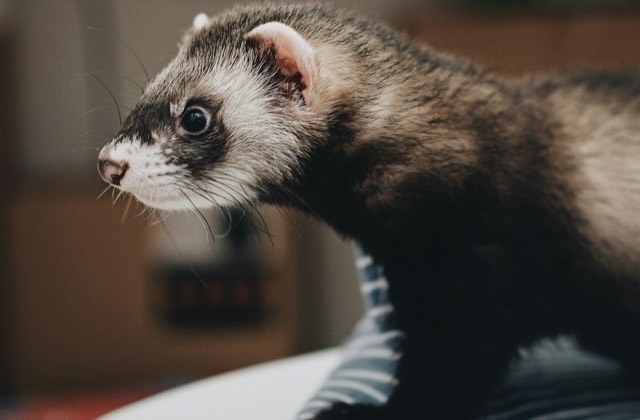
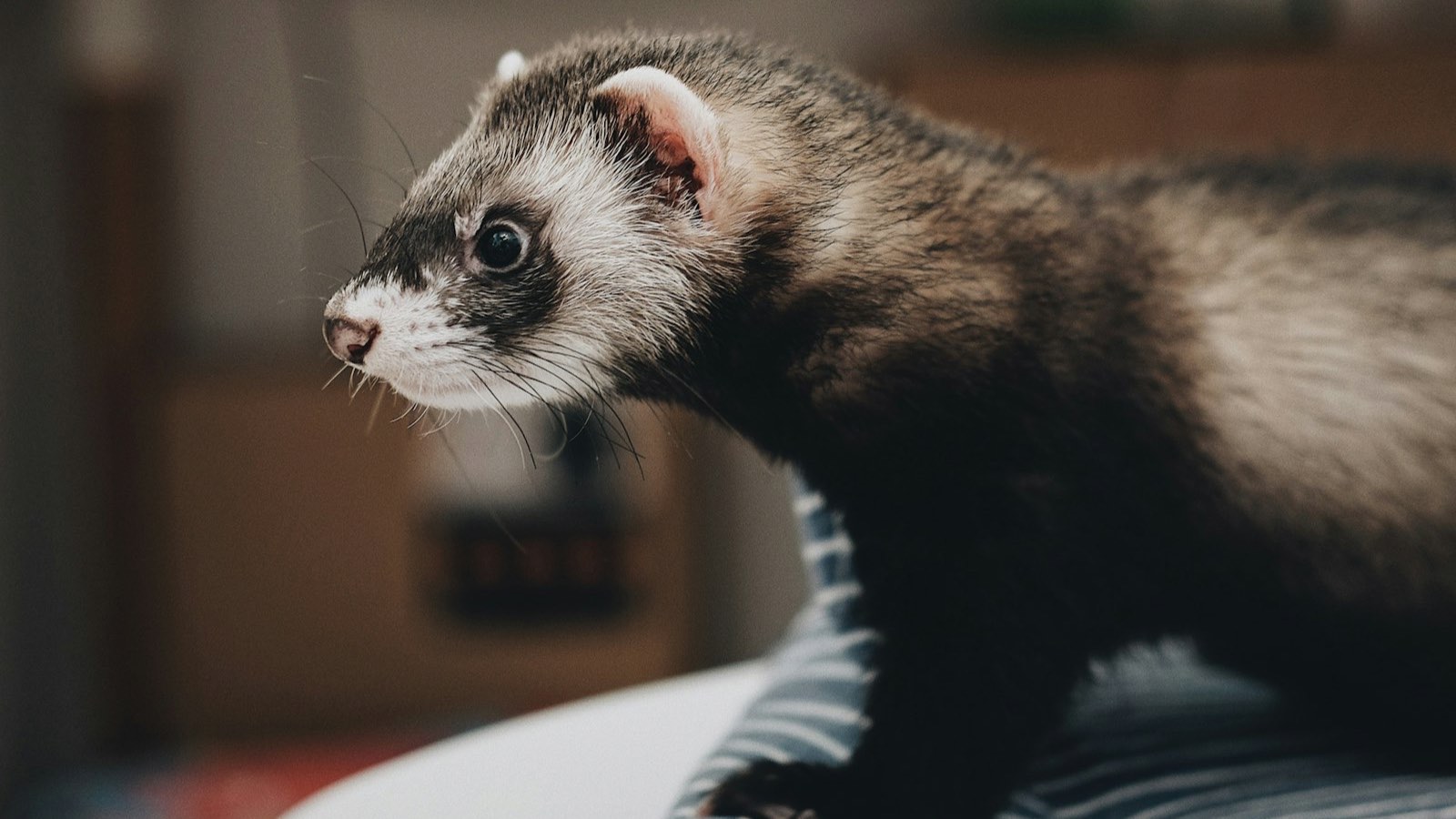
Ferrets, dogs and cats under one roof: barriers, buffer zones and successful introductions
Published by Planète Pets · managing editor: Clément Lacaille · how our guides are written
Cohabitation between ferrets, dogs and cats rests on one principle: no free contact before weeks of controlled introductions, behind suitable barriers and through a buffer zone. A hunting dog and a ferret form the riskiest duo; cats and ferrets often end up ignoring each other or playing. The separation equipment costs €30 to €100 and stays useful for the whole of their shared life.
Contents · 5 sections
What are the real risks between these species?
A dog with a strong prey drive (terriers, sighthounds, hunting breeds) can kill a ferret in a second, even in play. Conversely, a ferret bites without warning shots and can seriously injure a cat's nose or eye. Above all, the ferret fears nothing and no one: its total absence of fear makes every situation worse. The absolute rule: no interaction without active supervision, whatever their history.
What equipment separates and introduces them safely?
- a child safety gate with tight vertical bars, raised higher: ferrets climb the lattice models; €40 to €80;
- solid plexiglass or PVC sheets 60 cm tall fixed to the bottom of the gate: the ferret can no longer squeeze through or climb;
- a playpen with solid panels as a buffer zone for the first visual meetings;
- a room dedicated to the ferret, closed in your absence, set up ferret-proofing style;
- a harness and leash to control the dog during introductions.
How do you run a gradual staged introduction?
Week 1: scent exchanges only (rubbed cloths, swapped beds), the animals never in sight of each other. Weeks 2 and 3: short visual contact through the gate or the pen, dog on leash, calm behaviour rewarded on both sides. Only then, brief meetings in a neutral room, ferret free and dog held, adding a few minutes with each success. Any growl, hard stare or chase sends you back a step. Allow four to eight weeks, sometimes more.
Which signs mean giving up on free contact?
A dog that trembles with fixation, snaps its jaws or ignores your recall in front of the ferret will never cohabit freely: permanent physical separation becomes the rule, and it works very well. After any bite, see an exotics vet for the ferret (fang wounds fester under the fur) and take stock with a behaviourist. Tested gates and pens are in our ferret travel and safety comparison.
Frequently asked questions
Can a ferret and a cat become friends?
Often, yes: many end up playing chase in turns. Still keep the cat's claws trimmed and supervise rough play.
Can a ferret pass diseases to a dog or cat?
Flu and certain parasites circulate between species, and distemper threatens ferret and dog alike: vaccines up to date all round, as your exotics vet will advise.
Should the animals be fed together to bond them?
No, that is the surest way to create a resource conflict. Bowls in separate rooms, always.
See it in the Planète Pets shop: Bubble-window carrier backpack for dwarf rabbit, guinea pig or ferret (€47.90) · the whole shop
This guide is part of Planète Pets’s Ferrets universe. Our advice is general in nature: for any health concern, your veterinarian remains the only reference.