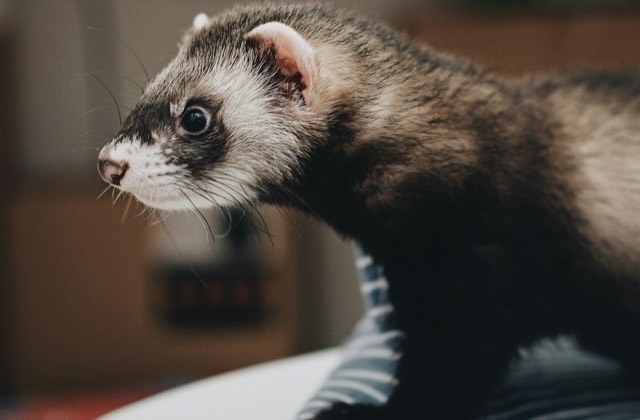
Harness and leash for ferrets: walking your little weasel safely
Published by Planète Pets · managing editor: Clément Lacaille · how our guides are written
Walking a ferret is entirely possible and often much enjoyed… provided you have the right kit. A ferret is not a small dog: supple as an eel, it will wriggle out of a badly fitted harness in seconds. Here is how to choose and use a harness and leash without any scares.
Contents · 4 sections
Never a collar: why a harness is non-negotiable
A ferret's neck is slim, muscular and slippery: a collar either slides off or injures. A harness spreads any pull across the chest and back and, crucially, when properly fitted it will not let the shoulders through. It is the only acceptable equipment for walking a ferret on a leash, and it belongs in the outing kit just as much as the travel carrier.
H-harness, vest or jacket: the differences
- H-harness (€5 to €12): two loops joined by a strap, light and adjustable, but easier for a determined ferret to shed;
- Vest or jacket harness (€10 to €20): a wide band of fabric secured with velcro and a clip, far harder to escape from, and our recommendation for beginners;
- Leash: 1.20 to 1.80 m, lightweight, with a small snap hook; retractable leads are not recommended, as ferrets change direction far too abruptly.
The correct fit: you should be able to slip one finger, not two, between the harness and the body. Always test indoors before the first outing.
Getting your ferret used to it, step by step
Have your ferret wear the harness for a few minutes a day at home, pairing each session with a treat or a game with its favourite tunnels. Add the leash after a few days, let it “walk” you first, then move on to the garden or a quiet park. Most ferrets accept the equipment within one to two weeks.
Safety rules outdoors
Go out during the cooler hours: ferrets cope poorly with heat above 25°C. Avoid areas frequented by off-leash dogs, check parasite prevention with your exotics vet (fleas and ticks affect ferrets too) and inspect the harness before every outing: a clogged velcro strip or a tired seam should be replaced without a second thought given the prices involved. Find the models rated highest by Planète Pets in our ferret travel and safety category.
An accessory from our shop for this use: Bubble-window carrier backpack for dwarf rabbit, guinea pig or ferret (€47.90) · the whole shop
This guide is part of Planète Pets’s Ferrets universe. Our advice is general in nature: for any health concern, your veterinarian remains the only reference.