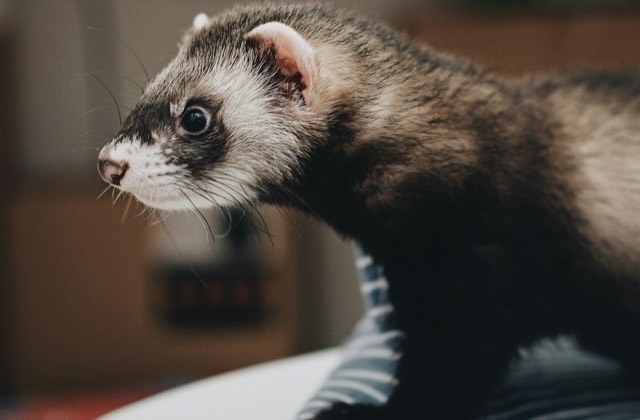
Ferrets and Human Allergies: Can You Live With One If You're Allergic to Fur?
Published by Planète Pets · managing editor: Clément Lacaille · how our guides are written
Just as with cats or dogs, it is entirely possible to develop an allergy to a ferret's dander, fur or saliva, through the same immune mechanisms as for other companion mammals. A study of staff who handle laboratory animals — rats, mice, guinea pigs, hamsters and rabbits — found sensitization to animal allergens in roughly a third of those exposed, most often appearing within the first three years of contact (see the study); ferrets were not directly part of that sample, but the same protein-sensitization mechanism applies to this small mustelid. Find more health pointers in the ferret care and grooming section.
Contents · 4 sections
What symptoms suggest a ferret allergy
Sneezing, itchy eyes, hives on contact or mild breathing trouble after extended handling are the most common signs; they usually appear within an hour of contact and fade once away from the animal. An allergy test with a doctor or allergist is the only reliable way to confirm the ferret is the cause rather than the litter, ambient dust or another allergen in the home.
Reducing exposure without necessarily giving up your ferret
Airing out and vacuuming the room regularly, keeping the ferret to the areas it actually sleeps in, washing your hands after handling and avoiding touching your face during play noticeably cut allergen exposure. Choosing a low-dust litter also plays a role, as covered in ferret litter: wood pellets or paper-based litter, as does regular brushing, which limits airborne fur, covered in ferret brushing and shedding.
When to seek advice before adopting or keeping your ferret
If you suspect an allergy, it is better to see an allergist before adopting rather than after, especially if asthma or a respiratory allergy already exists in the household; the decision to keep the animal should always go through medical advice rather than just tweaking your cleaning routine.
- Typical symptoms: sneezing, red eyes, hives on contact
- Useful steps: airing the room, regular vacuuming, handwashing, low-dust litter
- If unsure: get an allergy test before any final decision
Frequently asked questions
Are there hypoallergenic ferrets?
No, no ferret breed or coat variety is guaranteed hypoallergenic; sensitivity depends on the person, not the animal's coat or color.
Does neutering reduce allergy risk?
It may slightly reduce sebum production and thus odor, but it does not eliminate the allergenic proteins present in saliva and dander.
Should you see a doctor or a vet if in doubt?
See a doctor or allergist to confirm a human allergy; the vet remains the right person for any health question about the ferret itself.
See it in the Planète Pets shop: 2-in-1 felt tunnel and hideout for rabbits and ferrets (44 × 60 cm) (€37.90) · the whole shop
This guide is part of Planète Pets’s Ferrets universe. Our advice is general in nature: for any health concern, your veterinarian remains the only reference.