Accessories for your rodent: useful, not gimmicky

Bowls, outdoor gear, everyday extras: the catch-all category hiding both the best value for money and the most useless gadgets. Our guides put rodent accessories through the filter of real-world use.
🛒 Our picks shipped from the US
-
 Rolling 4-level ferret and chinchilla cage with hammock
$159.90
-
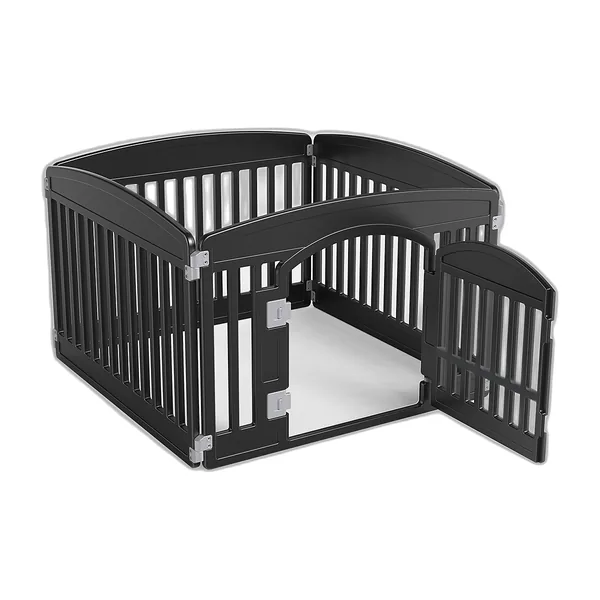 Modular plastic playpen for puppies and rabbits, 4 or 6 panels
from $87.90
Choose an option -
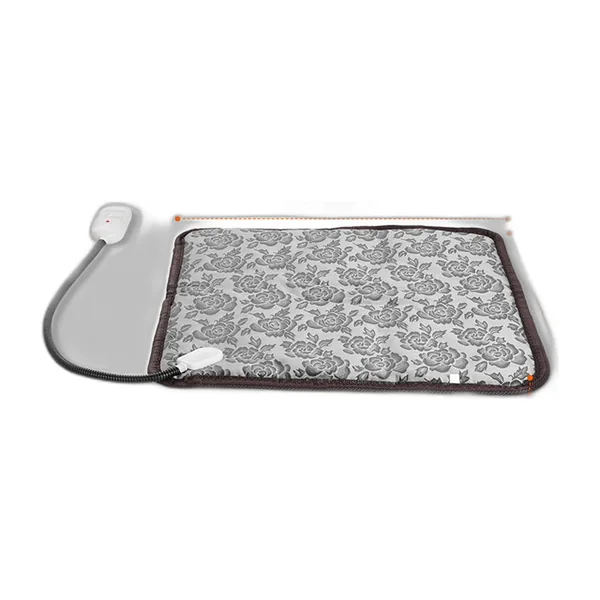 Electric pet heating pad 45 × 45 cm (17.7 in) with chew-resistant cord
$48.90
Ships from a US warehouse in 4 to 10 business days, free delivery within the United States. See the US shop
The key point : Untreated wooden hideouts, solid platforms (never wire under the feet), and a sand bath for gerbils and chinchillas.
Our dedicated guides
- Litter training rats and guinea pigs: can they really learn?
Litter boxes for rats and guinea pigs: what science shows about their natural toileting habits, and how to train them to use a dedicated corner.
- Harness and leash for a rodent: good or bad idea?
Why a harness is discouraged for most rodents, and the narrow, specific cases where it can, exceptionally, be justified.
- Household ultrasonic devices: an invisible stressor for your rodent
Pest-repelling ultrasonic devices, and some chargers or electronics, emit ultrasound imperceptible to humans but very audible, and stressful, to a pet rodent.
- Scales and weight tracking: the health habit your rodent needs
A kitchen scale and a weekly weight check detect rodent illnesses before any symptom shows: method, reference weights and alert thresholds.
- Hamster starter kit: the full budget, item by item
Hamster starter kit: a complete, realistic budget of 150 to 300 € — habitat, wheel, bedding, food — and why to avoid the 40 € all-in-one kits.
- Night vision camera for a rodent: gadget or genuinely useful tool?
Hamsters, gerbils and mice are mostly active at night, out of sight of their owners. Does a night vision camera actually help you understand your rodent better?
- What light lets you watch a nocturnal rodent without disturbing it?
Hamsters, gerbils and mice are mostly active at night. What research shows about light and rodent rhythms, to choose a light that doesn't disrupt their sleep.
- What colors can your rodent actually see? Choosing toys that work
Rodents don't see color the way we do: red looks almost gray to them. What vision science shows about rodent eyesight, and how to pick toys that are actually visible to your pet.
- Mice communicate through ultrasounds we can't hear
A silent mouse cage is anything but quiet to a mouse. What the research shows about ultrasonic vocalizations, and how a detector lets you 'hear' them.
- The gerbil's ventral gland: what does that belly-rubbing do?
A patch of flattened fur in the middle of the belly: gerbils have a scent gland they rub against their cage's decor. What research reveals about this marking behavior.
- Male or female rat: what equipment actually changes?
Adopting a male or a female rat? Size, marking, activity: what sex really changes for the cage, hammocks, bedding and your equipment budget.
- Complete rat starter kit: what budget to get going?
Cage, hammocks, bedding, bowls, carrier: the full budget for welcoming a pair of rats, item by item, with real prices and the false economies to avoid.
- Second-hand rodent accessories: smart buy or health risk?
Cage, tank, wheel, water bottle: which rodent accessories can be bought second-hand safely, how to disinfect them and which to always buy new.
- Why a rat or mouse that suddenly stops burrowing deserves your attention
The need to dig into loose substrate isn't just about comfort: a scientific method actually uses this exact activity as a sensitive indicator of a rodent's wellbeing.
- Why your guinea pig explores a new toy faster than its wild ancestor would
Domestication sharply reduced fear of novel objects in guinea pigs compared with their wild ancestor, the cavy. A comparative study sheds light on introducing a new accessory without unnecessary stress.
- How much does a chinchilla cost per month? Full budget breakdown
How much does a chinchilla cost per month? Cage, hay, dust bath, pellets and exotic-pet vet care: the real monthly budget, item by item, plus setup cost.
- Gerbils hear up to 60 kHz: why the accessories you pick actually matter
A landmark study measured the exceptional hearing range of the Mongolian gerbil. Reason enough to rethink how you choose its wheel and toys.
- A dwarf hamster's wheel changes its metabolism, a Polish study shows: it's not just a toy
A study compared the effect of a running wheel, nesting material, and pair housing on dwarf hamster metabolism. Only the wheel had a measurable effect, with consequences for weight monitoring.
- Mice prefer a nest box with a single entrance, a Dutch study shows: a simple criterion to check
Researchers tested several nest box shapes with laboratory mice. The result gives a concrete criterion for choosing a pet mouse's hideout.
- Guinea pigs: timing hay refills to their natural feeding rhythm
A German study measured guinea pigs' intake peaks and gut transit over 24 hours. Useful for choosing when to refill the hay feeder, not just how much to give.
- Mice: why the scale alone doesn't tell you how a mouse is really doing
A landmark study established a body condition scoring grid for mice, complementary to weighing. A simple way to check on your pet between two trips to the scale.
- Mice: how many days of tunnel handling before it stops being stressful?
A UK study tracked the effect of several days of tunnel handling on mouse anxiety. The benefit doesn't come from a single session — it builds with repetition.
- Hamsters: what the science says about cage size
A Swiss review of housing for laboratory hamsters, gerbils and guinea pigs sets out floor space and enrichment benchmarks that carry over to the pet cage.
- Water bottle hygiene: how often should it really be cleaned? What a veterinary study shows
Without any treatment, water in a bottle becomes bacteriologically unacceptable within one to two days, a landmark study shows. Reason enough to rethink cleaning frequency at home.
- What cage size does a hamster need? A study compares four setups and their effects
A controlled experiment housed golden hamsters in four different cage sizes and measured their behaviour. The results give concrete benchmarks for choosing a size beyond the minimums sold in pet stores.
- Dwarf hamsters: a 248-household survey points to undersized supplies
Fewer bowls and water points than animals, 12 % of cages under 75 cm: what a veterinary survey reveals about the equipment dwarf hamsters actually get.
- Exercise wheel: plastic and metal aren't equal, a study finds
A study compared two types of exercise wheel in mice: one made hearts and hind legs grow larger, and mice were willing to work harder to reach it.
- Nest material: an overly cosy fabric can trap your rodent's feet
A study compared four nesting materials in mice: only one caused foot entanglement, while another gave the best nest quality without that risk.
- Chinchillas: what really happens when the sand bath is missed?
An old but still-cited experiment measured how a chinchilla's bathing behaviour changes when access to sand is delayed. The result points to how often the bath should really be offered.
- Is a UVB lamp worth it for a guinea pig?
Six months of UVB nearly triples a guinea pig’s blood vitamin D. What that changes for its health has never been demonstrated.
- Thermometer and hygrometer in the cage: an accessory worth having?
Tracking temperature and humidity in a rodent's cage helps you catch heat stress and respiratory trouble early. How to pick the right gear.
- Cage cleaning: transferring the nest instead of dirty bedding cuts fights
A Dutch study counted fights between male mice depending on what was transferred during cage cleaning. Nest material changes everything, soiled bedding makes it worse.
- A cardboard tube cuts wire-gnawing by 40% in mice, a study shows
Repeated bar-gnawing isn’t just a rodent habit — it’s often a frustration-driven stereotypy. One cheap accessory noticeably lowers how often it happens.
- Why a gerbil digs nonstop: it isn’t a toy that’s missing, a study shows
Two common stereotypies in laboratory gerbils — digging and bar-gnawing — each have their own separate cause, identified by a Swiss study. Neither is a toy problem.
- Hamster wheels: a complete circle beats diameter alone, a study shows
Large or small, complete or truncated: when given a real choice between several wheels at once, Syrian hamsters don’t settle for size as the only criterion.
- A running wheel can flip a degu's rhythm to nocturnal, a study shows
Degus are a diurnal species, but a Spanish study shows that a wheel in a warm room can flip their rhythm toward the night. What that means for the accessory itself.
- Multi-level rat cages: what a study on space use changes about furnishing
A spatial cognition study shows rats explore one level fully before moving to the next rather than mixing movements freely. Reason to rethink furnishing more than sheer height.
- Fearful chinchilla: a bigger cage with a litter floor makes a real difference, a study shows
A Polish experiment compares three farm cages: only the combination of enlarged size and a litter floor meaningfully reduces a chinchilla's fear of humans — litter alone on a standard cage does not.
- Syrian hamster and oversized treats: what a cheek-pouch study reveals
A frame-by-frame analysis of cheek-pouch filling in Syrian hamsters shows that large pieces of food require noticeably more handling than small ones.
- Automatic feeder or classic bowl for a rodent: which should you choose?
Automatic feeder or a simple bowl: which one truly cuts down on waste, and which rodent suits which? The full comparison.
- What accessories for a Roborovski hamster? The small-size traps
A hopper too wide, a wheel too small, bars too far apart: the accessories actually suited to the smallest, fastest hamster.
- Water Bottle or Bowl for a Rodent: Which Way to Offer Water?
Sipper bottle or ceramic bowl: pros, cons and hygiene of each watering option for a hamster, rat, guinea pig or chinchilla.
Accessories breed by breed: every rodent profile covers this product family with that species’ own figures.