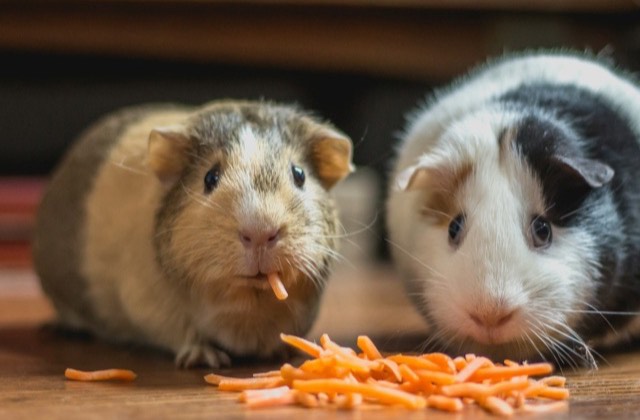
Automatic feeder or classic bowl for a rodent: which should you choose?
Published by Planète Pets · managing editor: Clément Lacaille · how our guides are written
Between the classic bowl, simple and cheap, and the automatic feeder that promises to cut down on waste, the right choice mostly depends on the species and how that rodent eats. Find all our guides in the accessories category for rodents.
Contents · 5 sections
What are the advantages of a classic bowl?
A heavy ceramic bowl, hard to tip over, remains the simplest way to see exactly what the rodent is eating and catch a change in appetite, an important health signal to watch day to day. It also makes daily cleaning easier, essential to stop leftover fresh vegetables from going moldy.
When is an automatic feeder actually useful?
- For a dry seed mix given in bulk, a hopper-style feeder cuts down on scatter waste, common with hamsters that hoard seeds.
- For a short absence, a programmable feeder avoids having to fill an oversized bowl in advance.
- For a guinea pig that eats small, frequent amounts, a continuous-flow feeder can top up the hay ration without ever replacing it.
What downsides should you know about?
A mechanical feeder sometimes hides a drop in appetite, since seeds stay visible in the hopper even if the animal is eating less: it still needs a regular manual check. It also doesn't suit fresh, moist food, which belongs in a classic bowl changed daily. The same trade-off applies to water: our article on water bottles versus bowls covers a similar comparison.
Can you combine both solutions?
That's often the best option: a feeder for the dry seed or pellet mix that forms the base of the diet, paired with a small bowl for fresh vegetables and the day's measured portions, as covered in our comparison of seed mix versus pellets. This combination cuts down on waste while still keeping an eye on the animal's real appetite.
Frequently asked questions
Does an automatic feeder work for a single rodent?
Yes, but still check the remaining level every day: a jammed mechanism can leave the animal without food without it being obvious from a glance.
Do you need a different feeder for each species?
The size mostly needs to match the rodent: an opening that's too wide wastes more food for a small dwarf hamster than for a rat.
Does a feeder replace a guinea pig's hay?
No, never: hay must always stay available at all times in a separate rack, whatever accessory you choose for the rest of the diet.
See it in the Planète Pets shop: Bubble-window carrier backpack for dwarf rabbit, guinea pig or ferret (€47.90) · the whole shop
This guide is part of Planète Pets’s Rodents universe. Our advice is general in nature: for any health concern, your veterinarian remains the only reference.