Accessories for your dog: useful, not gimmicky
Bowls, outdoor gear, everyday extras: the catch-all category hiding both the best value for money and the most useless gadgets. Our guides put dog accessories through the filter of real-world use.
🛒 Our picks from the shop
-
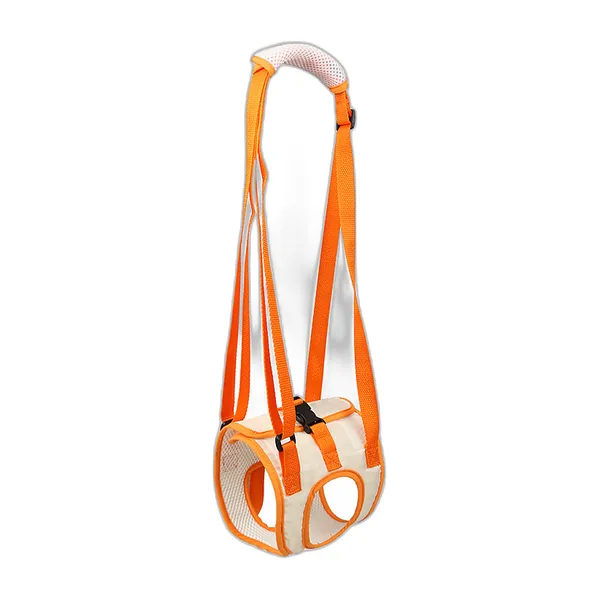 Rear support harness for dogs, with handle
from €25.90
Choose an option -
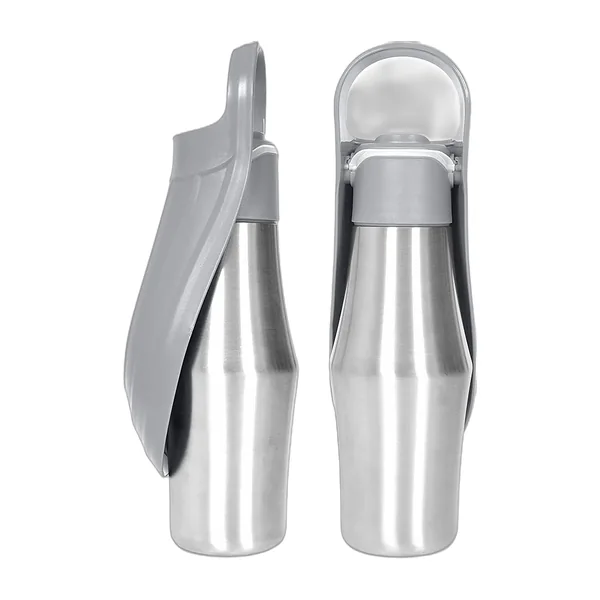 750 ml dog walking bottle, stainless steel with silicone leaf bowl
€31.90
Choose an option -
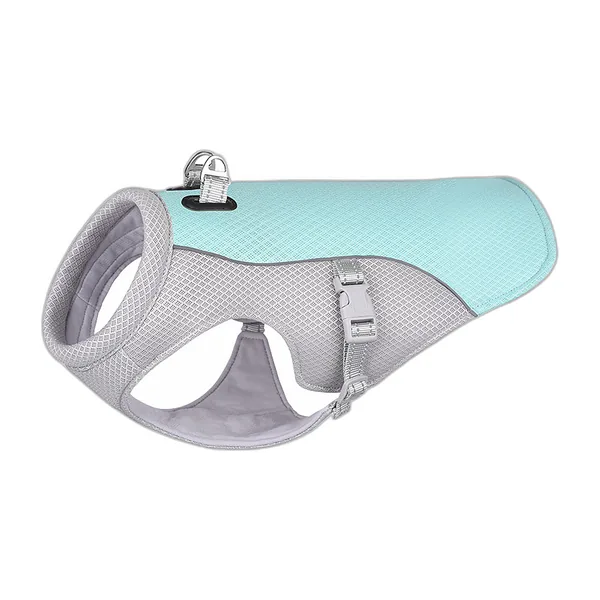 Evaporative cooling vest for dogs, with lead ring
€35.90
Choose an option
Delivery in 8 to 15 working days, free from €49 (otherwise €4.90). See the whole shop
🛒 Our picks shipped from the US
-
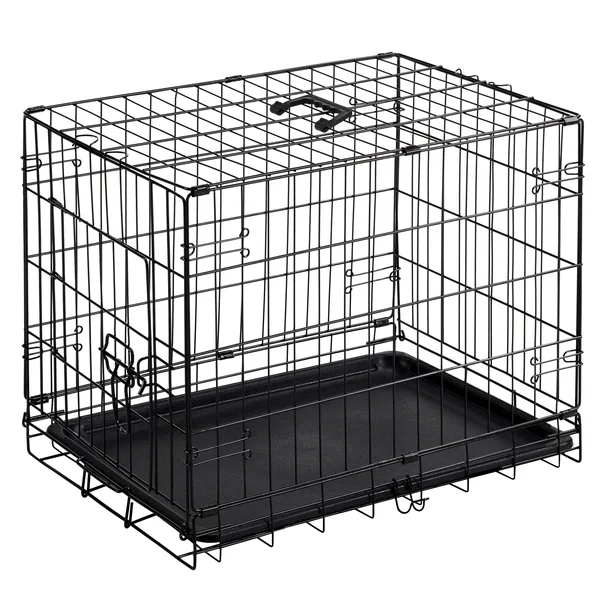 Folding wire dog crate 24 in (61 cm), single door, with tray
$62.90
-
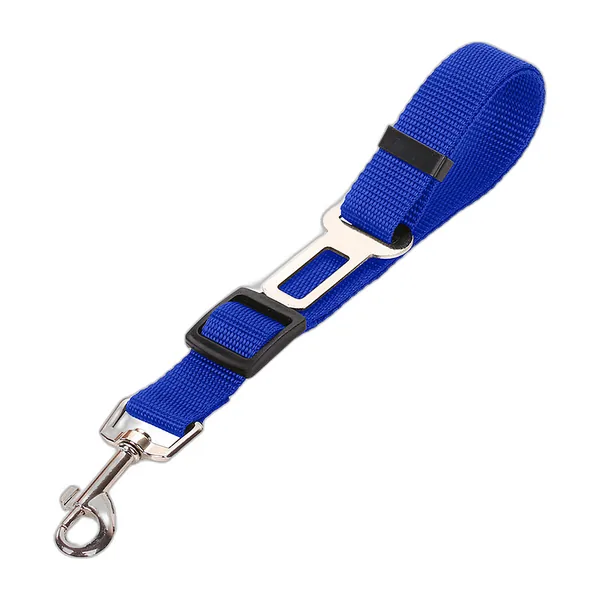 Adjustable dog car seat belt tether
$21.90
Choose an option -
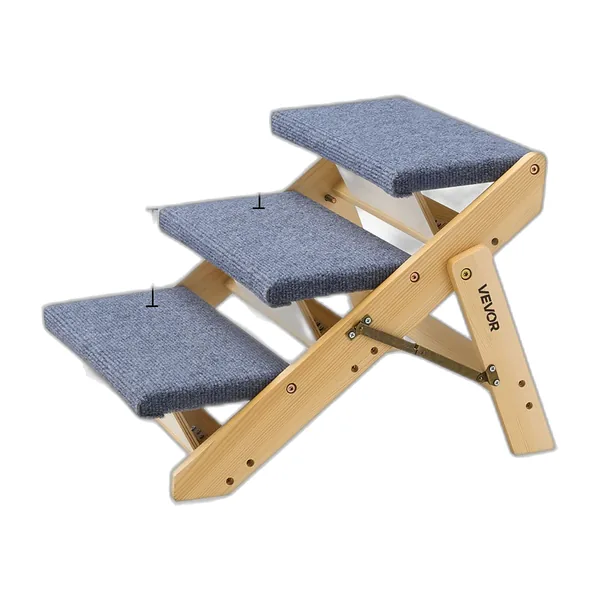 Folding 3-step wooden pet stairs for beds and sofas
$75.90
Ships from a US warehouse in 4 to 10 business days, free delivery within the United States. See the US shop
The key point : Leads, long lines, slow-feed bowls, GPS trackers: smart accessories rarely cost more than €40 and improve daily life more than you would think.
Our dedicated guides
- No-pull front-clip harness for dogs: what does the science actually show?
Front-clip no-pull harness for dogs: what a recent study measured on pulling force, compared with a plain collar and a prong-style collar.
- Reflective vest vs light-up collar for dogs: what's the real difference?
Dog visibility at night: what pedestrian-conspicuity research reveals about the real gap between a reflective vest and a light-up collar.
- Post-surgery cone: dog welfare and alternatives
A cone protects a wound but hurts a dog's comfort according to most owners surveyed in one study. How to limit its impact and what alternatives exist.
- Canicross and bikejoring gear: the essential kit for running with your dog
Pulling harness, bungee line, running belt, bikejoring bar: which canicross gear to choose to run or ride with your dog safely.
- Tracking line for dogs: choosing the right one to start scent sports
Length, material, biothane or nylon: how to choose a tracking line for your dog and get started in mantrailing or search work.
- Dog whistle: the most reliable tool for training recall?
Ultrasonic or audible whistle, fixed frequency, conditioning method: how to choose a dog whistle and build a rock-solid recall on walks.
- Dog walking accessories: the checklist for the perfectly equipped walk
Poop bag dispenser, safety light, treat pouch, water bottle: the dog walking accessories that are genuinely useful, and their real cost.
- Camera for a dog home alone: watch and reassure from a distance
Night vision, two-way audio, treat launcher: how to choose a camera for a dog home alone and spot barking or separation anxiety.
- Essential gear for the German Shepherd, an active working dog
The German Shepherd is an energetic, intelligent dog prone to certain joint problems. Which gear to choose to channel its energy and protect its joints.
- Poop bag dispenser for dogs: which one should you choose?
Consistently picking up waste limits the spread of parasites transmissible in public spaces. Which dispenser keeps you from ever leaving home without a bag.
- Adopting an adult shelter dog: what equipment to buy first, and what budget to plan?
Unlike a puppy, an adult dog adopted from a shelter often already has habits. What equipment should you prioritise, in what order, and for what starting budget?
- Stainless steel or ceramic dog bowl: the full head-to-head
Hygiene, stability, durability, price: stainless steel or ceramic bowl for your dog, this comparison details the strengths and weaknesses of each material.
- First puppy: the 7 equipment mistakes to avoid
Oversized bed, unsuitable collar, dangerous toys, pointless purchases: the first-puppy equipment mistakes that cost dearly, and how to avoid them from adoption day.
- How much does a puppy cost in the first year? The detailed budget
Equipment, food, vet care, identification: a puppy’s first-year budget line by line, from 1,200 to 2,800 euros depending on size and your choices.
- Second-hand dog equipment: smart move or false bargain?
Crate, playpen, coat, toys: which dog equipment to buy second-hand without risk, what to refuse outright, and how much you can save on used gear.
- Pomeranian: tracheal collapse and why a harness beats a collar
The Pomeranian ranks among the breeds most affected by tracheal collapse according to a recent study. Why a harness protects the trachea far better than a standard collar.
- English Setter: coat-linked congenital deafness and the gear that helps
The English Setter is among the breeds at higher risk of congenital deafness linked to its speckled coat. What the landmark study shows and which accessories ease daily life for a hearing-impaired dog.
- American Staffordshire Terrier: why visual breed identification is unreliable
A large-scale study shows that even canine professionals often misidentify breeds by sight alone. What that means for the legal status and required gear of the American Staffordshire Terrier in France.
- Dalmatian: congenital deafness linked to pigmentation and the right gear
In the Dalmatian, hereditary deafness affects close to one dog in three and is directly tied to coat pigmentation. What the landmark study shows and which gear suits a dog that can't hear a vocal recall.
- Cavalier King Charles: syringomyelia linked to Chiari malformation and choosing a harness
In the Cavalier King Charles, a hereditary skull malformation causes fluid to build up in the spinal cord, a source of neck pain. What the landmark study shows and why a harness beats a collar.
- Y-shaped or chest-strap harness: measured shoulder extension contradicts the usual advice
Filmed on a treadmill, dogs lost 2.6° of shoulder extension at walk and 4.4° at trot with the so-called non-restrictive Y harness compared with the horizontal strap said to hinder them.
- Flat collars and eye pressure: the forgotten argument in the collar-versus-harness debate
Walking on a collar raises a dog's intraocular pressure, walking on a harness does not: two tonometry studies quantify an effect the collar-harness debate almost always ignores.
- Dog cooling vests: what a study on Spanish military dogs actually measured
Two cooling vest types were compared against no vest in dogs exercising in the heat: the temperature drop is real, but modest.
- Anxiety vest for dogs: does it actually calm stress, or is it just placebo?
Anxiety vest for dogs: how it works, which situations it genuinely helps with, and its limits with severe anxiety.
- Prong collars for dogs: what two owner surveys say about training methods
Two surveys of dog owners compare training methods, collar corrections included, and their links with dog behavior.
- Knee brace for dogs: what a study on cranial cruciate ligament rupture measures
A study on dogs fitted with a knee orthosis after cruciate ligament rupture measures a gradual improvement in weight bearing over 32 days, without surgery.
- Wheelchair for a paralysed dog: what a survey of cart users reveals
A survey of owners using a mobility cart reports improved quality of life in six cases out of ten, but also frequent complications.
- Biodegradable dog poop bags: what a composting study shows
A laboratory composting study shows that dog poop bags marketed as biodegradable fully break down within 90 days — but only under the right conditions.
- Ear protection for dogs: what a study on MRI stress measures
A study measuring salivary cortisol in dogs undergoing an MRI shows that wearing hearing protection prevents the rise in this stress marker seen without it.
- Head halters for dogs: what the research shows about stress and the differences between models
Two studies compare the head halter to a plain collar and test four models against each other: neither finds measurable physiological stress, despite the real nose-pawing seen in early sessions.
- Collar, harness, prong collar: a 2024 study actually measures the pulling force of each type
A study fitted 23 dogs with a strain gauge to compare four leash walking setups: the force differences measured change the calculus for choosing anti-pulling equipment.
- Dog coats at night: an accelerometer study measures the real effect on sleep
Eight outdoor-kennelled working dogs wore an accelerometer with and without a coat overnight: the effect on their sleep is measurable, but nuanced.
- Dog afraid of fireworks and thunderstorms: how can you help?
Dog afraid of fireworks or thunderstorms: how to recognise a real noise phobia and which gear genuinely helps calm it down.
- Raised bowls for dogs: good idea or bad idea?
Raised dog bowls: what research shows about the risk of stomach torsion in large breeds, and when a raised bowl is still justified.
- Citronella anti-bark collar for dogs: what does the science say?
Citronella anti-bark collar: real-world effectiveness according to veterinary research, comparison with electric collars, and the limits to know.
- Harness or collar for your dog: which to choose, and when?
Comfort, safety, control on walks: the pros and cons of harnesses and collars, so you can pick the right gear for your dog.
- Choosing a leash or long line for your dog: the comparison
Standard leash, retractable, multi-position or 5 to 15 metre long line: which gear for the city, the countryside and your dog’s training?
- Winter coats for dogs: genuinely useful or just a gimmick?
Which dogs really need a coat in winter? Selection criteria, materials, sizing and budget to kit out your companion sensibly.
Accessories breed by breed: every dog profile covers this product family with that species’ own figures.