Canicross and bikejoring gear: the essential kit for running with your dog
Published by Planète Pets · managing editor: Clément Lacaille · how our guides are written
Basic canicross gear comes down to three pieces: a pulling harness that frees the shoulders and spreads the effort, an elastic towline of around 2 m that absorbs the jolts, and a waist belt for the runner. For bikejoring, add a bike antenna fixed to the frame that keeps the line out of the wheel. Expect 90 to 200 € for a complete quality kit.
Contents · 5 sections
Why is a dedicated pulling harness non-negotiable?
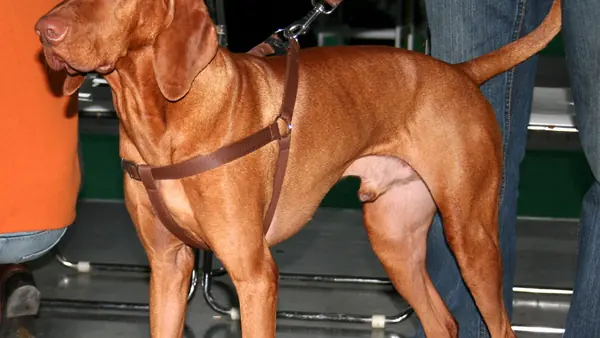
A regular walking harness restricts the shoulder and loads the pull onto the wrong areas; running on a plain collar is out of the question, as the neck would take everything. A pulling harness (X-back type or short sport models) leaves the shoulders free and shifts the effort onto the chest and body. Our harness or collar comparison lays the groundwork; for sport, the dedicated harness is not up for debate. Expect 35 to 70 €.
Which buying criteria for the line and the belt?
- Towline: built-in bungee, roughly 2 m under tension for canicross, heavy-duty clips; 15 to 35 €.
- Belt: wide band sitting down on the hips, leg straps for powerful dogs, a treat pocket; 30 to 60 €.
- Low attachment point with a quick release in case of a fall.
- Bikejoring bar: rigid mount on the frame, never on the handlebars; 30 to 60 €.
- Reinforced stitching and reflective straps for headlamp outings.
From what age, and in what conditions, can you run with your dog?
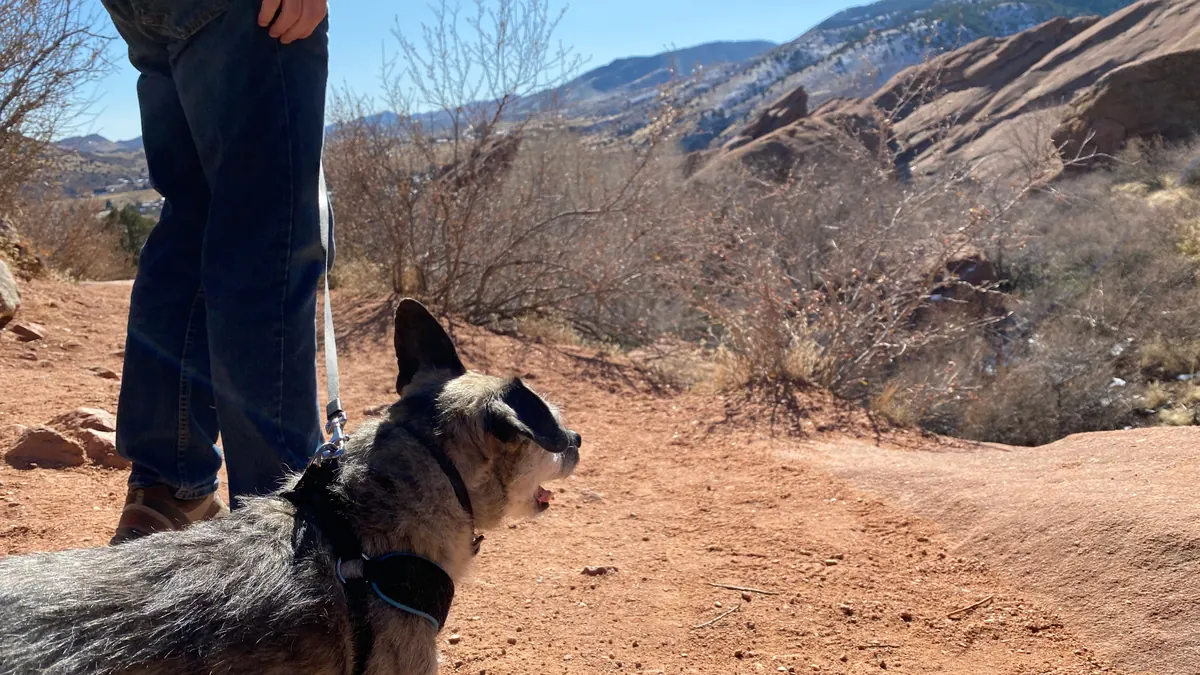
No official text and no study sets a starting age that holds for every dog of a given size: your vet, after checking your dog's growth and joints, is the one who gives the green light for pulling. The only official benchmark is for racing: the rules of the French canine sports federation (FFSLC) only admit dogs aged 18 full months, 24 months for canitrail (FFSLC rules 2026-2027, article 1.1.1). On heat, the same rules cap canicross at 9 km up to 16 °C, 7 km from 17 to 20 °C and 5 km from 21 to 25 °C, and cancel the race above 25 °C (article 14.2); their veterinary appendix quotes Dr Dominique Grandjean of the Alfort national veterinary school: from 21 °C, a dog leaves its thermal comfort zone. In the UK, exercise is the leading trigger of heatstroke seen by vets, 74% of recorded cases (Hall, Carter and O'Neill, Animals, 2020). In hot weather, run early in the morning and prefer soft ground: hot asphalt damages paw pads, a topic covered in our guide to boots and paw protection. Water before and after, and never a meal right before the effort.
How do you start canicross gradually?
Begin with short 10 to 15 minute sessions alternating walking and trotting, teach the directional commands, and build volume over several weeks. A canine sports club speeds up progress enormously; in France, the FFSLC licence for 2025-2026 costs 25 € for leisure and 40 € for racing for an adult, with the club fee usually on top (FFSLC licence fees). If your dog has more nose than legs, the tracking line opens up another discipline. All our guides are in the accessories section.
Frequently asked questions
Can every dog do canicross?
The French federation (FFSLC) opens its races to dogs “regardless of breed and pedigree” (first-category dogs excluded) and sets no minimum weight. Brachycephalic (short-nosed) breeds should sit it out, though: they have a higher risk of heatstroke, including from exercise (Hall et al., 2020); so should dogs with heart or joint conditions. A prior vet check is the rule.
What is the maximum distance with a dog?
There is no universal distance. In racing, the FFSLC caps canicross at 9 km, and less as the temperature rises (see above). Build up gradually, always according to the weather and your dog's enthusiasm. The dog sets the pace, not your training plan.
Is bikejoring more dangerous than canicross?
It demands more technique and a dog perfectly trained to voice commands, because speeds are high. Start with canicross before moving to the bike.
This guide is part of Planète Pets’s Dogs universe. Our advice is general in nature: for any health concern, your veterinarian remains the only reference.